
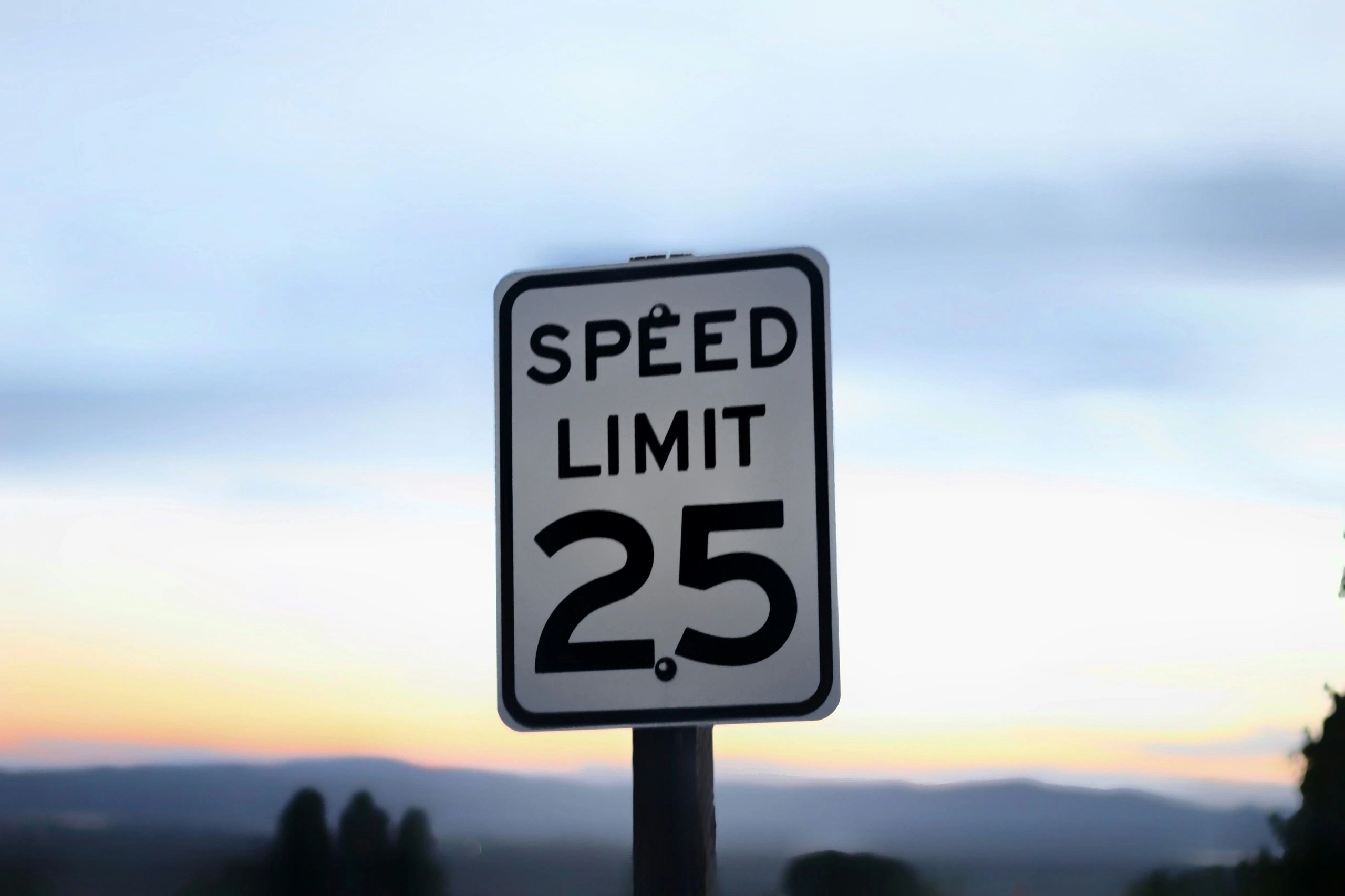
WORCESTER—Worcester is now enforcing its new city-wide 25 mph speed limit, joining 77 other Massachusetts communities in lowering its city-wide speed limit. The change, which took effect following a unanimous city council vote in September 2024, applies to most streets in Worcester’s thickly settled and business districts.
The decision comes as Worcester has grappled with concerning traffic safety statistics. In 2024, the city recorded more than 2,800 vehicle crashes, including 90 incidents involving pedestrians, with 51 cases resulting in serious injuries or deaths. Data from the MassDOT Crash Portal reveals that Worcester had the second-highest number of pedestrian fatality crashes statewide in 2022.
Commissioner of Transportation and Mobility Stephen Rolle noted strong community backing for the initiative. “There has been a vocal group of residents advocating for the reduction in the speed limit for the purpose of improving street safety for many months. Residents have shown their support by commenting at public meetings, posting on social media, and placing 25 mph yard signs in their yards to help with educational efforts.”
“I am in favor of the 25 mph speed limit on city streets, because calming traffic will keep pedestrians and drivers safer,” said Maureen Schwab, a Worcester resident who has been following the Vision Zero rollout. “The recent accidents that resulted in the death of a pedestrian appear to be on bigger streets like Belmont St. and Lake Ave. I believe we also need to promote an effort to educate people as to the necessity to use/find a crosswalk on very busy streets and to obey the walk/wait signals.”
According to the Federal Highway Administration Institute for Road Safety Research, higher driven speeds directly correlate with increased crash rates. Studies show that a car traveling at 25 mph needs 85 feet to stop completely, compared to 109 feet at 30 mph. This difference factors in both human reaction time—which takes between one-half to three-quarters of a second—and actual braking distance.
The new limit won’t apply to major roadways with posted speed regulations, including Interstates 190 and 290, state Routes 12, 20, and 146, as well as several main arteries such as Belmont Street, Park Avenue, Gold Star Boulevard, and portions of Grove Street, Main Street, and Pleasant Street. Here is a map of streets where the posted speed limits are not subject to a city-wide 25 mph speed limit.
While speed cameras aren’t currently a legal option, the city has implemented other safety measures. “The municipality has installed a variety of different traffic calming measures, including temporary and permanent speed humps, curb extensions and crosswalk daylighting,” Rolle said. “You can learn more about all of these efforts, which fall under the Vision Zero program, by reading the draft Vision Zero Safety Action plan.”
“We have other corridors throughout the city that will be undergoing traffic calming improvements,” Worcester Mayor Joe Petty told the Worcester Guardian, “and I am eager to see how we can make a difference in the number of crashes in Worcester. I also hope we can continue holding neighborhood walk audits, and I am open to participating in more community efforts to spread the word about Vision Zero and the importance of working toward zero traffic deaths in the City of Worcester.”
Rolle explained that enforcement efforts continue to be a collaborative approach, and that departments work together as part of the Vision Zero plan to focus on the shared goal of “creating a transportation system free of death and severe injury.”
“Currently, WPD is focused on educating drivers on the 25 mph statutory speed limit change,” said Rolle. “WPD will stop motorists for speeding and issue an educational pamphlet. Other moving violations, as well as speeding that constitutes negligent operation, will be subject to ticketing. Residents may notice increased police presence in specific areas as they monitor for speeding.”
The impact of similar speed reductions in other cities has been substantial. Boston saw reductions of 2.9%, 8.5%, and 29.3% in vehicles exceeding 25 mph, 30 mph, and 35 mph, respectively. Manhattan reported a more than 22% decrease in traffic fatalities and a 25% reduction in pedestrian fatalities. In Portland, Oregon, the number of cars driving 30-35 mph dropped by 26%, while those exceeding 35 mph decreased by 47%.
According to the National Highway Traffic Safety Administration, crashes cost the United States over $340 billion in total costs in 2019. Beyond the financial impact, reduced speed limits can improve public health. The Centers for Disease Control and Prevention reports that safer streets contribute to lower levels of obesity, diabetes, hypertension, and asthma by encouraging active transportation like walking and biking.
Worcester joins other major Massachusetts cities including Boston, Cambridge, Chicopee, Framingham, and Springfield in implementing this change. The city-wide approach, rather than street-by-street implementation, follows MassDOT recommendations to avoid driver confusion and allows for more effective enforcement techniques.
The speed reduction initiative aligns with several city policies, including the Complete Streets Policy of 2017, the Green Worcester Plan of 2021, and the upcoming Vision Zero Safe Streets Plan of 2024.
Matt Olszewski is a freelance content and news writer based in Boston, MA. In his free time, Matt enjoys running, hiking or skiing. Matt just graduated with his MPH from Tufts University. He can be reached at mattoskier@gmail.com