
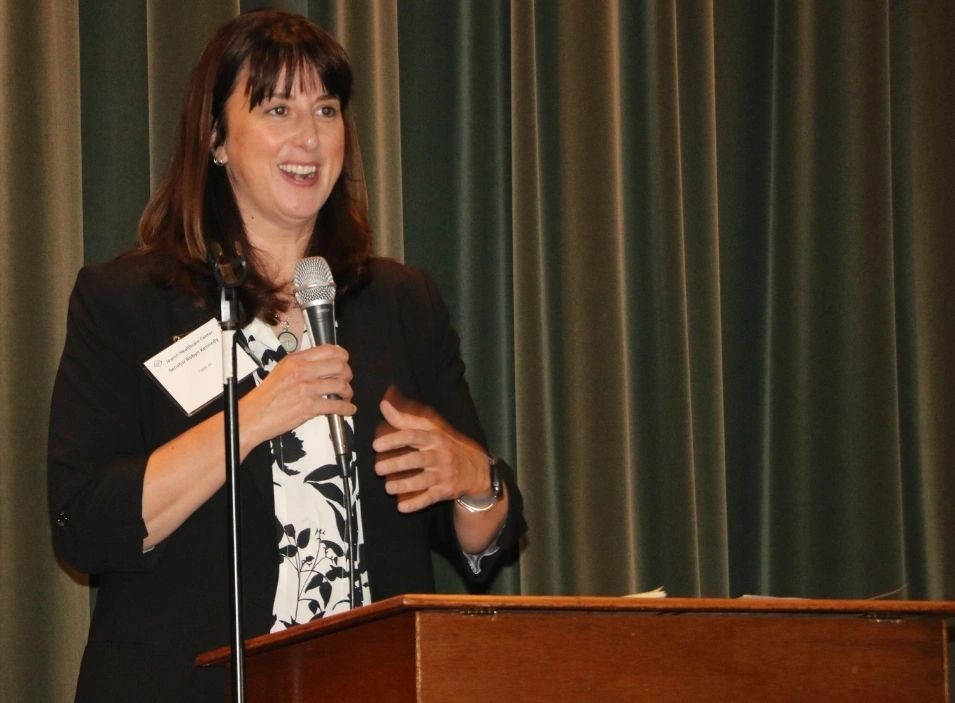
WORCESTER—Following her inaugural year representing Worcester’s first district, Sen. Robyn Kennedy has been heavily involved on a variety of issues, with a particular emphasis on introducing initiatives in early childhood education. These efforts are designed to ensure the well-being and thriving development of every child in Worcester from a young age, and Kennedy is at the forefront of the effort.
“The social-emotional curriculum to help students develop healthy and safe relationships,” Kennedy told the Worcester Guardian, “learn about friendships, and engage with other adults and young people in their community is a critical skill set for young people to learn before they go into their K-12 experience.”
Kennedy stressed this approach lays the groundwork for students to become well-rounded individuals capable of contributing positively to their community. Meeting other specific student needs is critical, too, she said.
Most recently, Kennedy introduced Bill S.301, which aims to provide “affordable and accessible high quality early education and care to promote child development and well-being and support the economy in the Commonwealth.”
Kennedy underscored the significance of addressing basic needs in educational environments and pointed to a recent legislative win in early childhood education, which is an initiative that aims to eliminate barriers caused by hunger, ensuring every student has the opportunity to learn effectively in the classroom.
“In this year’s budget, the legislature and the governor included universal school meals,” she said. “We know that kids can’t learn if they’re hungry or distracted. A healthy lunch is one of those ways to ensure students get a productive learning experience at school.”
Kennedy said she is striving to provide equitable academic opportunities from the earliest stages of life, and is a staunch advocate for inclusivity and equality in education from the start. “We are really trying to ensure that every child has access to that academic start that begins at birth,” Kennedy said. “We want to level the playing field for every child in our school to be going into their K-12 experience on equal footing.”
Kennedy specified that Worcester has been piloting and funding universal Pre-K around the community. “As we continue these conversations around how to expand access to pre-k and preschool,” she said, “it needs to be an intensive partnership between public schools and our community-based providers of early education and care.”
She said this collaborative approach is crucial for building a comprehensive early education system that serves all children.
“Another big piece that we need to continue to grow is to ensure that we have adequate and accessible after-school programs for students,” she noted. “Those hours from 3-6 p.m. are critical for when young people should have access to recreational support, academic support, cultural engagement and care.”
Worcester benefits from a robust network of organizations dedicated to enriching the lives of young people outside the classroom, Kennedy said.
Financial support for early education is also a priority, as illustrated by recent legislative achievements. “In terms of funding,” said Kennedy, “last year the senate voted and supported the Common Start Bill. This does a variety of things to be able to invest in our early education and care programs and make them more affordable for families. I look forward to working with my colleagues in the Senate to pass that bill this year and continue to move it forward.”
Finally, Kennedy highlighted the importance of supporting educators. “One of the key pieces which we’ve included in this year’s fiscal budget is the C3 grants which is funding to providers that started during the pandemic,” she said. “This fiscal year we not only saw an increase to the C3 grants, but it was funded for a full fiscal year. So, providers can invest that in increasing salaries of our educators and providing full support.”
By ensuring educators are well-compensated and supported, Kennedy emphasized that Worcester school providers can more easily attract and retain educators to guide youth in their academic journeys.
Domenica Perrone, the director of community engagement and volunteering at Clark University, echoed Kennedy’s thoughts. “I think it is policy change that’s needed. We need fully funded early education and care. Funding the physical space for early education is important, but a lot of our early educators are not being paid living wages. Joseph Corazzini, vice president for Government and Community Affairs at Clark, is also in favor of more funding in this field, as he firmly believes that paying educators fairly helps set up our youth for success.”
Perrone also mentioned that she works with students who want to go into early education, but the issue of fair pay often arises. “Here at Clark, I meet students who are interested in early education and care,” she said,“ but they end up in the K-12 system because that’s more of a sustainable career they think. Financially, we need to fund the workforce, fund the pathways, and subsidize it as a program.”
Kennedy and other senators vote Thursday, March 14, on their most recent bill, The Early Ed Act. A previous bill similar to this one passed the Senate back in 2022, but it failed to be taken up by the House.
Matt Olszewski is a freelance content and news writer based in Boston, MA. In his free time, Matt enjoys running, hiking or skiing. Matt is currently finishing up the MPH degree program at Tufts University. He can be reached at mattoskier@gmail.com
