
Worcester Patriots in 1774 did not appreciate it when city clerk Clark Chandler noted in the official record that Loyalists had protested their activities. Infuriated Patriots forced Chandler to dip his fingers in ink and run them across his account of the protests while they watched.
The humiliated clerk left town but returned on Sept. 20, 1775, to turn himself over to city authorities, writing in a letter, “ I have Just arrived at my father’s House in this Town, am Sensable [sic] my going away in the manner I did has given great uneasiness to the people and it being your duty to proceed against Suspected persons and you Shall think best for the publick Safety I desire to Resign my Self into your Hands.”
This story and countless others about life during the American Revolution will be told this year during the semiquincentennial of US independence. Many of those stories, including the experiences of ordinary people on the home front in Central Massachusetts, can be found in letters, diaries, muster rolls, and other documents written by hand during that time.
“History books often focus on events in bigger cities,” said Ashley Cataldo, curator of manuscripts at the American Antiquarian Society (AAS). “However, people living in smaller communities like Worcester and the surrounding towns were very much involved in the Revolution. They boycotted British goods, supported and corresponded with loved ones serving in the Continental Army, and some who remained loyal to King George III were harshly treated by their neighbors.”
Chandler, the Loyalist city clerk, may have just been doing his job when he officially recorded Patriot activities in Worcester. But he ignited the wrath of his fellow townspeople who were already angry about the so-called Coercive Acts the British Parliament passed in the spring of 1774 to punish Massachusetts for the Boston Tea Party.
That summer, the Committees of Correspondence—an anti-British communication network―from most of the towns in Worcester County met in the city to sign an eight-part resolution resisting the crushing new laws. The three-page document, signed on August 9, 1774, and now preserved at AAS, outlines the Patriots’ determination to reject all British goods and
“to convince our Brethren in Britain that more is to be gained in the way of Justice from our friendship & affection than by extortion & arbitrary Power.”
These documents are among 8,000 pages of Revolutionary War manuscripts at AAS that will soon be available for worldwide digital access. The scanning project, funded by Jeffrey Griffith, an AAS member who lives in Anaheim, California, will be completed at the end of the summer. According to Griffith, this is the perfect time to make these documents freely available online. “We will be commemorating 250-year anniversaries related to the War for the next seven years. Getting these materials online now will get all this information out there for current and future scholars, both casual and academic,” he said.
Many of the digitized manuscripts are muster rolls―official, handwritten lists of soldiers in a military company. “During a muster, or military roll call, each soldier was checked against his name on the roll and notations were made about his status, such as rank and whether he was present or not,” said Cataldo. The rolls, used to track troop strength, listed circumstances that affected pay or explained absences. These might include notes about furloughs, disabilities that made a man unfit for service, or assignment to the hospital for smallpox inoculation. This information is used by all kinds of people, from scholars to genealogists researching family histories. “With the searchability function in digitized documents, looking for individuals or details will be much easier than perusing hundreds of handwritten manuscripts,” she said.
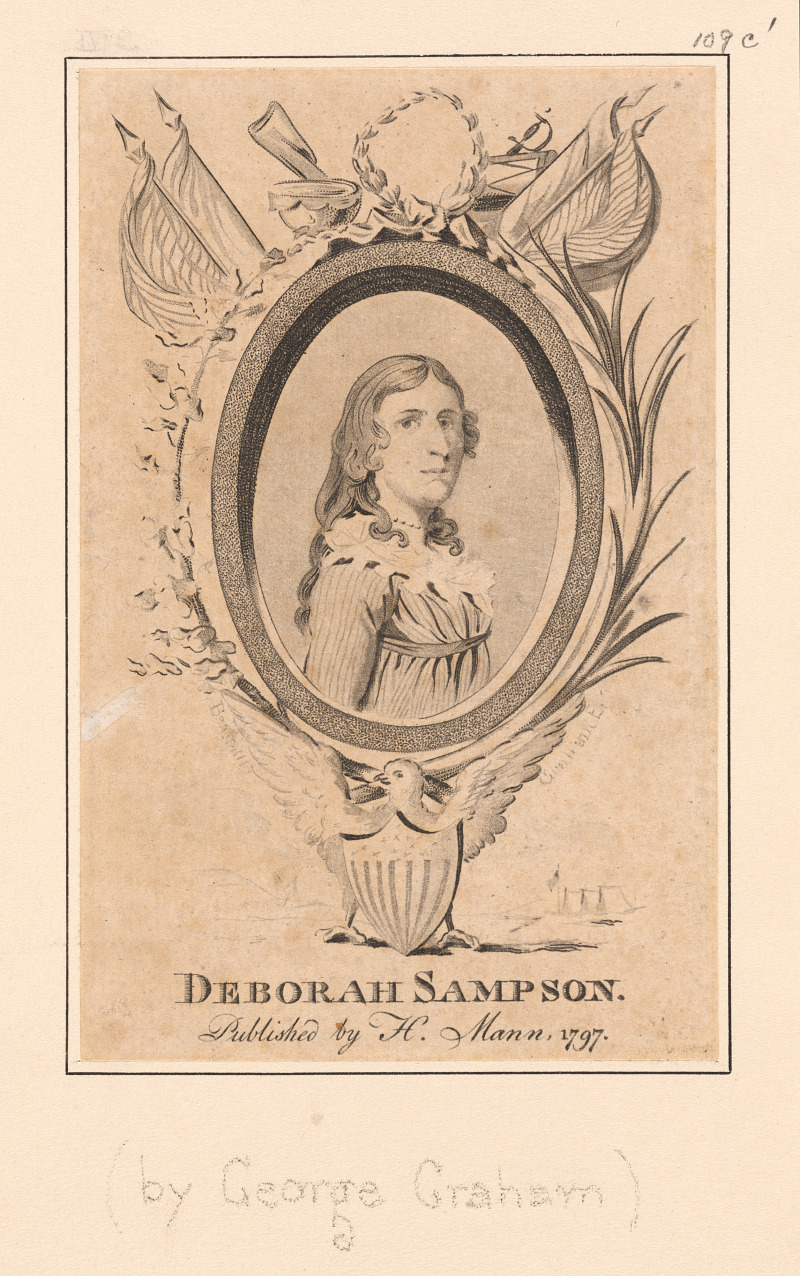
One of the most interesting muster rolls in the AAS collection is the November 17, 1782, roll for the George Webb Company of the Light Infantry of the 4th Massachusetts Regiment. At the end of the list of soldiers is an especially noteworthy name: Robert Shurtleff. This was the alias used by Deborah Samson, who disguised herself as a man and served for seventeen months in the Continental Army before her identity was discovered. “This proof that Samson enlisted in the army as a male soldier is a very important document in our collection,” said Cataldo.
The collection also includes letters written during the Revolution, including one dated November 17, 1775, by General George Washington to his second-in-command, Major General Artemas Ward, of Shrewsbury. Washington was in Cambridge at the time, while Ward was overseeing troops in Roxbury. In his letter, Washington points out that it wouldn’t be long before the harbor and river froze, making them passable by the enemy. He requests that Ward meet him at ten o’clock the next morning to discuss securing the Patriot camp and ammunition stores against a British attack.
Washington penned the letter on the same day Henry Knox and his team of more than forty men embarked on an expedition to bring heavy artillery to Boston from Fort Ticonderoga in New York. “Written seven months into the eleven-month-long siege of Boston, this letter gives
insight into what Washington was thinking and doing to fortify the city at a precarious time,” said Cataldo.
Nine months later, John Ramsdell wrote to his wife, Mary, from Fort Ticonderoga, where he was serving in the Continental Army. His letter, dated August 28, 1776, does not reveal what he and his fellow soldiers were doing there―although they were likely preparing defenses for a suspected British attack from Canada. However, his brief message must have been a comfort to his loved ones at home, eager for news from him: “My Dear Wife, I am in a comfortable state of health through the Wonderful goodness of God. We have had a very tedious journey to this place. We had to carrey [sic] our packs about a Hundred miles. . .I must confess that my Heart and affections are often at home and I Hope in time that I Shall Be Returned to my family again.”
Griffith relied on AAS’s extensive digitized newspaper and pamphlet collections while doing research for his doctorate from Claremont Graduate University. Having online access to the materials while living in California inspired him to fund this new project to digitize the Revolutionary War manuscripts. “The Society’s collection is so vast and deep through print and manuscripts and provides researchers and those interested in history direct access to how history develops at all levels of society,” he said. “It’s remarkable what people can learn and discover.”
This article is part of an ongoing, monthly series supplied by the American Antiquarian Society that focuses on the society’s collections and how they deepen the community’s understanding of Worcester’s–and the American–past. Through wide-ranging programs, community engagement, and research support for scholars and students, the AAS works to cultivate a broad community of inquiry―locally and nationally.
- The Worcester Guardian is an independent nonprofit news organization. Support local journalism by making a DONATION today.