
Worcester’s next snowstorm may still be weeks away, but the city is already changing the way it plans to fight it.
After what City Manager Eric Batista described as Worcester’s eighth snowiest winter on record, with more than 6½ feet of snow, the Department of Public Works is preparing to head into the 2026-27 season with more equipment, additional mechanics and drivers, expanded use of road brine and a new approach to storms that produce less than two inches of snow.
The changes, outlined in a report heading to the city council on Tuesday, Oct. 13, follow a review of last winter’s operations that identified problems with equipment reliability, staffing, contractor availability and the ability to keep streets clear during prolonged storms. DPW spent the spring and summer addressing those issues, although officials acknowledge that some challenges remain.
Winter preparations share the agenda with several other issues. Councilors receive updates on traffic safety improvements along Belmont Street and Lake Ave., plans to reduce the city’s waste, the upcoming fall leaf collection program and efforts to improve recycling. They also consider a proposal to change the starting time of council meetings and review how Polar Park is being used for community events.
For DPW Commissioner John Westerling, one of the most significant operational changes involves smaller snowstorms. In the past, crews did not always plow when accumulation was expected to remain below two inches, relying instead on salt. This winter, the department plans to plow when weather conditions warrant it, even during smaller storms.
The idea is to prevent snow from accumulating on roads and reduce the amount of salt needed to maintain safe driving conditions. That could become increasingly important as Worcester faces higher salt prices. The three lowest bids this year averaged approximately 10% more than comparable bids in 2025.
To stretch those supplies, DPW plans to calibrate its city-owned salt spreaders and expand the use of brine, a saltwater solution that can be applied before and during winter weather. Worcester’s upgraded brine system became operational in February, too late to play a significant role last season. Only three trucks were available for brine operations last winter; at least nine are expected to be available this season.
Equipment and staffing are receiving attention as well.
Seven new six-wheel dump trucks equipped with wing plows are scheduled for delivery between November and February. The city also expects a loader-mounted snowblower, another loader and four sidewalk machines, two of which can assist with roadway snow removal.
DPW has hired seven commercially licensed drivers, four mechanics, three temporary laborers, six additional laborers and a staff assistant. Offers are pending for three more drivers and another mechanic. The department now has nearly three times as many mechanics as it had last winter, an increase intended to get broken-down equipment repaired and back on the road more quickly.
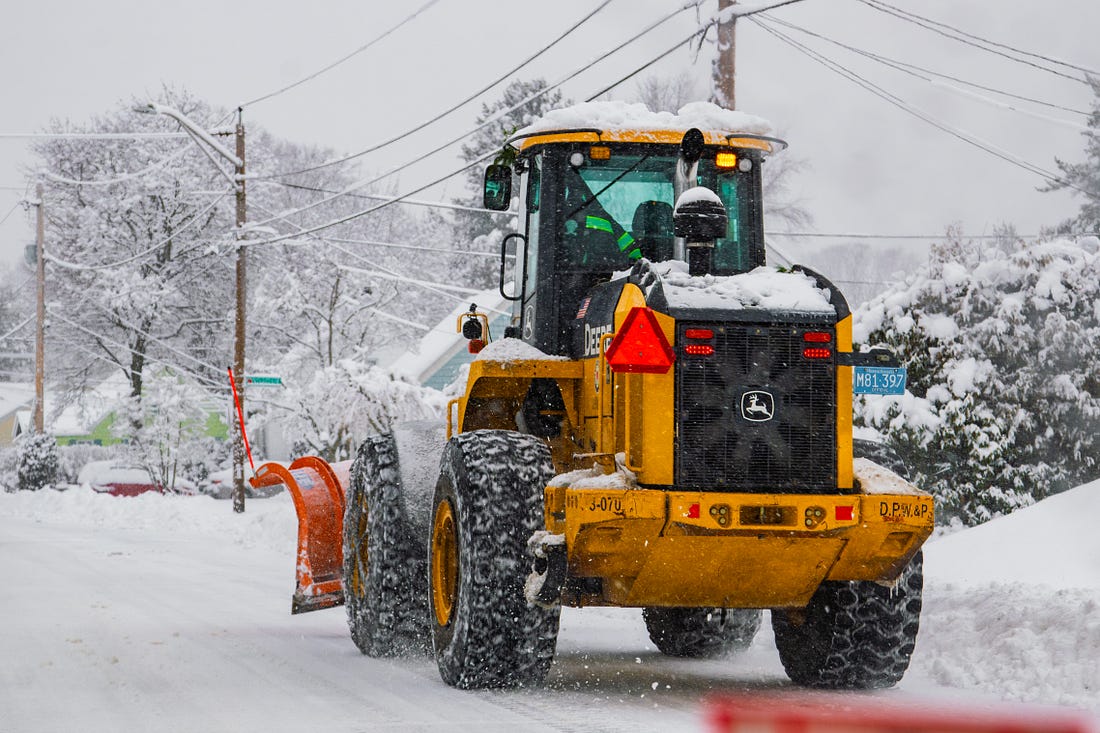
Training programs are being expanded so employees can operate different types of equipment, giving supervisors more flexibility during storms.
The city is also seeking new routing software that would allow supervisors to track snow removal vehicles in real time, monitor progress and identify streets that may have been missed. Drivers would receive turn-by-turn directions, particularly useful for employees unfamiliar with assigned routes. The software remains in procurement and is not yet operational.
Private contractors remain another concern. Westerling’s report recommends higher rates for plow and spreader operators to account for rising fuel, insurance and equipment costs and to attract more contractors. The department says municipal employees and equipment alone cannot handle a major storm.
The administration is also developing a public outreach campaign focused on parking regulations and winter parking bans, particularly on narrow streets where parked vehicles can obstruct snowplows and emergency responders.
In his Oct. 9 Substack newsletter, “The Buzz,” Batista said the city is working across municipal departments to improve awareness of year-round parking rules ahead of winter weather.
Despite the changes, challenges remain. Equipment deliveries could be delayed, salt costs continue to rise and winter overtime is generally voluntary unless a state of emergency is declared.
The department is also acquiring a pavement recycler that will allow crews to produce hot asphalt from reclaimed material, potentially making winter road repairs easier and less expensive.
Fall leaf collection begins Nov. 2
Before snow removal becomes a concern, Worcester residents have another seasonal chore to tackle.
The city’s fall curbside leaf collection program is scheduled to begin Monday, Nov. 2, and continue for approximately four to five weeks, weather permitting.
The program follows the city’s regular trash collection areas, although leaves won’t necessarily be picked up on residents’ normal trash collection days.
Collection begins in neighborhoods with Wednesday trash pickup, where there are fewer trees. That allows crews to get started while giving leaves in more heavily wooded neighborhoods additional time to fall.
Once Wednesday areas are completed, two crews work simultaneously. One collects leaves in Monday trash pickup neighborhoods, while the other will proceed through Friday, Thursday and finally Tuesday collection areas.
DPW is asking residents not to rake leaves into the street before their scheduled collection period. Leaf piles can block storm drains, interfere with traffic and create hazards during heavy rain. Raking leaves into the roadway outside designated collection periods also violates city ordinances.
The department plans to post signs and notify residents 24 to 48 hours before collection begins in their neighborhoods. Updates will be available through the city’s website, social media and ALERTWorcester.
There will be no collection on Veterans Day, Nov. 11, Thanksgiving Day, Nov. 26, or Friday, Nov. 27.
Residents may also bring leaves to the city’s yard waste disposal sites during operating hours without an appointment.
Safety improvements target Belmont Street, Lake Ave.
Two Worcester roadways with histories of serious crashes are receiving additional attention as the city pursues short-term improvements and longer-term redesigns.
The Department of Transportation and Mobility updates councilors on work along Belmont Street and Lake Avenue, both identified as priority corridors in Worcester’s Vision Zero Safety Action Plan because of concerns involving crashes, speeding and pedestrian safety.
Some improvements are already in place.
Along Lake Ave., flashing crosswalk signs have been installed at Bigelow Davis Parkway, also known as Hamilton Street. Two radar speed feedback signs have been installed farther south, while crosswalks and lane markings were repainted this summer.
Worcester police have also conducted targeted enforcement to address speeding and dangerous driving.
Additional pedestrian crossing signs are planned near Sherbrooke Avenue, Lake View Street and Coburn Avenue, along with more speed limit signs.
One of the larger projects involves the intersection of Lake Avenue and Bigelow Davis Parkway, where Worcester has secured $400,000 in regional transportation funding for planning and design. Engineers will evaluate options including a roundabout or a signalized intersection.
Construction is currently programmed for federal fiscal year 2030, although the city intends to explore whether the schedule can be accelerated.
On Belmont Street, improvements have included traffic signal adjustments, new school-zone markings, repainted crosswalks and a curb extension with an enhanced crossing at Rodney Street.
Additional work is planned, including a pedestrian signal at Edward Street, with construction anticipated in spring 2027. The city is also pursuing funding for improvements to the six-lane section of Belmont Street between Salisbury Street and Lake Avenue, where a new signalized pedestrian crossing is among the concepts under consideration.
Transportation officials say the city is pursuing immediate safety improvements while larger roadway projects move through planning and funding.
Worcester lays out plan to reduce waste
Worcester is also taking a longer look at what residents throw away—and how much of it could be kept out of the waste stream.
The Department of Sustainability and Resilience presents its Zero Waste Master Plan, developed with consultant Zero Waste Associates following public surveys, workshops, listening sessions and an examination of the city’s waste.
The plan identifies seven broad goals and 23 strategies intended to improve recycling, reduce food waste, address illegal dumping and expand opportunities to reuse materials.
If fully implemented over 10 years, the strategies are projected to divert approximately 40% of the city’s waste from disposal, compared with about 10% today.
Among the priorities are recovering edible food for donation, improving recycling containers, helping property owners increase recycling participation, organizing neighborhood cleanups and expanding hours at the Millbury Street residential drop-off center.
The department emphasizes that the master plan is a roadmap, not a package of projects ready for immediate implementation. Many recommendations would require additional research, funding and cooperation with businesses, community organizations and municipal departments.
In a separate update, Chief Sustainability Officer John Odell outlines the return of the Worcester Recycles Right campaign, which is being relaunched for the first time in four years.
The campaign responds to contamination in recycling bins serving residential buildings with one to six units. During October and November, city staff and volunteers plan to conduct curbside inspections in areas with high contamination rates, distribute educational materials and work with recycling contractor Casella Waste Systems to improve compliance.
The department will also update councilors on its WooBins program, which provides public trash and recycling receptacles. Worcester currently has 145 WooBins on city streets, with five more planned.
The program has collected more than 20 tons of recycling and 40 tons of trash over the past six months. According to Batista, 14 of the city’s 145 WooBin locations have experienced illegal dumping, prompting the installation of “No Dumping” signs and additional monitoring.
The same departmental update includes progress on Worcester’s integrated flood model, supported by a $900,000 state grant approved by the council in August. The project is intended to help identify areas at risk of flooding and guide future stormwater infrastructure investments.
Other highlights on the agenda
An earlier start for city council? Councilor Jose Rivera wants the city to consider moving the start of city council meetings to 5:30 p.m., with public participation taking place between 5:30 and 6:30 p.m. The proposal would change the current meeting schedule and establish a designated hour for residents to address the council. The matter was held under privilege by Council Vice Chairman Khrystian King on Oct. 6 and returns Tuesday for further consideration. Rivera’s request calls for the Standing Committee on Municipal and Legislative Operations to examine whether the change is feasible; it does not itself establish a new meeting time.
Polar Park’s community days remain underused: A report from Chief of Public Facilities James Bedard outlines the Worcester Ballpark Commission’s responsibilities and how community events are approved at Polar Park. The ballpark agreement provides for 10 community days annually, but only five events have been scheduled for 2026, according to the administration. Those include the YMCA Stand Against Racism event in April, an active shooter exercise in June, an African Diaspora Youth event in August and two upcoming events: a Veterans Day 5K in November and a wellness event in December. Event organizers must submit applications and receive commission approval before scheduling is coordinated with the Worcester Red Sox. City officials say they remain committed to making greater use of the available community days.
New bike lanes, but limited expansion in 2026: Worcester added approximately 0.9 bike-lane miles this year through the Country Club Boulevard Complete Streets project, bringing the city’s total network to 35.6 bike-lane miles. The project also included accessibility improvements, bus stop upgrades, new crosswalks and traffic-calming measures. Transportation officials note that the city measures bike lanes by direction, meaning a one-mile roadway with bicycle lanes on both sides counts as two lane-miles. Additional bike lanes are planned for Massasoit Road as part of a resurfacing project, with approximately 0.9 lane-miles expected when the first phase is completed in 2027. The city also modified existing bike lanes on Grove Street to provide additional parking and greater separation between cyclists and vehicles.
More information before budget season: City Chief Financial Officer Timothy McGourthy provides feedback on three proposed City Council rules advanced by Councilor Satya Mitra to give councilors more information and input during the annual budget process. One would require departments to submit annual performance reports with measurable goals, while another would allow council committees to recommend budget priorities by March 1. A third would call for the city manager to provide a preliminary budget report by March 15, months before the council’s final budget vote. McGourthy supports the potential value of earlier input but warns that departmental reporting could duplicate existing budget reviews and that preliminary financial estimates would remain subject to change. City Manager Eric Batista also recommends handling the proposed preliminary budget submission through the administration’s annual budget process rather than making it a formal council rule.
Who is signed up for city alerts? Worcester’s revamped ALERTWorcester notification system has enrolled 7,204 people since its relaunch in March, according to Emergency Communications and Management Commissioner Charles Goodwin. The system allows residents to choose among seven categories of notifications, including parking bans, winter weather, school announcements, road construction, trash and recycling, elections, and beach and lake advisories. City officials plan additional outreach through advertisements, public service announcements and signs at locations including Union Station and polling places. Residents can register online through the city’s ALERTWorcester page, text JoinAW to 65513 or seek assistance through Worcester 311. The report provides a six-month update on enrollment as the city prepares for winter weather and other situations requiring public notifications.
Worcester earns national recognition for welcoming immigrants: The city council receives an update on Worcester’s designation as a three-star Certified Welcoming community by Welcoming America, announced Oct. 1. Worcester became the 50th community nationally to earn certification. The recognition follows a two-year evaluation of municipal policies and community programs supporting immigrants and refugees.
“Refugees and immigrants have shaped the city for generations and by pursuing this designation I wanted to show members of those communities that they belong here and we are committed to being a city that welcomes, values, and supports them,” Batista wrote in his Oct. 9 edition of “The Buzz.“
Among the programs highlighted are the Worcester Public Library’s English-language classes and immigration legal clinics, Worcester Public Schools’ family engagement efforts and the city’s Immigrant Belonging Program. The review also recognized Worcester’s economic development efforts, awarding the city five stars in that category. City officials say the certification identifies both strengths and areas where services and policies can continue to improve.
Appointments to arts and conservation boards: City Manager Eric Batista is transmitting appointments to two municipal bodies. According to Batista’s Oct. 9 newsletter, Nayari Vera is being appointed to the Worcester Arts Council, while Chris Michelotti is being reappointed. Aashish Dhungana is being appointed to the Conservation Commission, which reviews matters involving wetlands and other protected natural resources. The appointments are listed as informational communications that do not require council confirmation.
School safety and retiree benefits: City Auditor Robert Stearns is submitting a completed school safety audit for referral to the Traffic and Parking Committee. The agenda also includes his recommendation to increase the maximum base used to calculate cost-of-living adjustments from $16,000 to $17,000 beginning July 1, 2027. That recommendation is scheduled for a roll-call vote. Stearns is also providing information about how money in the Sale of Lots and Graves fund may be used at Hope Cemetery. The materials provided do not include the findings of the school safety audit or the details of the cemetery fund review.
A longer-term look at city maintenance: DPW is seeking approval of a five-year contract with Central Square Technologies to expand Worcester’s enterprise asset management system and move its existing Lucity software to a cloud-hosted platform. The proposed system would help city departments coordinate maintenance records, work orders, inspections and costs for infrastructure and equipment. Its expanded use would cover areas including streets, sanitation, traffic signals, streetlights, the central garage and parks. Officials say the goal is to improve preventive maintenance and provide better information when deciding which infrastructure needs repairs or replacement. The request requires council authorization before the city can proceed.
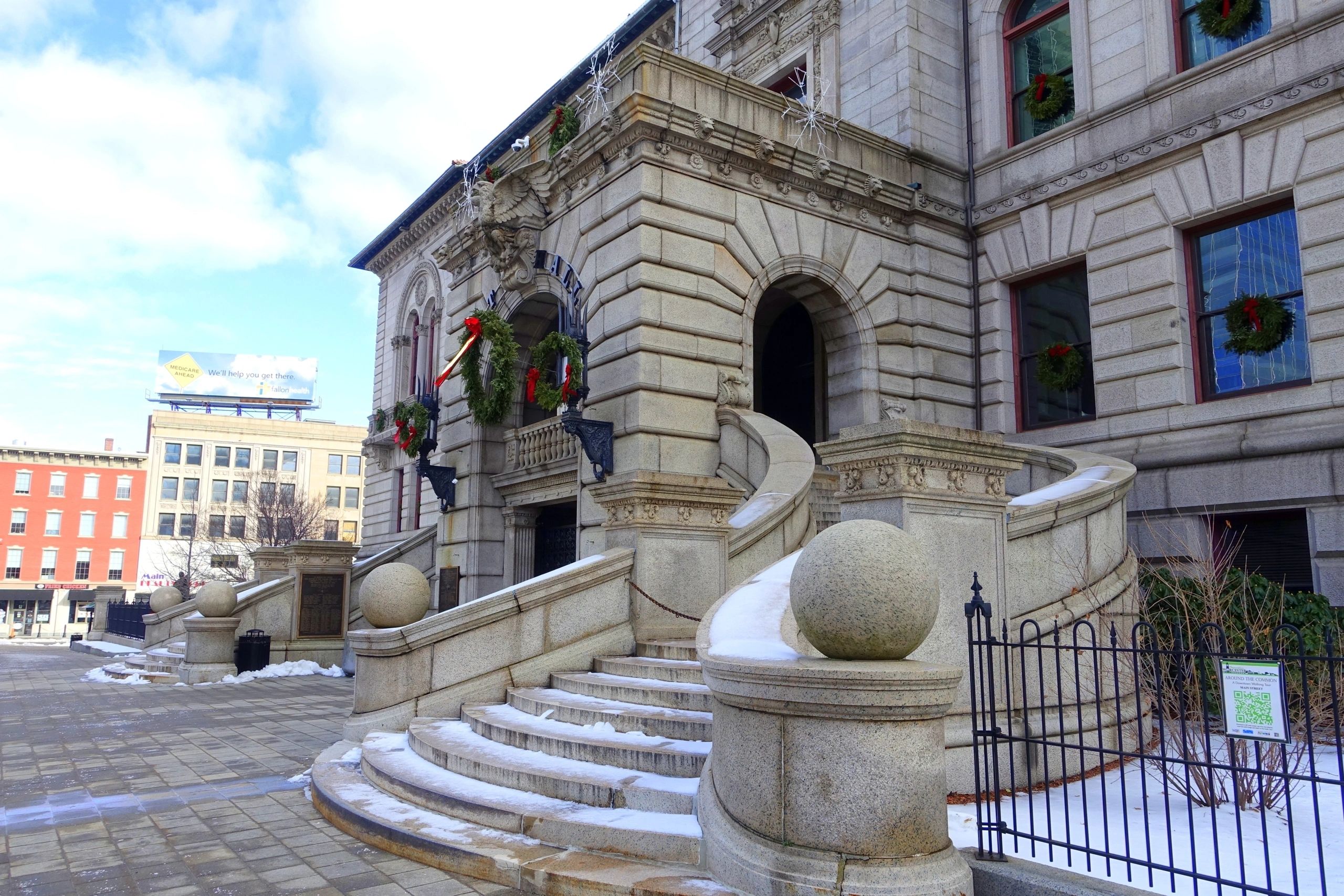
Worcester City Council meets Tuesday, Oct. 13, at 6:30 p.m. at City Hall in the Esther Howland (south) chamber. The meeting is also livestreamed on the city’s website.
Charlene Arsenault can be reached at carsenault@theworcesterguardian.org
