
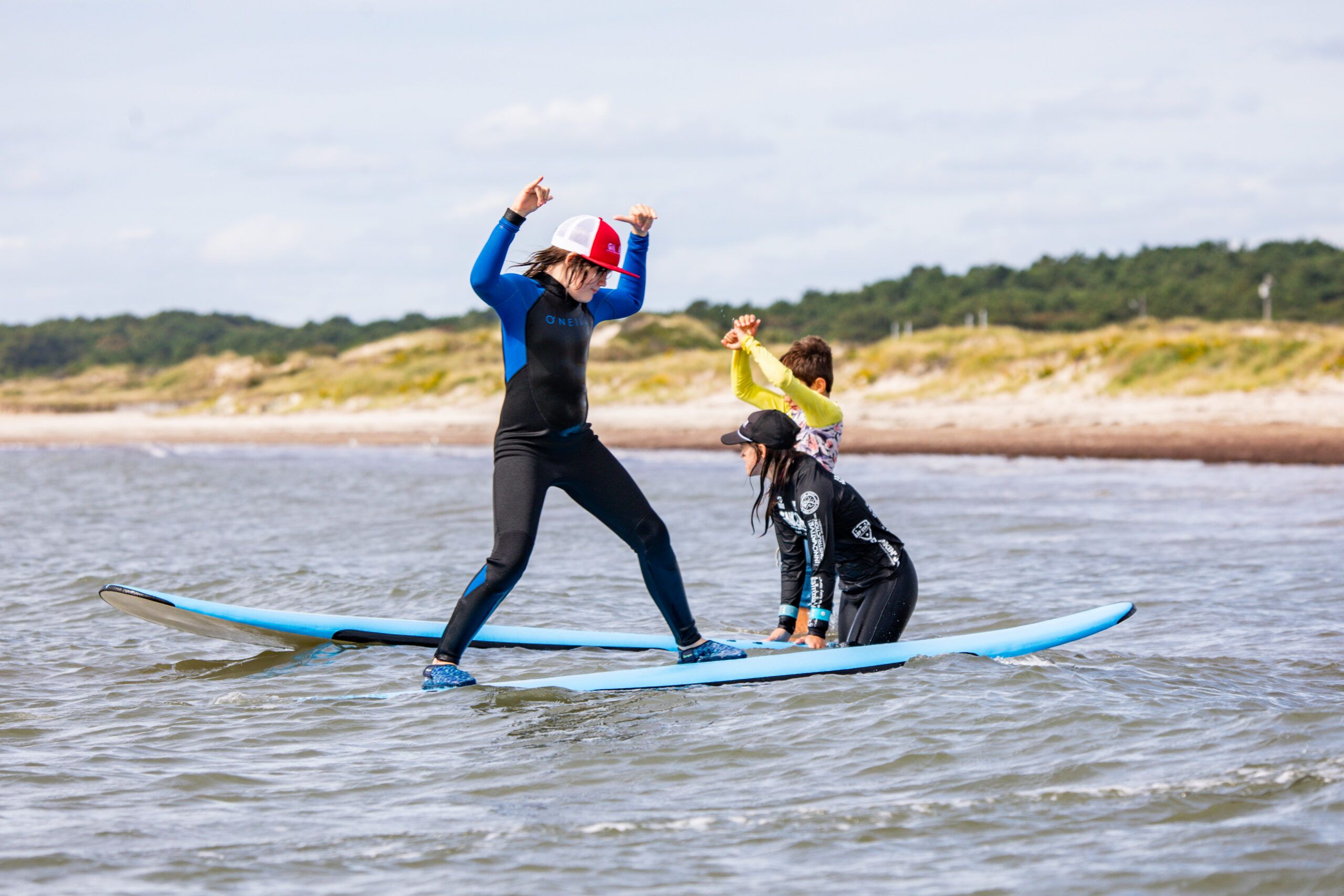
For a long time, when Oliver “Ollie” Charest needed help, he raised his hand.
The Sutton boy couldn’t always find the words to explain what he needed. While other children called out to coaches or adults during sports and group activities, Charest would stand quietly, waving and waiting for someone to notice.
Sometimes, no one did.
“I would stand there and watch my little boy wave his hand, waiting for someone to notice him,” his mother, Candice Edwards, told the Worcester Guardian. “Sometimes he would keep waving. And keep waiting.”
Eventually, she said, he’d quietly pull his hand back down. Frustration or anxiety might follow, but the adults around him hadn’t necessarily seen what came first: a child trying to ask for help.
“I started to feel like I was watching my child become invisible,” Edwards said.
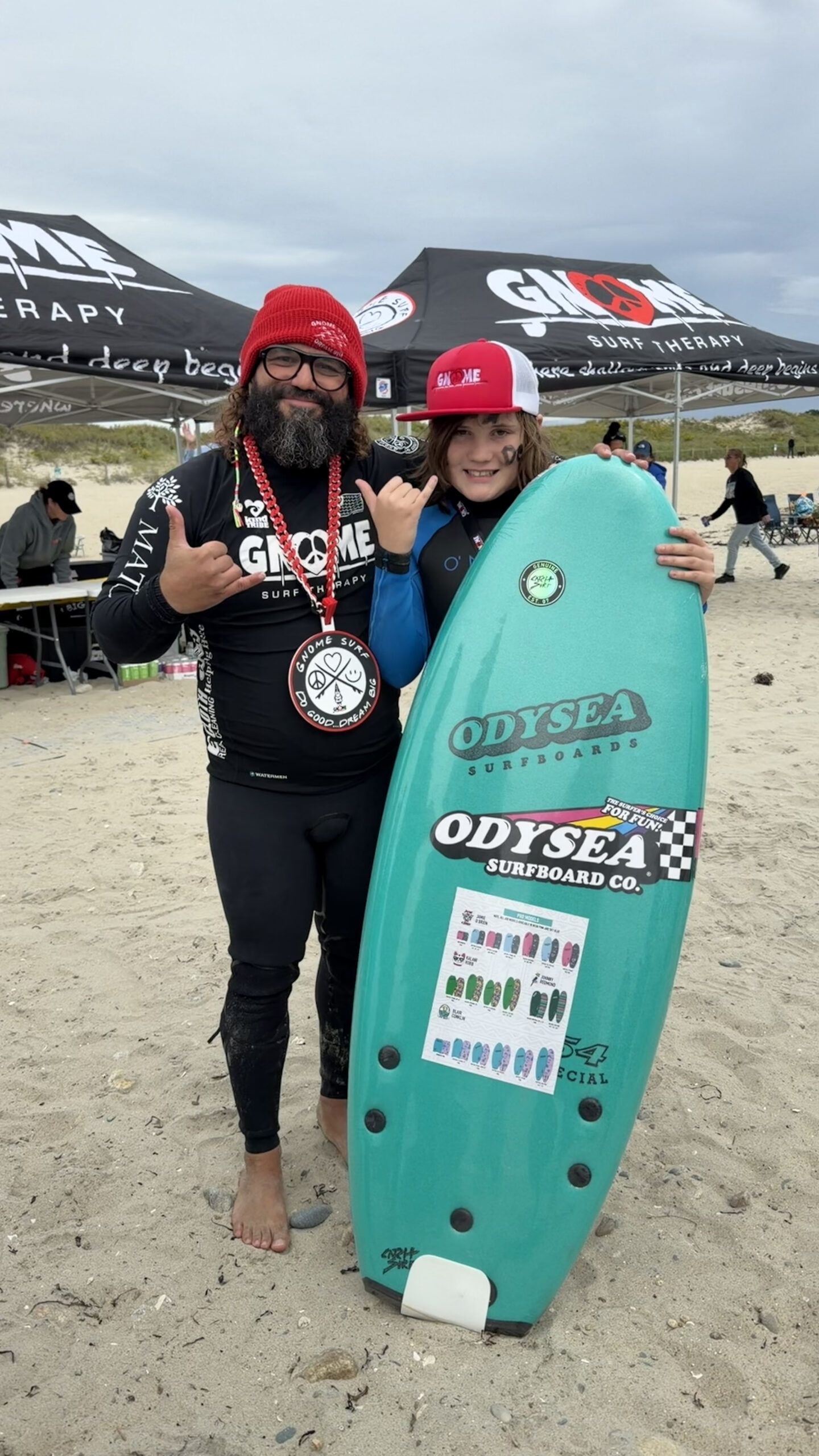
Five surfing seasons later, Charest, now 11, stood before a cheering crowd at Horseneck Beach in Westport, holding a surfboard he had won as the overall champion of Gnome Surf Therapy’s fourth annual Little Legends Wave Fest.
He had finished first in his division and earned the highest overall score of the Oct. 4 competition, which brings together young surfers with a wide range of abilities and support needs.
But for his mother, the championship represented something much bigger than a trophy or a score.
It was the culmination of years spent watching her son find confidence, friendship and a sense of belonging in a place she never expected to find them: the ocean.
Finding a way through
Charest has autism, attention-deficit/hyperactivity disorder, anxiety and post-traumatic stress disorder. His mother said his early childhood was marked by challenges that became especially difficult beginning in 2020.
That same year, Edwards was diagnosed with breast cancer. The COVID-19 pandemic disrupted routines and isolated families, and Charest was also struggling at school. His anxiety became so severe that he sometimes experienced panic attacks and would throw up. Communication difficulties made it hard for him to explain what was troubling him.
“I could see that my child was struggling, but he didn’t always have the language to tell me what was wrong, what had happened, what he was afraid of, or what he needed from me,” Edwards said.
While undergoing treatment for cancer, she was also searching for something that might bring happiness back into her son’s life.
Traditional sports and group activities hadn’t provided the experience she hoped for. Charest wanted to participate, she said, but often struggled to communicate his needs in around people who weren’t equipped to pick up on them.
Then, in 2022, three different people mentioned Gnome Surf Therapy to her within about a week.
The Massachusetts nonprofit offers adaptive surfing programs designed for neurodivergent children and people with disabilities, along with other participants who benefit from individualized support.
Charest had always loved water and the outdoors. His mother signed him up for one of Gnome Surf’s Happy Camps, introductory experiences offered at no cost, with donations welcomed from families who are able to contribute.
They arrived without knowing what to expect.
At Charest’s first session, Gnome Surf founder Christopher Antao approached the nervous boy and spoke directly to him.
Charest wasn’t ready to climb onto a surfboard.
Rather than insist, Antao brought out a large inflatable bodyboard and took him into the water.
From the shore, Edwards watched Antao guide her son through the waves, helping him grow comfortable with each splash.
“Chris didn’t push him, and he didn’t move on to someone else,” she recalled. “He saw him.”
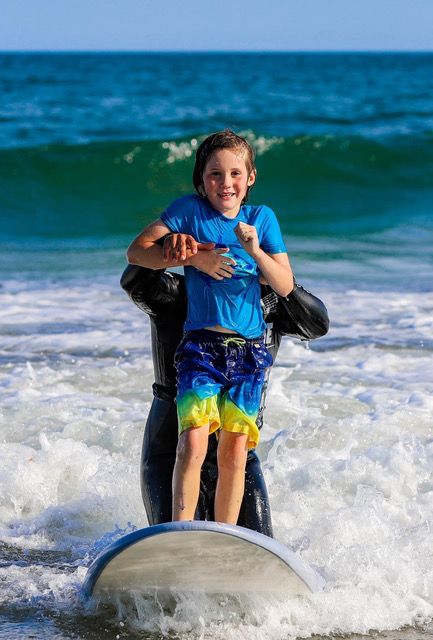
Soon, Charest was ready to try a surfboard. With Antao’s help, he caught his first wave.
When he returned to shore, he began signing a word his mother understood immediately.
More.
Then he spoke.
“More surf.”
Edwards cried.
“Because I watched that dark cloud lift,” she said.
The family kept coming back.
Learning to fall
Over the next five seasons, surfing became more than a summer activity for Charest.
He learned to balance on a board, catch waves and trust the instructors working beside him. He made friends. His mother found a community of families who understood experiences that could otherwise feel isolating.
And this year, something changed.
“This really was Charest’s season. Something clicked for him. He locked in,” Edwards said.
One of his biggest breakthroughs wasn’t learning how to stay on a surfboard.
It was learning how to fall off one.
“He learned that falling doesn’t mean you’re done,” she said. “You fall off the board, you get back up, and you try again.”
For a child whose anxiety had often made unfamiliar situations overwhelming, that realization carried significance beyond surfing. Charest began taking more chances in the water, knowing that a mistake wouldn’t end his opportunity to participate. His instructors, Edwards said, learned how he communicates and processes information, adapting their guidance to help him succeed.
Charest describes the difference simply.
“Sports are hard for me,” he told the Worcester Guardian. “I worry I’m going to do something wrong and make someone sad. Sometimes when things are too much, I have a panic attack. At Gnome, they love me for me. I feel safe. I made lots of friends. My mom did, too.”
The way his instructors teach also matters.
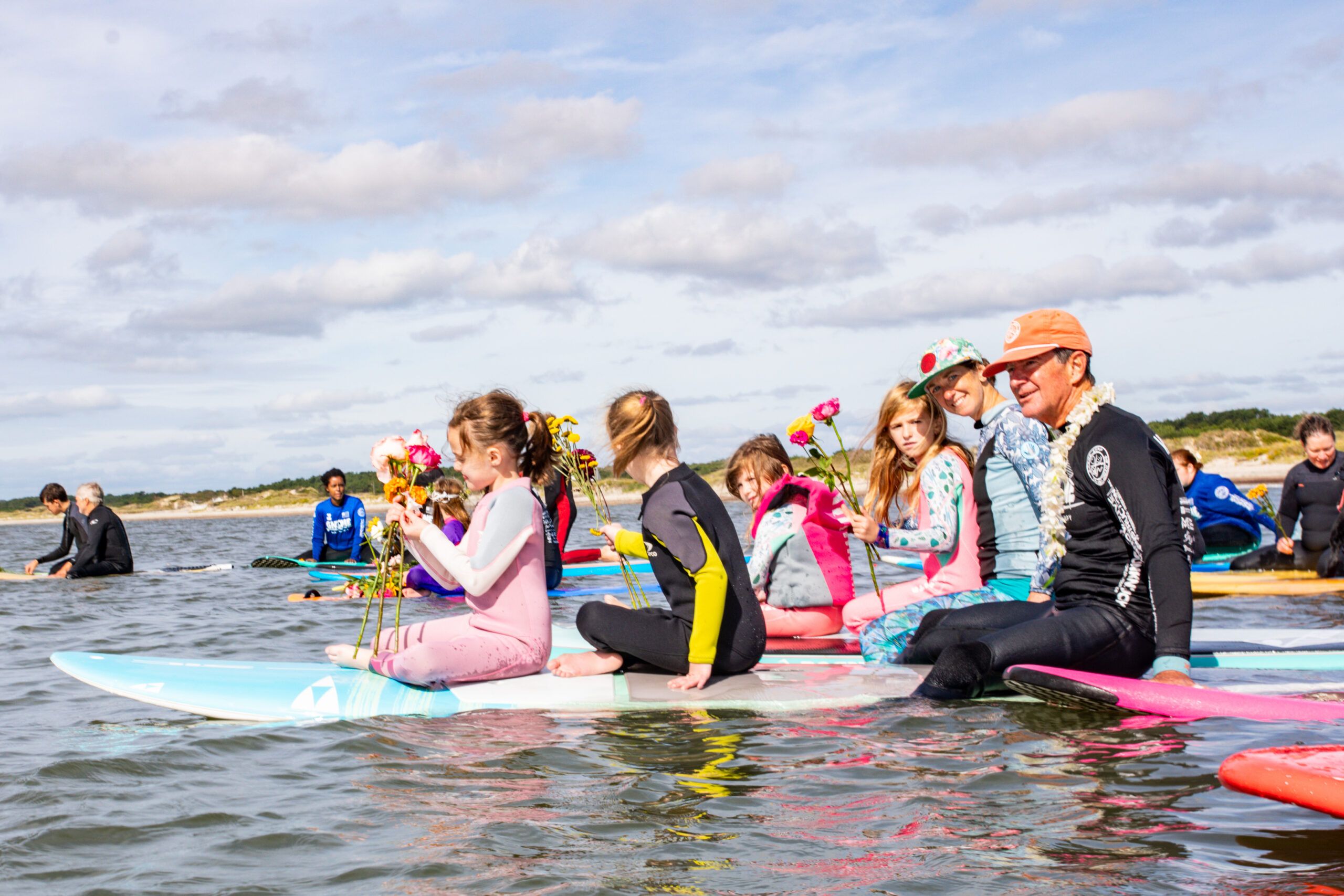
“My instructors explained surfing to me in a way my brain liked,” Charest said. “Surfing helps me with my anxiety. It calms my brain and my body. Catching a wave is the happiest feeling in my body. I wish I could stay on the wave forever.”
A champion among champions
On Oct. 4, Charest joined other young athletes at Horseneck Beach for Little Legends Wave Fest, an inclusive surfing competition that Gnome Surf describes as the only event of its kind in New England.
Athletes compete in three categories, divided further by age.
In the Tandem division, surfers ride with an instructor. In the Assisted division, instructors help athletes with positioning, wave selection and entering a wave before the athletes complete the ride themselves. Freestyle competitors surf independently.
Charest competed in the Assisted 10-and-older division.
According to Edwards, judges scored athletes’ waves and averaged their five highest-scoring rides, considering not only surfing technique but also style, courage, enthusiasm and enjoyment.
The competition celebrates individual achievement across different abilities and levels of assistance. Every participant receives a medal and certificate.
When Charest’s name was announced as the first-place finisher in his division, he was pleased but didn’t entirely understand what the ranking meant.
The crowd was large, and walking to the front felt overwhelming. He reached for his mother and asked her to accompany him.
She did.
Then Antao announced that the competition’s overall champion would be named.
A surfboard stood nearby as the grand prize. This time, Charest understood what was at stake. When his name was called, he turned toward his mother in disbelief.
“My jaw was on the floor,” Edwards recalled.
Three of Charest’s friends were nearby, cheering and encouraging him to collect his prize.
He walked forward, accepted the surfboard and carried it directly back to his mother.
She gently explained that he could return to the front and stand beside Antao while everyone celebrated.
So he did.
“He went back up with a little gentle guidance and stood there as the crowd cheered for him,” Edwards said. “You could see the joy on his face.”
She struggled to contain her tears. Charest sometimes has difficulty interpreting facial expressions, she explained, and she didn’t want her happy tears to confuse him.
“But I can say categorically that I have never felt anything quite like that moment in my life,” she said.
For Edwards, the victory was especially meaningful because she knew how much effort had gone into it.
Every wave. Every fall. Every time Charest had climbed back onto his board.
And every instructor who had helped him along the way.
More than surfing
Gnome Surf Therapy was founded by Antao, who has spoken publicly about his own experiences with undiagnosed ADHD, childhood trauma and the sense of belonging he found through surfing.
A former collegiate wrestler who later worked in business and as a firefighter, Antao built the nonprofit around adaptive instruction, emotional well-being and acceptance.
The organization serves children and families, veterans and first responders in Massachusetts and Rhode Island.
Its approach is centered on meeting participants where they are, whether that means helping a nervous child become comfortable in the water or adapting equipment and instruction for someone who requires substantial physical assistance.
For Edwards, that philosophy has changed what it means to be the parent of a child participating in an activity.
She has watched families arrive at the beach with children who use wheelchairs or need extensive support. Instructors work with them to make surfing possible, while parents who are accustomed to managing every detail can, for a little while, simply watch.
“There is this moment when you can almost see something change in their eyes,” Edwards said.
“It’s like they’re realizing, they’ve got my child. They’re safe. I can just watch.”
She remembers what it felt like to bring Charest to his first session, hoping someone might find a way to reach him. Now she sees other families experiencing that same relief.
“The therapy may happen in the ocean, but the ripple reaches the entire family,” she said.
And the boy who once struggled to get an adult’s attention has developed a new ambition. When he turns 12, Charest wants to become a junior instructor at Gnome Surf. He wants to be the person who helps another kid onto a board, encourages them if they fall and makes sure they know someone’s paying attention.
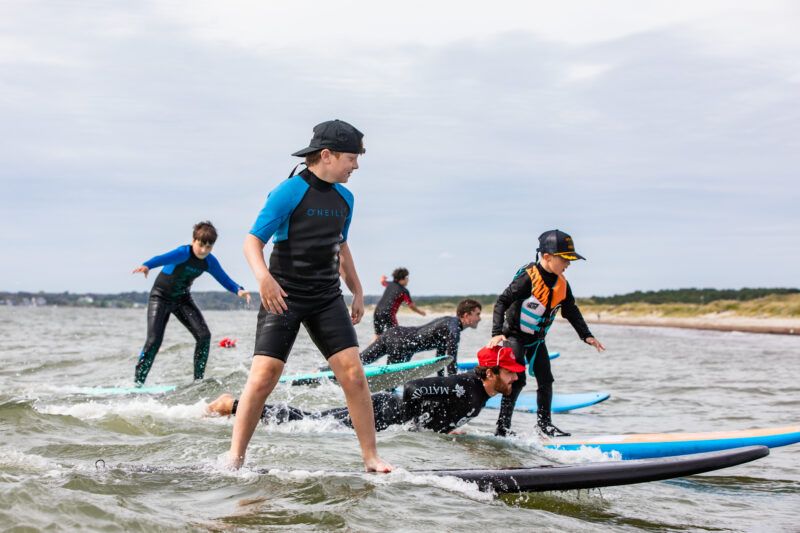
“I want to join the team that helped me and help other kids,” Charest said. “If you get stuck or fall, don’t worry—I’ll help you. I want other kids to feel the stoke too.”
For his mother, the transformation is difficult to put into words.
Five seasons ago, she brought a frightened little boy to the beach, hoping someone could help him find his way.
This October, she watched that same boy become a surfing champion.
And now, he wants to help someone else catch a wave.
Have news, tips, or a story worth telling? Feedback to this story? A good recipe, a funny joke or a suggestion? Reach Editor Charlene Arsenault at carsenault@theworcesterguardian.org—because good stories (and great scoops) deserve to be shared.
- The Worcester Guardian is an independent nonprofit news organization. Support local journalism by making a DONATION today.