
The Worcester Human Rights Commission revisited longstanding questions about police accountability and civilian oversight during its Oct. 26 meeting, taking a closer look at the city’s procedures for handling misconduct complaints and discussing whether investigations should be more independent of city administration.
The meeting included a presentation from Chief Equity Officer Kevin Lovaincy on Worcester’s existing police accountability procedures, a historical overview from retired Massachusetts Appeals Court Justice Mel Greenberg and discussion about the commission’s limited investigative authority.
Commissioners also agreed to review several Worcester Police Department policies and a proposed ordinance concerning homelessness and encampments, while raising questions about public access to records and the commission’s ability to influence city policy.
Commission’s history offers context for current debate
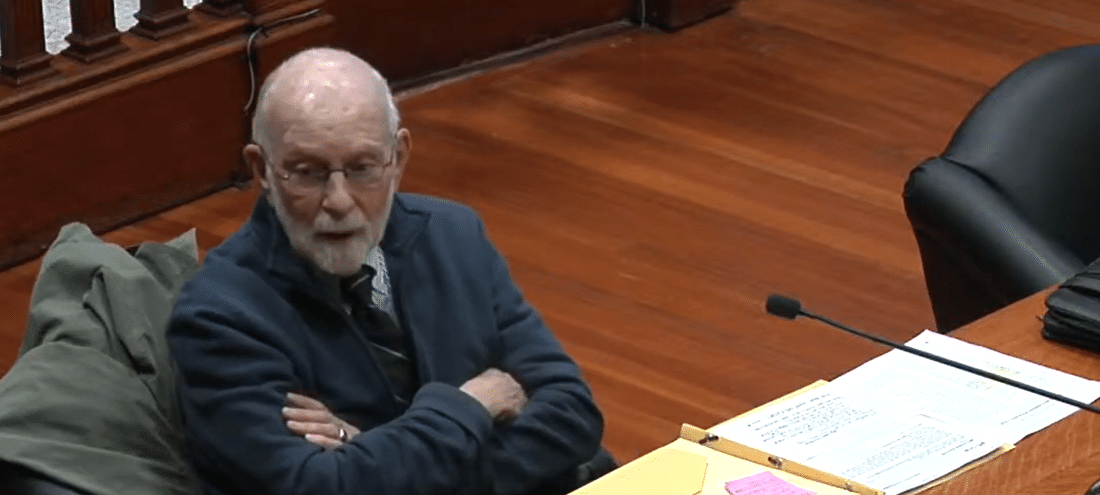
Greenberg, who served on the Massachusetts Appeals Court from 1983 to 2007, described the Human Rights Commission’s origins during the early 1970s, a period marked by racial tensions, civil rights activism and strained relationships between police and some Worcester residents.
According to Greenberg, incidents involving police and members of the city’s African American community contributed to demands for an independent body capable of investigating discrimination and civil rights complaints. The commission was initially granted subpoena authority, he said, allowing it to compel testimony and obtain evidence during investigations.
That authority faced a legal challenge from the Worcester Police Department, which questioned whether the city could grant such powers under Massachusetts’ Home Rule Amendment. Greenberg recalled that the Massachusetts Supreme Judicial Court ultimately upheld the commission’s authority.
Despite those disagreements, Greenberg said the commission sought to resolve complaints through mediation whenever possible, limiting formal hearings and reducing confrontation with police.
“One of the things that we avoided, and I hope you you’ve been able to avoid it so far, is that we use terms like ‘oversight’ or ‘police review board,’” Greenberg said. “Those terms raise the hackles of the police department. They don’t like to be overseen.”
Greenberg also discussed changes to the commission’s subpoena authority around the early 1980s. According to his recollection, subsequent modifications required approval from the city solicitor and city manager before subpoenas could be issued, reducing the commission’s independence.
His remarks prompted questions about whether the commission’s current authority is sufficient to fulfill its responsibilities and maintain public confidence.
City examines police oversight models
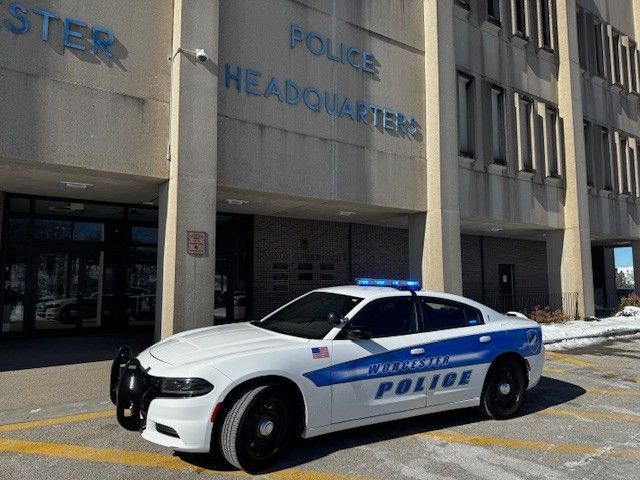
Lovaincy outlined Worcester’s existing police accountability system and discussed research identifying different approaches to civilian oversight.
The presentation drew on work from the Worcester Regional Research Bureau, which examined four models used to evaluate police conduct and departmental accountability.
“I always want to say ‘thank you’ to the research bureau team,” Lovaincy said. “Just being able to collaborate with them, a lot of their recommendations, a lot of the studies that they did, we did build upon that. They provided some great insight. It’s also a good checks and balance to see internally what we currently don’t have and what are some practices that other municipalities have that we can build on.”
The investigatory model uses independent professional investigators to examine complaints involving police conduct, while the review model evaluates completed investigations for thoroughness, fairness and accuracy. An audit or monitor model focuses on departmental policies and practices, examining broader patterns and potential systemic concerns. The hybrid model combines aspects of the other approaches, allowing investigators to examine complaints, review completed cases and conduct broader policy audits.
Lovaincy explained that Worcester currently incorporates elements of civilian investigation and policy review through its Executive Office of Diversity, Equity and Inclusion, although it does not have a separate civilian review board with independent subpoena powers.
Current system divides investigative responsibilities
Under Worcester’s existing system, police misconduct complaints generally follow one of two investigative paths.
Allegations involving discrimination, bias, sexual harassment or other protected-class concerns are handled by investigators within the Executive Office of Diversity, Equity and Inclusion.
Complaints involving other forms of police misconduct or violations of departmental procedures are generally investigated internally by the Worcester Police Department’s Bureau of Professional Standards.
Lovaincy explained that investigators within his office use trauma-informed practices and coordinate with police officials when appropriate. Although the equity office operates outside the police department’s command structure, it remains within city administration and lacks independent subpoena authority, meaning investigators cannot independently compel testimony from unwilling witnesses. He described the arrangement as an effort to balance civilian involvement and investigative accountability with cooperation between city departments.
He also explained that the city manager would serve as the final decision-maker if disagreements arose between his office and the police chief. According to Lovaincy, such a disagreement had not occurred.
The presentation highlighted ongoing accountability initiatives, including anti-harassment training, disability awareness programs, police promotional assessments and the department’s voluntary accreditation process involving 178 mandatory standards.
Lovaincy also discussed efforts to improve transparency by tracking recommendations and their implementation.
“Between the city manager’s office, executive office of DEI, and the police department, we try to find a transparent way to build a dashboard of recommendations,” Lovaincy said. “This dashboard shows not only the recommendations but the steps taken and their impact. Transparency is huge…We also participate in promotional oversight and police captain assessments, providing real-life situational feedback from an equity perspective to help shape leadership,” he said.
Commissioners question investigative independence
Commission Vice Chairman Randy Feldman raised concerns about whether the city’s current oversight structure provides sufficient independence, particularly when ultimate administrative authority rests with the city manager.
Feldman argued that the city manager’s responsibilities could create competing interests when investigations involve city employees, potential legal liability or allegations of misconduct. He questioned whether a system operating within city administration could provide the same level of independence as an external civilian oversight body.
The discussion addressed public perceptions of fairness, including whether residents would trust investigations conducted through offices that ultimately report to city leadership. These concerns focused on the oversight structure rather than findings of interference in any particular investigation.
Feldman also questioned the division of investigative responsibilities between the equity office and the Bureau of Professional Standards, suggesting it could limit independent examination of broader patterns of police conduct.
Commissioners raised additional concerns about access to investigative records and whether their previous policy recommendations had meaningfully influenced departmental procedures. Members also acknowledged the commission’s limited access to personnel with specialized policing expertise, which can make evaluating technical law enforcement policies more challenging.
Independent civilian review board discussed
Feldman advocated for consideration of an independent civilian review board combining investigative authority, case reviews and broader examinations of police policies.
The proposed hybrid structure could include law enforcement representatives, attorneys, social workers, city officials, minority communities and civil rights organizations, including the NAACP. Unlike the current administrative arrangement, the proposed board would possess independent subpoena authority and could retain its own legal counsel, investigators and auditors.
Feldman referenced the Massachusetts Peace Officer Standards and Training Commission, commonly known as POST, as an example of an oversight organization operating independently of individual municipal police departments.
Proponents of greater independence argued that separating investigative authority from city administration could strengthen public confidence and reduce perceived conflicts of interest. However, establishing such a body would involve questions surrounding legal authority, funding, staffing, confidentiality requirements and collective bargaining agreements.
No vote was taken to establish a civilian review board or formally advance changes to the commission’s subpoena powers.
Police policies and transparency addressed
Commissioners agreed to review three WPD policies and a proposed ordinance concerning homelessness and encampments.
Commissioner Anahit Marutyan volunteered to examine emergency mental health procedures, while the Rev. Jonathan Slavinskas agreed to review policies governing police interactions with transgender and gender-nonconforming individuals. Feldman and Commissioner Bernard Reese will jointly review the department’s updated body-worn camera policy. Commission Clerk Kerry Whiterell, Marutyan and Slavinskas agreed to pore over the proposed homelessness and camping ordinance.
Members plan to evaluate the policies from a human rights perspective, considering their background, potential concerns, established practices and possible recommendations. Commissioners acknowledged that their recommendations are advisory and may not be incorporated into final city policies.
The commission also discussed public access to correspondence concerning police oversight, including a letter from the commission to City Manager Eric Batista and a separate letter from Feldman criticizing aspects of the existing accountability structure.
Members questioned restrictions on attaching supporting documents to meeting agendas and minutes, emphasizing the importance of making materials available to residents.
Commissioners unanimously approved a motion to attach both letters to the meeting minutes, making them part of the public record.
The commission’s next scheduled meeting is Nov. 23. Members are expected to continue reviewing police policies and the proposed homelessness ordinance while considering ways to strengthen the effectiveness and transparency of their recommendations.
Matt Olszewski is a freelance content and news writer who graduated with his MPH from Tufts University. He can be reached at mattoskier@gmail.com