
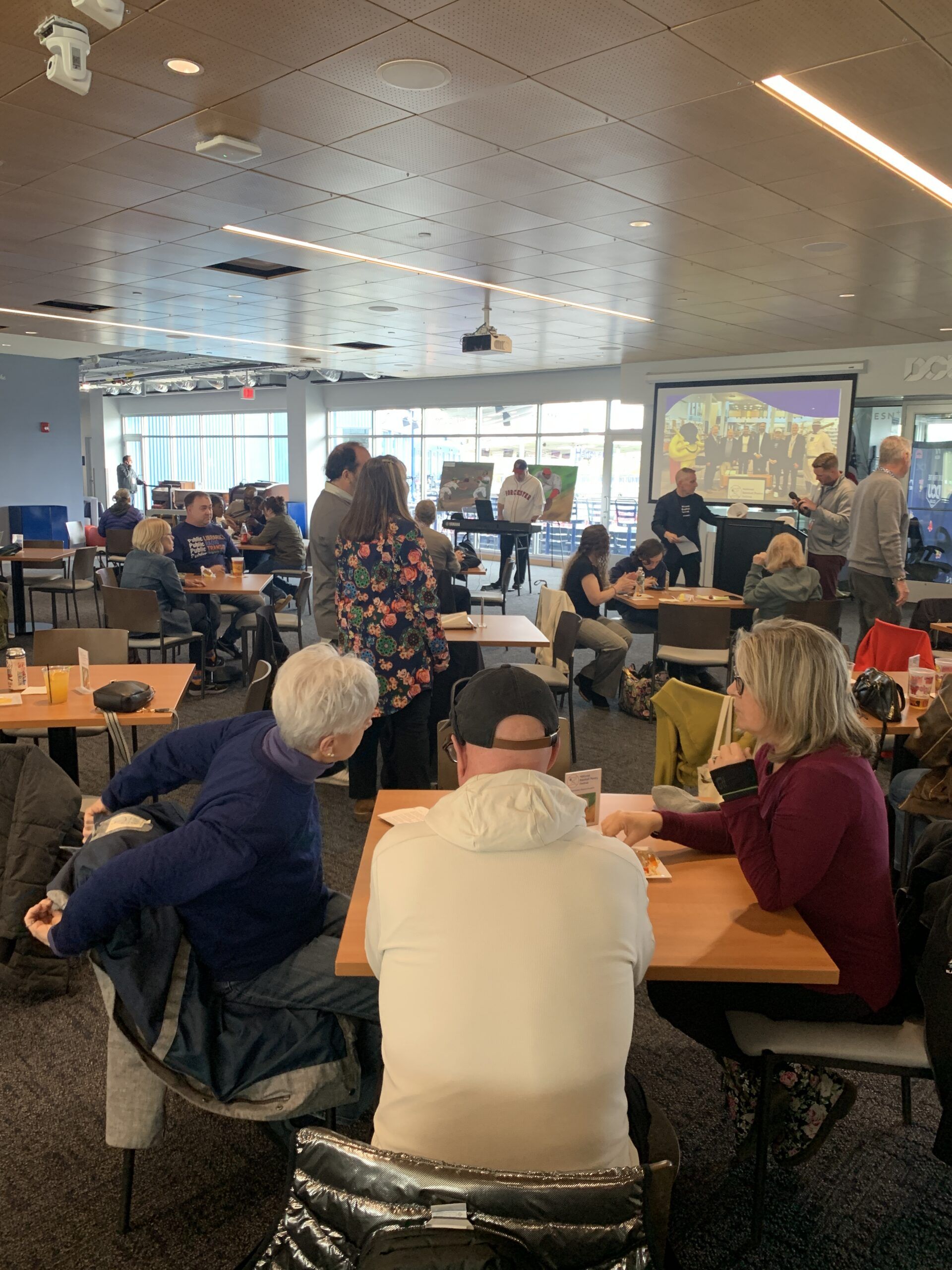
WORCESTER—Baseball is a sport in which a batter can hit a ball 415 feet to right-center and be out, or dribble one 65 feet down the third base line and be safe.
It is a game devoid of reason.
But rhyme?
That is an entirely different story, one that was on glorious display here during the weekend.
The city was the site of the annual National Baseball Poetry Festival, and why not? It is where the game’s best-known poem, and arguably the best, period, was penned by Ernest L. Thayer in 1888.
“Casey at the Bat” is full of unforgettable rhyme from beginning to end. How about, “The sneer is gone from Casey’s lip, his teeth are clenched in hate. He pounds with cruel violence his bat upon the plate.”
If only this year’s Red Sox batters felt that way when they come to bat with the bases loaded.
The festival covered three days in the city, which is on its way to becoming Worcester, D.C. when it comes to baseball poetry. This weekend’s get-together marked the fourth straight time it has been held here and headquartered at Polar Park.
The DCU Club was the site of the official welcome reception. It featured light refreshments, some introductory remarks, poetry readings, a tour of the ballpark and tickets to watch the Worcester Red Sox beat the Yankees’ Triple-A team, the Scranton-Wilkes-Barre RailRiders, 8-3.
Friday morning featured workshops then, at 1 p.m., WooSox president Dr. Charles Steinberg led a presentation on the music of baseball. Saturday’s events included a youth poetry reading in the afternoon followed by open microphone opportunities nearby.
In between those, the WooSox were supposed to play a baseball game but it was rained out.
“It is such a wonderful concept,” Steinberg said, “that Worcester is the home of the National Baseball Poetry Festival,” adding that, “poetry is verbal music.”
Karen Sharpe is an accomplished local poet who lives in Rutland but grew up in Shrewsbury. She was co-chairman of the poets committee for this year’s festival and has been on hand for all four of them.
“It has gotten a lot bigger,” she said, estimating the crowd at the DCU Club Friday afternoon as more than 100.
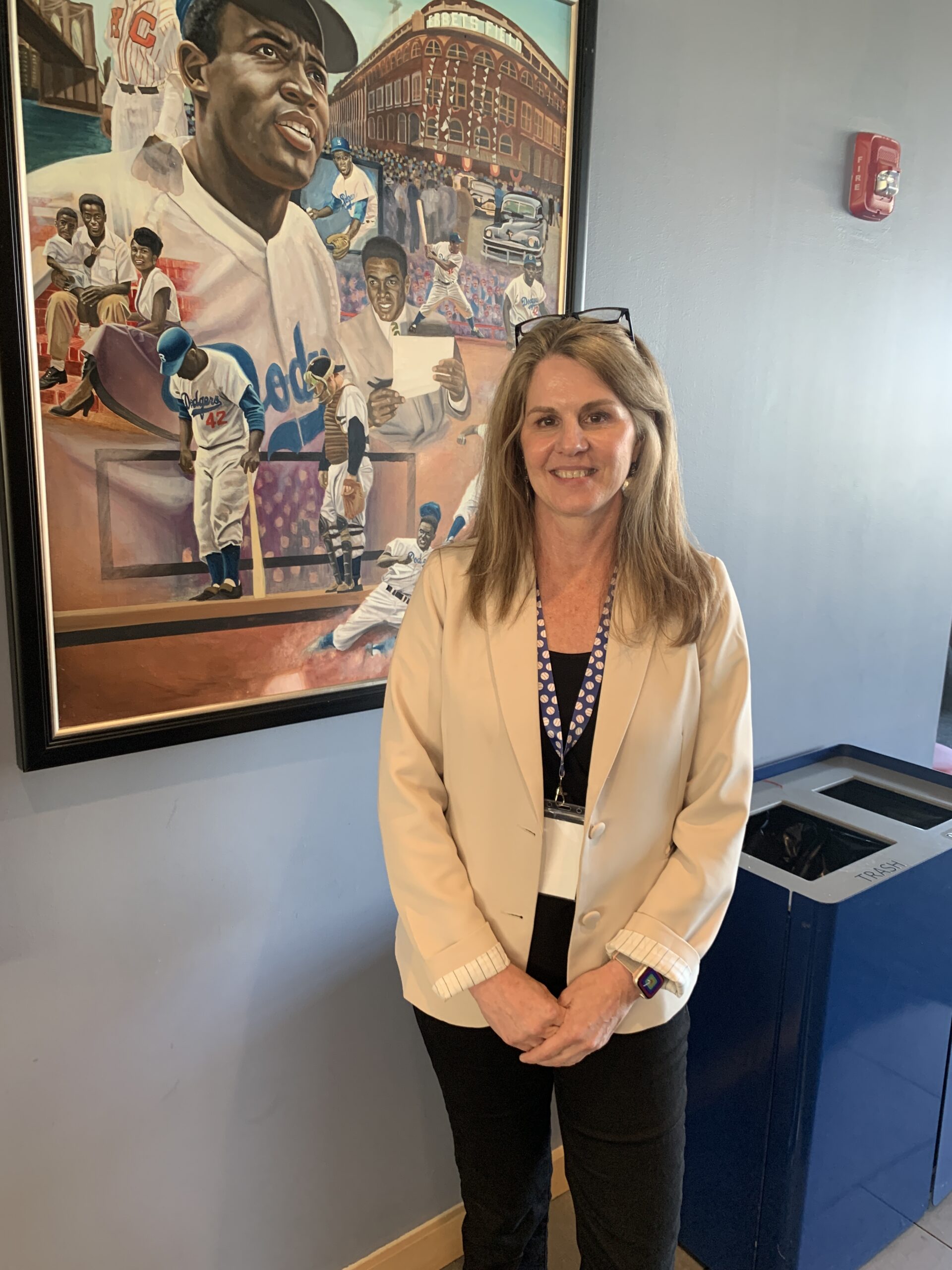
“There are dozens of people here from out of state. They’ve flown in. They’ve driven in. Someone drove in from Pennsylvania just today. People are here from Arizona, from California. We know there are a lot of people here from the northeast, from New York, Connecticut, Rhode Island.
“The adult poetry contest has entries from so many states and countries, and that has grown as well.”
The festival attracted non-poets, too. That list included local figures like Mayor Joe Petty. It had an international presence as well with a visit from the British Consul General of Boston, David Clay MBE.
“This is proof that Worcester is a city where tradition and innovation are in the same field,” Petty said. “We are honoring the national pastime through the world’s oldest art form…celebrating the storytelling DNA that defines our city and our country.”
Sharpe works as a fundraiser at Dana-Farber. She has written poetry books and has been widely published in poetry journals. She describes herself as, “Basically a regular poet, not a baseball poet in my mind..…I love to motivate people to write, and this is why I got involved.”
This part of the baseball world is, of course, partial to “Casey at the Bat”. Baseball has inspired other poems, as well, long and short.
“These are the saddest of possible words — Tinker to Evers to Chance” was written by Franklin Adams about the Chicago Cubs great double play combination of the early1900s.
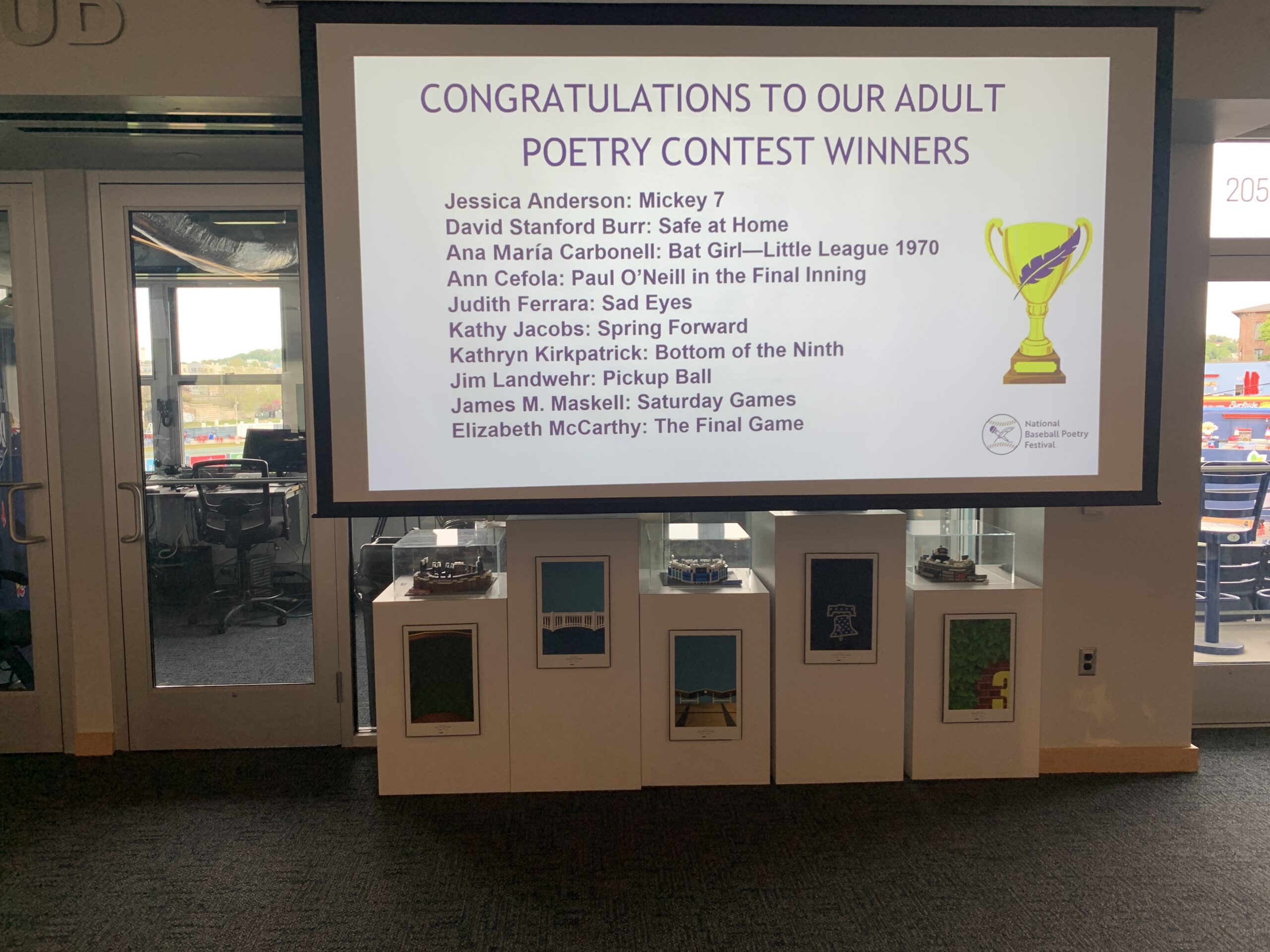
Boston Post sportswriter Gerald V. Hern wrote about the 1948 Boston Braves’ starting rotation — “First we’ll use Spahn, then we’ll use Sain, then an off day followed by rain.”
The Braves won the National League pennant that season.
There are music lyrics like Jack Norwoth’s, “Take me out to the ballgame, take me out with the crowd. Buy me some peanuts and crackjack, I don’t care if I ever get back.”
And “Centerfield” by John Fogerty.
“You got a beatup glove, a homemade bat, and a brand new pair of shoes. You know I think it’s time to give this game a ride.”
Four the fourth straight year here, the National Baseball Poetry Festival brought rhyme to a game that is often short on reason.
