
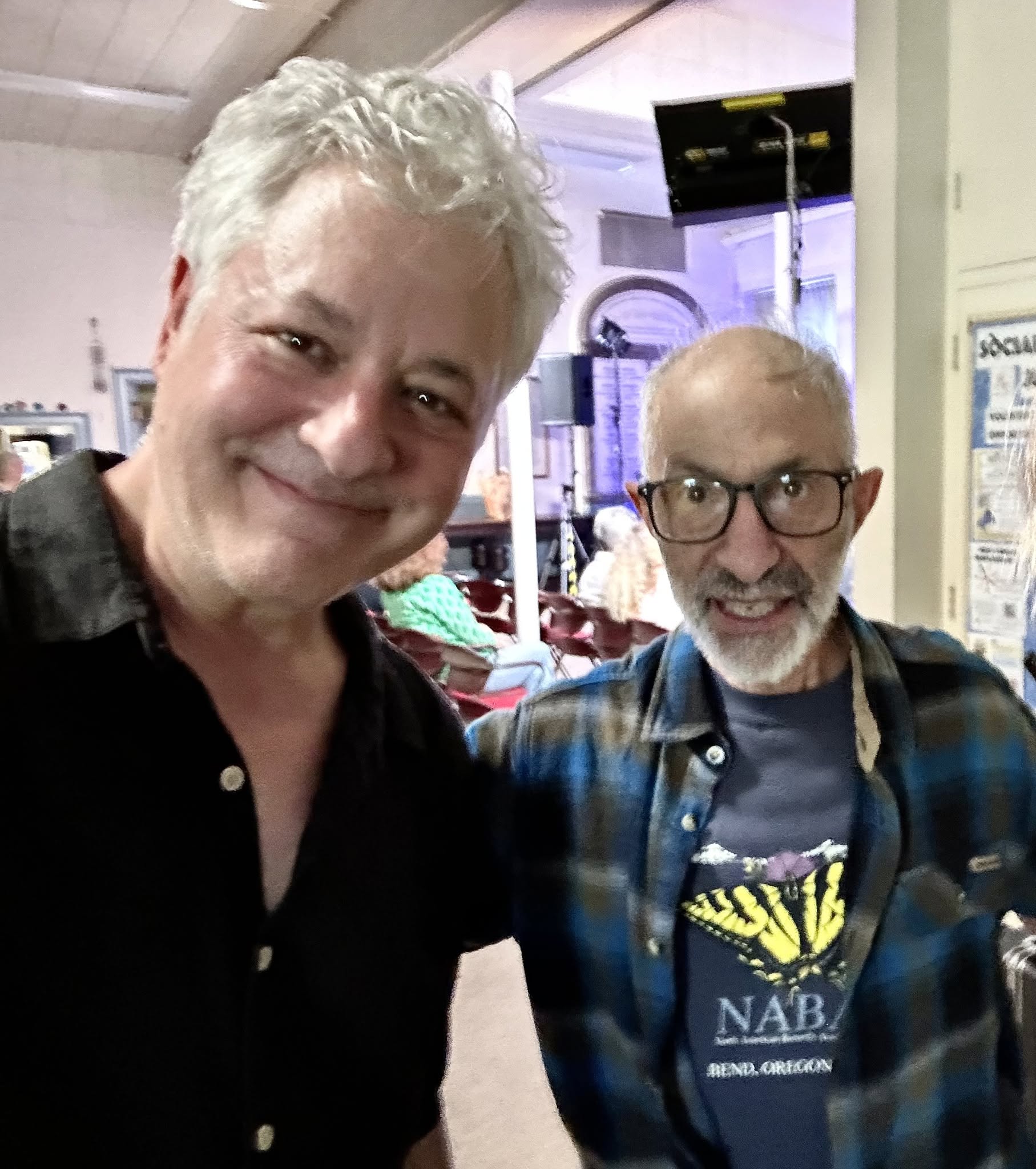
Long before Duke Levine became one of the country’s most respected guitarists, toured with Bonnie Raitt and built a career playing alongside some of music’s biggest names, he was a 14-year-old Worcester kid who couldn’t believe his luck.
Carl Kamp had offered him a job at Union Music.
“I thought I was the luckiest 14 year old when Carl Kamp asked me if I would want to work at Union Music on Main Street,” Levine recalled in a tribute following Kamp’s death.
Nearly half a century later, Levine still owns a Martin 000-28 guitar that Kamp allowed him to special order through the store. He plays it at home and on the road. Recently, Levine wrote, he used that same guitar to play “Dimming Of The Day” with Raitt.
“That guitar is my tribute/connection to Carl, and I always think of him and my time at the store when I play it,” Levine wrote.
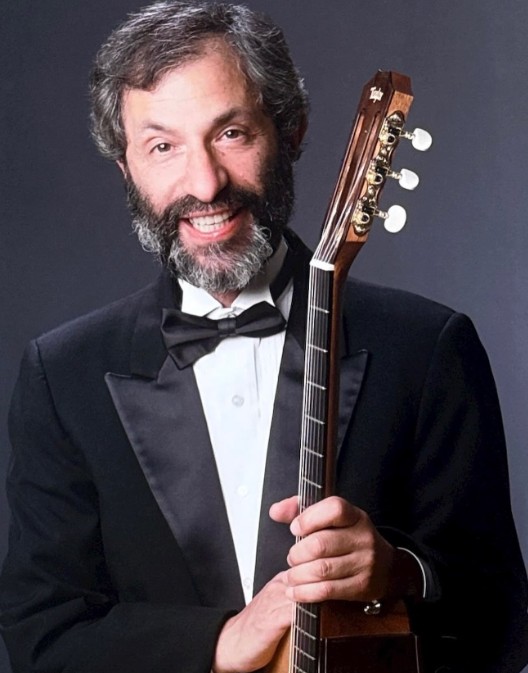
Kamp, the longtime owner of Union Music whose influence stretched across generations of Worcester musicians, died Aug. 12 at Oasis at Dodge Park in Worcester following a long battle with Alzheimer’s disease, according to his obituary. He was 80.
His death prompted an outpouring of memories from musicians, former employees and others who encountered Kamp during a lifetime that revolved around music but wandered happily into plenty of other territory, too: birds and butterflies, mountains and Morris dancing among them.
Union Music, which Kamp built from a family business into a Worcester musical institution, remembered its founder as a man whose first guitar changed his own life—and who spent much of the rest of it helping other people discover what an instrument might do for theirs.
Kamp was 9 when his grandfather, who had founded Union Loan Company more than a century ago, gave him his first guitar. Kamp became involved in the family pawnshop at an early age and eventually transformed and renamed the business Union Music.
“Carl got his very first guitar at age 9, a gift from his grandfather, and it changed the course of his life,” Union Music wrote in a remembrance posted after his death. “He turned that into a lifelong love of sharing music with others, building Union Music into a place where countless kids picked up their first instrument and countless adults found their way back to playing.”
For many Worcester musicians, Union Music became considerably more than somewhere to buy a guitar.
Musician Mike Ladd called Kamp “a giant” in the Worcester music community, remembering both a gifted classical guitarist and a businessman who helped generations of musicians find the tools to make their own music.
“Carl was always the antithesis of the outside world – he treated you as a person, not because you were a customer, or to make money, but because he was genuine and sincere,” Ladd wrote.
That quality surfaces repeatedly in the memories shared since Kamp’s death.
Journalist and musician Walter Crockett remembered him as “mild-mannered and soft-spoken” and said Kamp built a legacy encompassing musicians, musical craftsmen and virtually anyone who wanted to learn to play an instrument.
“A wonderful man, young and old,” Crockett wrote. “A legacy of musicians, musical craftsmen, anyone who wanted to play an instrument, and fair dealing.”
Kamp graduated from Worcester’s Classical High School in 1964, according to Crockett. Last year, friends and members of the music community gathered for a tribute to him at John Henry’s Hammer Coffeehouse.
‘The young kids just starting out’ mattered, too
Perhaps the clearest picture of what Union Music meant to Worcester comes from the people who worked there.
Bob Gordon worked for Kamp at Union Music from 1974 to 1982, when the store was at 556 Main St. Customers and vendors of every sort came through its doors, Gordon recalled, but Kamp’s manner rarely changed depending upon who was standing in front of him.
“Your level of expertise or fame didn’t matter,” Gordon wrote. “The young kids just starting out received the same courtesy, attention and encouragement as the ‘stars’.”
Gordon described Kamp as patient, fair, kind, gentle and encouraging.
“It was a lesson in how we should treat other people,” he wrote.
Years after their days working together, members of the Union Music crew continued gathering every year or so to reminisce. Kamp, Gordon recalled, still insisted on buying everyone dinner.
“Carl Kamp…. best boss I ever had!” Gordon wrote. “The world was a better place with him in it and I’ll miss him dearly.”
Levine’s memories stretch back just as far.
Before Kamp hired him, Levine remembered visiting Union Music with his father, who bought Levine and his sister Rachael each a Yamaha FG-75 guitar. Levine even remembers the price: $42 apiece.
He worked at the store from 1976 to 1979, a few afternoons after school and on Saturdays, alongside Kamp, Kamp’s father Leon and other longtime members of the Union Music crew.
“What an amazing time,” Levine wrote.
Kamp’s encouragement of musicians wasn’t limited to selling them instruments. His obituary described his life’s work as enhancing music in the personal lives of “countless people” across multiple generations in Worcester.
He was also an accomplished classical guitarist himself.
A life well beyond the music store
Music, however, occupied only part of Kamp’s world.
He was an avid hiker, birder, butterfly enthusiast and conservationist. He climbed Mount Kilimanjaro and traveled to the Monarch Butterfly Biosphere Reserve in Mexico.
Kamp served as president of the Massachusetts Butterfly Club, a chapter of the North American Butterfly Association, and led butterfly walks in Royalston and elsewhere in Massachusetts.
He was also a charter member of the Millers River Morris Men, a group devoted to the traditional English folk dance known as Morris dancing.
His obituary described a man who loved teaching others about both music and the natural world, doing so “quietly, patiently and with devotion.”
Union Music’s remembrance managed to capture the eclectic combination more succinctly.
“Carl loved the world around him too,” the store wrote. “He played classical guitar, chased butterflies, danced with the Morris dancers, and once climbed Kilimanjaro just to take it all in.”
‘A truly great human’
The tributes that followed Kamp’s death rarely dwell on business success or sales figures. Instead, they return again and again to patience, encouragement and kindness — and to the musicians who walked into Union Music at the beginning of their journeys.
Some of those journeys went remarkably far.
Levine’s took him from a teenage job at the Main Street store to stages around the world. Yet that Martin guitar from Union Music is still traveling with him.
“It was really special to get to gather with Carl last summer and pay tribute and see how much he was loved by so many,” Levine wrote. “A truly great human.”
Kamp was predeceased by his brother, Barton, and parents, Leon and Harriet Kamp. He is survived by his life partner, Alyce Mayo, and his family.
Memorial arrangements will be announced at a later date.
His family has asked that memorial donations be made to the Phinehas S. Newton Library in Royalston or Mount Grace Land Conservation Trust in Athol.
Union Music, meanwhile, remains in business—a legacy carrying on from a Worcester kid who received a guitar from his grandfather at age 9 and spent decades helping countless others find theirs.
