
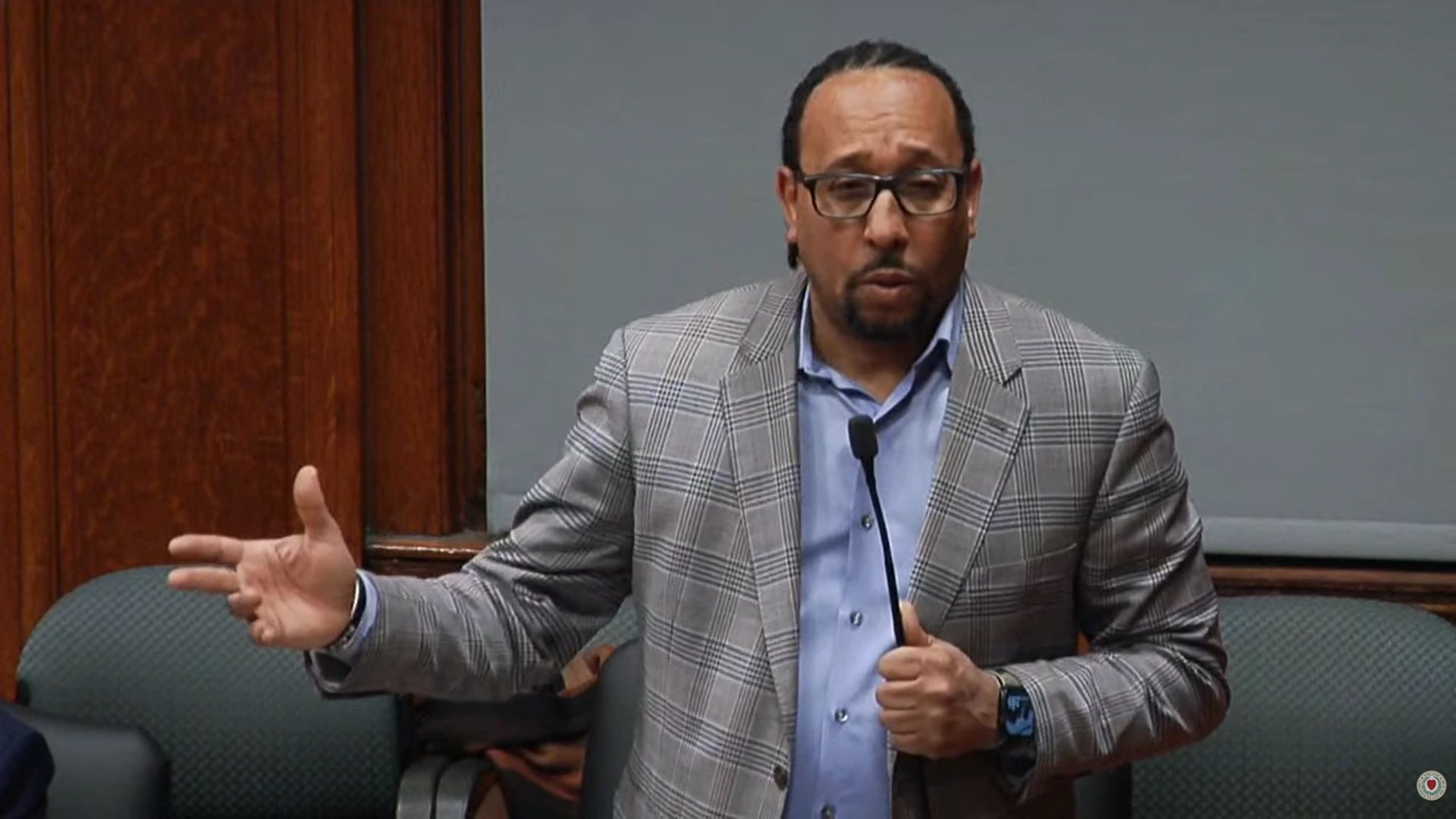
WORCESTER—After twice holding the item for further review, the Worcester City Council on Tuesday voted unanimously to advance a proposed tax increment exemption (TIE) for a redevelopment project at 401-409 Main St., clearing the way for the proposal to move to the council’s Economic Development Committee for a recommendation.
The request, submitted by City Manager Eric Batista on Jan. 13, seeks approval of a TIE that would support the rehabilitation of a historic downtown property known as the Clark Block. The local exemption would also make the project eligible for state tax credits through the Commonwealth’s Housing Development Incentive Program (HDIP).
Councilor Khrystian King, who requested that the item be held at the council’s two previous meetings, said the delay allowed time for discussions between the city, the developer — 403 Main Street Partners, LLC, part of The Mankiti Group — and other stakeholders.
The building lost office tenants during the COVID-19 pandemic and requires significant remediation, including extensive electrical upgrades. The developer has proposed converting former office space into 48 mixed-income residential units. The total cost of the project is estimated at $27 million.
Concerns about developer accountability
Concerns about the project stem from labor violations at another Mankiti development at 204 Main St., where subcontractors received five Fair Labor Standards Division citations for wage theft in September 2024 and June 2025. Mankiti paid a $5,000 fine related to the 2024 citations and said it was unaware of the subcontractor issues when its general contractor hired the firm. The company has appealed the 2025 citations, and the civil case remains ongoing.
Under the proposed agreement, the TIE would exempt 35% of the incremental increase in the property’s value annually over a 10-year period, resulting in an estimated savings of about $12,775 per residential unit. The local exemption is a prerequisite for HDIP eligibility.
King said the discussions addressed broader concerns about developer accountability.
“We certainly were able to further explain that this concern isn’t simply related to the wage theft,” King said, “but that we want responsible developers to make sure their contractors are, on a consistent basis, being responsible themselves.”
Important tool for revitalizing downtown
Councilor Robert Bilotta said tax incentives remain an important tool for revitalizing downtown Worcester.
“We want to spur development downtown, and we are doing that through tax breaks, and obviously that’s a great tool that we have,” Bilotta said. “And I think it also provides us some leverage to make sure that developers are honoring our responsible development ordinance and are taking concerns seriously.”
Several residents raised questions about whether the exemption was warranted.
“We need to make sure that companies that we give money [to] help out on their taxes, we need to make sure they are doing the right thing,” resident Fred Nathan said.
Resident Steve Hart said Mankiti did not seek tax incentives when it purchased the property and warned that approving the exemption could set a precedent.
“It’s not even a handout, it’s just money they don’t want to leave on the table,” Hart said. “It doesn’t speak well in terms of putting together 1,000 a year when any developer is going to come in and want that same deal.”
Darnell Dunn, director of business recruitment for the Worcester Regional Chamber of Commerce, said the company has consistently paid property taxes since acquiring the building in 2017 and emphasized that TIE agreements differ from traditional tax breaks.
“What you’re being asked to approve is the difference in the property’s current value and the value post-conversion,” Dunn said, “that will be phased into their assessment over a 10-year period.”
With the council’s unanimous vote, the proposal now heads to the Economic Development Committee for further review.
Contact Steve Smith at steve@stevephotographysmith.com
