
WORCESTER—With an assist from the Massachusetts Broadband Institute (MBI) and the Central Massachusetts Regional Planning Commission (CMRPC), the city recently released a digital equity report.
And what is a digital equity report, anyway? It is essentially a document that examines whether everyone in a community has equal access to digital technology and the internet. It looks at who has—or can get—computers, smartphones, high-speed internet, and digital skills training.
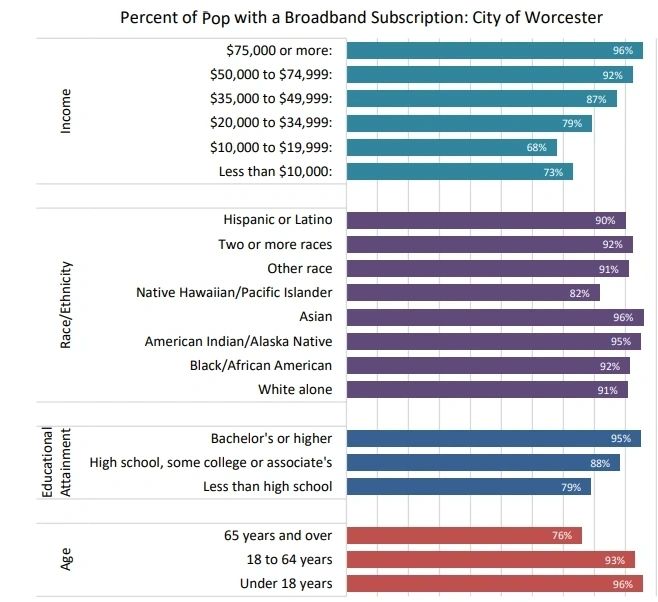
The main findings of the report indicate that while Worcester has made strides in increasing digital access and literacy, there are significant gaps, particularly as it concerns low-income neighborhoods and older adults, according to Tom Matthews, public communications administrator for the city manager’s office.
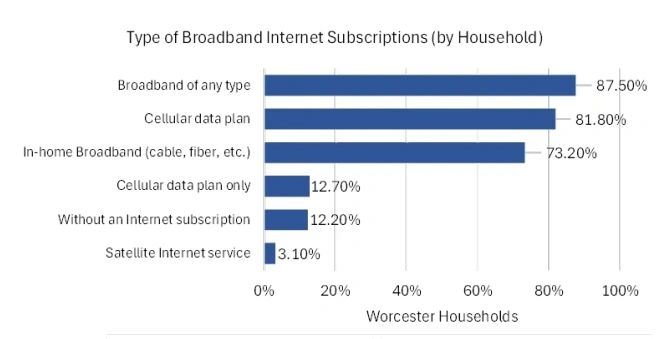
“The report states that as a city, we do not have a connection issue, with more than 99.82 percent of our households having physical access to at least one broadband internet service provider,” Matthews told the Worcester Guardian. “But connection does not equal access. The report highlights the need for more affordable broadband options, improved digital literacy programs, and better access to devices.”
The goal is to identify any gaps or barriers that prevent people from fully participating in the digital world, such as lack of affordable internet or devices, and to suggest ways to address these issues so that all individuals have the opportunity to benefit from digital resources and services.
In Fall 2023, the city applied to join the Municipal Digital Equity Planning Program through the MBI and selected the CMRPC as the consultant to lead the planning initiative.
“We are proud to have partnered with the city in completing Worcester’s Digital Equity Report,” said Janet Pierce, executive director of the Central Massachusetts Regional Planning Commission (CMRPC), said in a press release. “Through engagement with diverse city residents and community partners, we evaluated current programs to develop a comprehensive strategy with actionable directions.”
The municipality undertook a series of public workshops to engage local officials, community groups, residents, and key stakeholders about the status of digital equity in the city.
Following a four-month planning timeline that included gathering and analyzing demographic data, broadband usage data, distributing community surveys, tabling at events, resource mapping, one-on-one interviews with community leaders, and convening the Worcester Digital Equity Group, CMRPC completed its report.
The report sheds light on the community’s needs and opportunities for the city to improve digital equity initiatives. These areas include the affordability of home internet subscriptions, access to digital devices, language and age barriers to digital literacy, coordination between community organizations, and online safety.
Improvements are needed, but it’ll take a concerted effort
To address digital equity issues and improvement, it is recommended in the report that the city implement a coalition that encompasses numerous community-based organizations, many of which were identified during the charette process.
“The City of Worcester is well-positioned to implement certain digital equity programs and solutions, especially those related to infrastructure and city resources (such as the library) that are already connected to the community,” reads the report. “However, the city cannot work or solve digital equity alone.”
The report underscores the pivotal role the Worcester Public Library will play in promoting digital equity in the city, emphasizing the need for coalition building and the expansion of the library’s digital services for residents.
Recently, the library received a $100,000 implementation grant from MBI. These funds will be crucial for kickstarting the city’s digital equity initiatives, enhancing digital skills training, and expanding the device lending programs.
“The Worcester Public Library is deeply committed to advancing digital equity, said Worcester Public Library Executive Director Jason Homer in a statement. “We are excited to utilize the resources provided by MBI, thanks to CMRPC’s report, along with the expertise of our talented librarians. Our goal is to bridge the gaps in access and implement meaningful, sustainable programs that benefit those with the greatest need in our community.”
More than a dozen other organizations are named in the report as possible coalition partners, including Tech Goes Home, Quinsigamond Community College, the Worcester Housing Authority and the Latino Education Institute.
“A coalition should be more than just a group that meets to discuss community needs and provide recommendations to the city,” the report continues. “It should consist of community partners that are actively pursuing ways to improve access, affordability, and literacy. The goal of the group should be to bolster existing efforts and build clear lines of communication between organizations, creating a broad ecosystem of community assistance.”
Matthews stressed that digital equity is crucial because it affects nearly every aspect of modern life, from education and employment to healthcare and civic participation.
“Ensuring that all residents have equal access to digital resources is essential for promoting social and economic inclusion, reducing disparities, and enabling everyone to participate fully in the digital era,” he told the Guardian. “Without digital equity, communities risk leaving behind those who are most vulnerable, exacerbating existing inequalities.”
Charlene Arsenault can be reached at carsenault@theworcesterguardian.org
