
Inside classrooms better known for coding, animation and game mechanics, Clark University students spent the semester tackling a problem far removed from traditional entertainment: loneliness tied to severe mental illness.
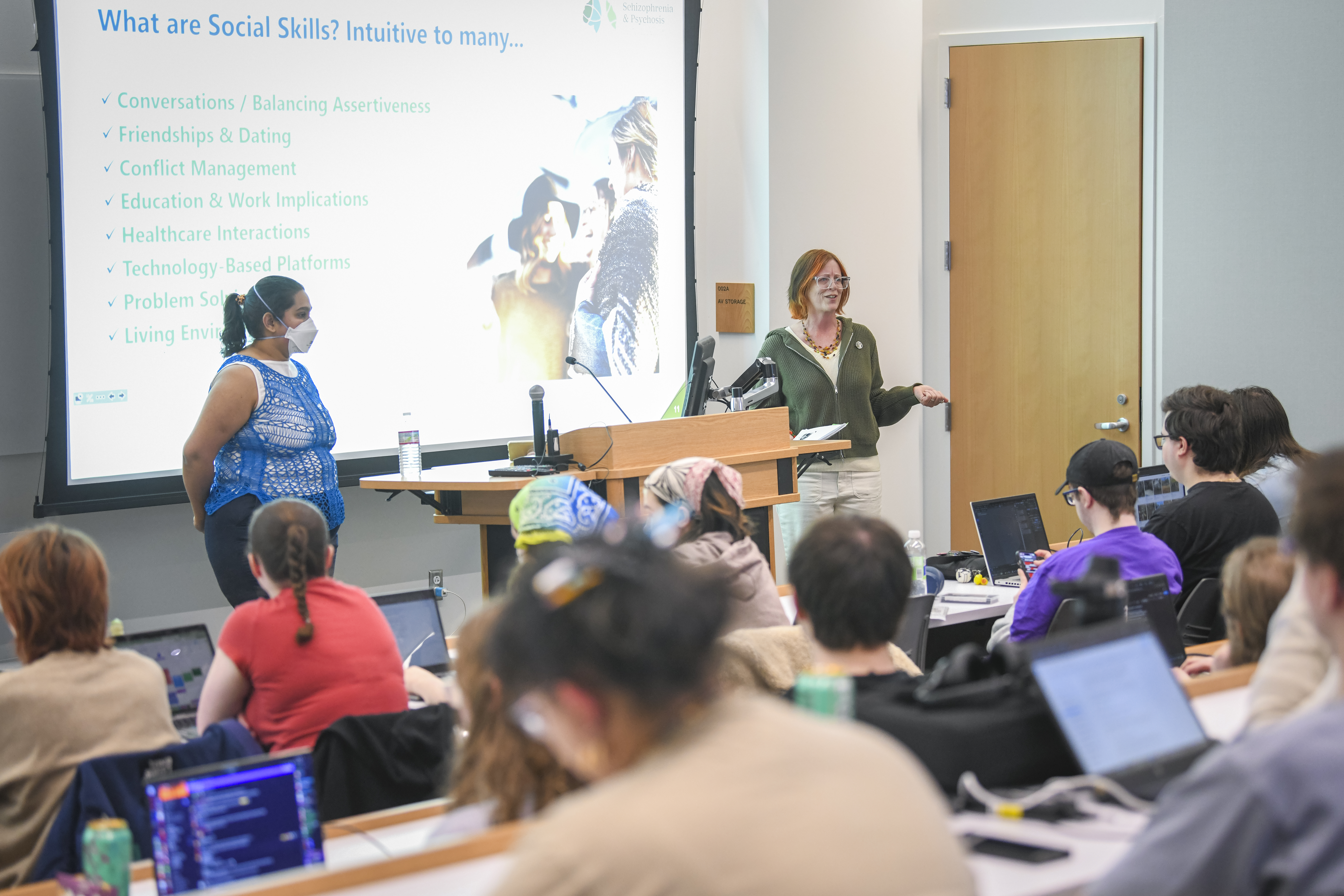
Students in Clark University’s Becker School of Design & Technology partnered with the Schizophrenia & Psychosis Action Alliance to develop video game concepts designed to reduce social isolation for people living with schizophrenia and psychosis — an effort organizers describe as the first collaboration of its kind for the Worcester university.
The project brought together roughly 80 students, who worked in teams to build prototype games focused not simply on play, but on communication, cooperation and rebuilding social confidence.
According to the Schizophrenia & Psychosis Action Alliance, the partnership reflects a broader push to explore approaches beyond traditional clinical treatment, particularly around the social fallout many people experience after diagnosis.
“A growing movement in mental health is challenging a long-standing gap in care: how to meaningfully address social isolation,” the organization said in the announcement, noting that stigma, disrupted education and employment, and a loss of social confidence can leave people disconnected from daily life and relationships.
“Through this partnership we are seeking a transitional way to rebuild social skills and form real connections—one that can help translate those gains into friendships, employment, and a path toward rebuilding and transforming daily life,” said Davy Yue, an S&PAA team member and care coordinator, in the release.
Representatives from the nonprofit worked directly with students to explore how multiplayer and cooperative games can encourage communication, collaboration, conflict resolution and role navigation — skills organizers believe can extend beyond the screen into real-world interactions.
The student teams developed and tested prototype concepts throughout the semester with feedback from faculty and the nonprofit before presenting final submissions earlier this month.
The work was led through Professor Terrasa Ulm’s Serious Game Project course, which focuses on designing games for purposes beyond entertainment.
“It was a privilege to be given the opportunity to develop a serious game that will bridge this gap in care for people who suffer from significant mental illness,” Ulm said in the announcement. “Our students embraced this opportunity to use their passion and creativity to create a meaningful and transformative experience that will improve the lives of people who suffer from these conditions.”
The project also reflects Clark’s growing national profile in “serious games” — a field that applies game design to education, healthcare, training and social challenges.
Last fall, Clark hosted its first Games for Good conference, drawing hundreds of participants to discuss topics ranging from autism-focused game design to climate awareness and inclusive gaming. The university plans to continue the conversation this fall with a symposium titled “Digital Tools to Reduce Isolation in Schizophrenia.”
“At the Becker School of Design & Technology, we see games not just as entertainment, but as powerful tools for empathy, learning, and impact,” said Paul Cotnoir, dean of the Becker School, in the release. “Last year’s inaugural Games for Good Conference, along with this coming year’s symposium, is helping to cement Clark University’s reputation as a leader in game design education focused on positive social change.”
The partnership also underscores how Worcester’s colleges and universities are increasingly positioning technology and creative fields as tools for addressing broader public health and community issues.
“Clark students applied their creativity and technical skills to one of the most urgent and human challenges in mental health—reducing isolation and helping people create social connections,” said Gary Labovich, a board member for both Clark University and the Schizophrenia & Psychosis Action Alliance, in the release.
The Becker School’s game design programs are ranked among the top 10 worldwide by The Princeton Review, according to the university.