WORCESTER—The landscape of civic engagement at colleges and universities has undergone a remarkable transformation in recent years, evolving from a niche pursuit to a prominent aspect of campus life.
From mentoring local students who have intellectual or developmental disabilities to spearheading initiatives to address food insecurity to encouraging the younger generation to get out and vote, institutions of higher education are increasingly embracing their roles as community partners. This shift is particularly evident in Worcester, where colleges and universities have emerged as hubs of civic activism and service.
Virtually every academic institution in and around the city, including Quinsigamond Community College, College of the Holy Cross, Worcester Polytechnic Institute, Worcester State University, Assumption College, offers clubs and programs dedicated to community engagement and volunteerism. Known for its progressive approach, Clark University is a longstanding leader in this realm, with a rich history of active involvement in the local community.
Libby Fontana, a Clark senior, has been dedicated to civic engagement both on campus and in the greater community. Majoring in community youth and education studies, Fontana said her journey into the world of activism and community service was fueled by her desire to make a tangible difference in the lives of others. Fontana’s path to civic engagement began early on at Clark.
“I wanted to become more engaged on campus and in the Worcester community,” she said. “I’m a Community Youth and Education Studies major, so I wanted to do something youth or outreach-focused.”
This led her to reach out to Domenica Perrone, director of community engagement and volunteering at Clark, who played a pivotal role in connecting Fontana with opportunities to serve and learn. Perrone introduced Fontana to the League of Women Voters, which marked the beginning of her journey into civic engagement.
Some of Clark’s efforts are supported through more than 35 groups that collaborate with the community, including All Kinds of Growth, which is a mentoring program that aims to cultivate pride, leadership, self-esteem, and self-expression in girls, non-binary, genderqueer, and transfemme youth ages 9-17, and Big Brothers-Big Sisters, which pairs Clark students with youth from Worcester’s main south area.
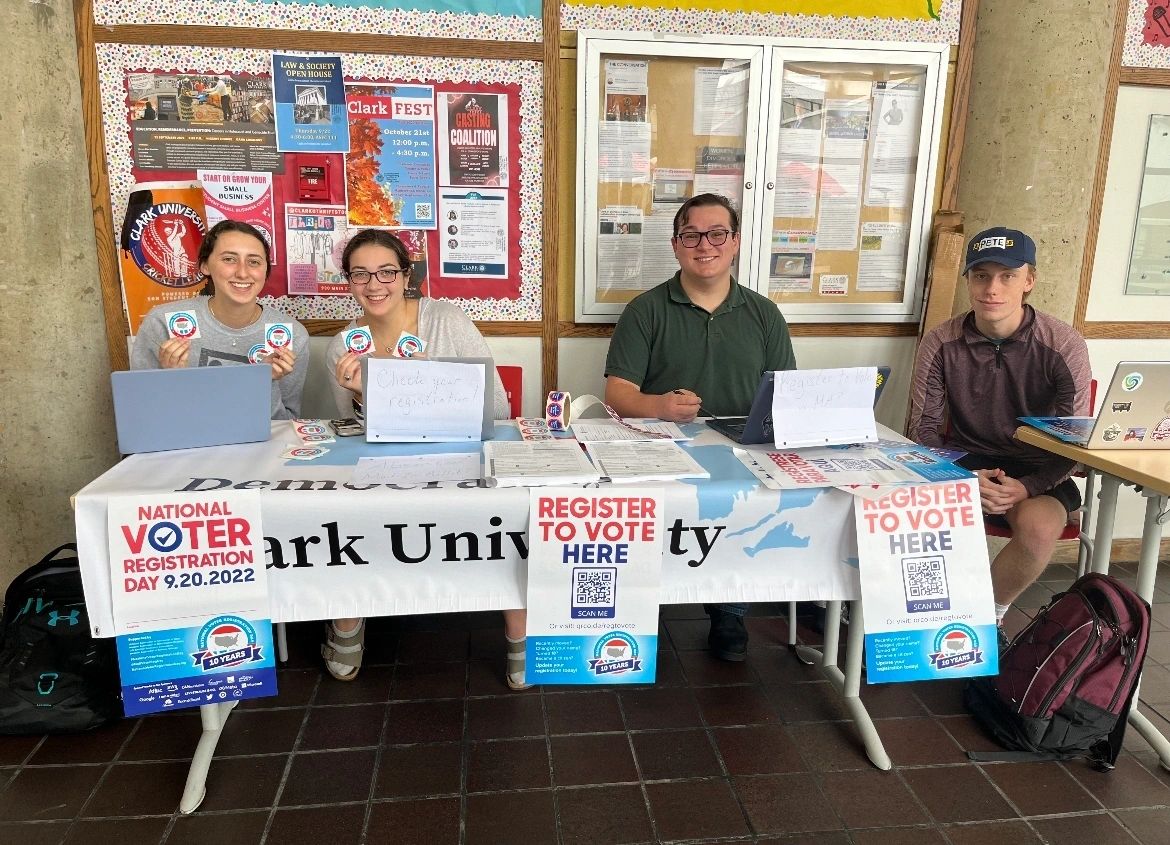
Perrone and fellow students have taken on an active role in encouraging community members, particularly the younger generations and Clark students, to not only register to vote but also to make it to the polling stations and participate in the electoral process.
“We have drop-in hours for voter registration as a part of orientation,” said Perrone. “We have a session about civic engagement and one that’s about community engagement in general in Worcester. We partner with the League of Women Voters and want to plant that seed early on for our students.” Perrone also mentioned that she and her colleagues have voter registration forms in their office and promote it as part of their weekly office hours.
Fontana formerly interned with the League of Women Voters, where she helped with the organization’s efforts to encourage community outreach across Worcester.
“They do a lot of outreach and promote voting throughout the city,” Fontana said. “They’re a nonpartisan organization and help get people registered to vote and get people active in their communities. I did social media for them and also went to events, meetings, things like that.”
This experience not only allowed Fontana to contribute to her community but also provided her with invaluable learning opportunities, she said.
“Being aware of the different opportunities around campus really helps with staying engaged,” explained Fontana. “I also think that once people have connections to these organizations around the community, it really helps make it easier to stay engaged.”
However, she also acknowledged the barriers that can hinder participation.
“I think [financial] funding is also important to incentivize people getting engaged,” she said. “Being able to do this type of work unpaid is not realistic, so that funding is critical.”
In Worcester, youth civic engagement has been supported by local leaders such as Sen. Robyn Kennedy, who said she is building on the legacy of her predecessor, former Senator Harriette Chandler.
“Ensuring we have civic education in our schools is critical and that it’s working,” Kennedy told the Worcester Guardian, “Senator Chandler was a huge champion to make sure we restored civic education into our schools and our curriculum.”
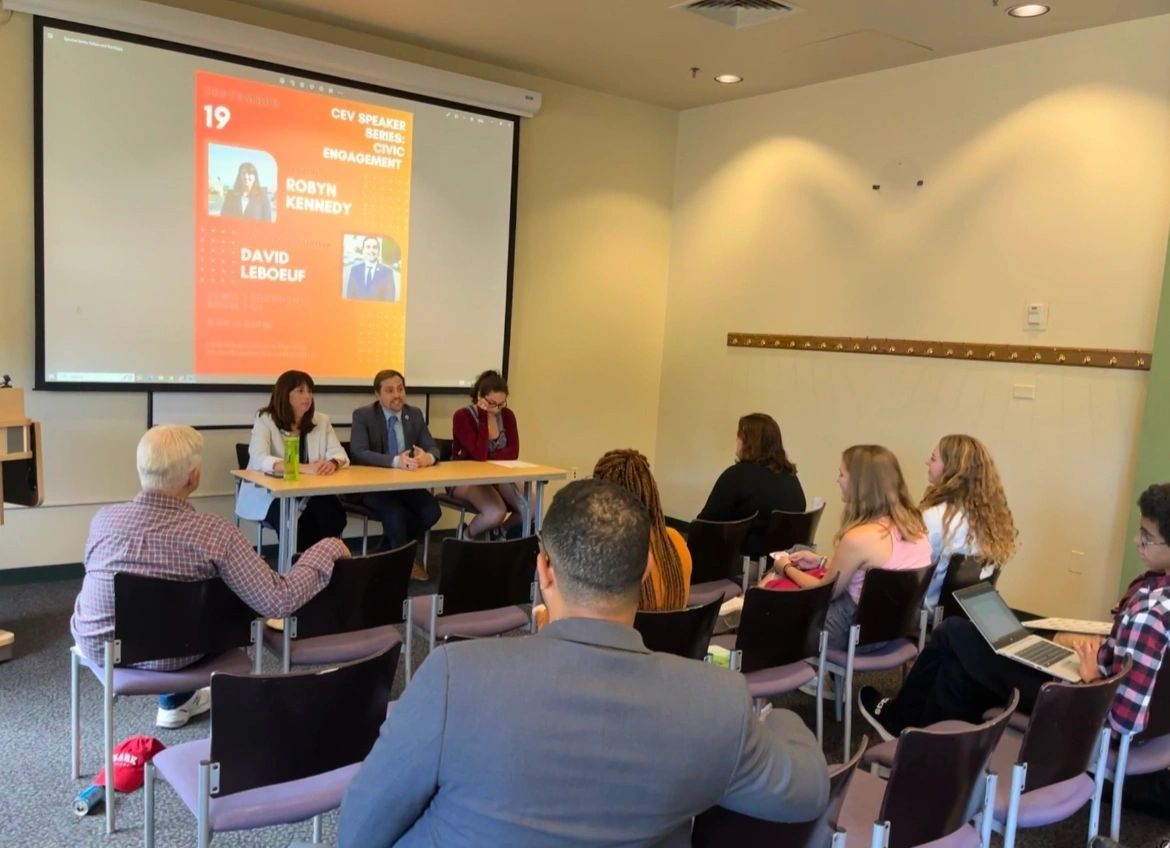
Through partnerships with organizations such as the League of Women Voters and local schools such as Forest Grove Middle School, Kennedy has been active in civic showcases and has even attended some in person. “Students do group projects on different areas of interest policy wise to the students,” she said. And then members of the public come in and evaluate the final projects of the students.”
These issues can range from gun violence in schools, to racism that students experience, to proposals around what the city should do around vacant lots. “These events allow students to explore and present on critical issues ranging from gun violence in schools, to racism that students experience, to proposals around what the city should do around vacant lots,” said Kennedy.
Through Fontana’s collaborations in the Community Engagement and Volunteering office, she found a strong support system that encourages students to dive into civic engagement.” They’re really good about connecting students to civic engagement opportunities,” she added.
Fontana is extending her time at Clark, staying one more year to earn her Master’s degree.
“I’m excited to stay on campus and continue to be aware of civic engagement opportunities,” said Fontana. “Student activism is super important, so I’m excited to continue to attend events that promote that. Being so connected to the Worcester community over the last several years has been amazing.”
“At their core, Clark students are really interested in being engaged,” said Bennett Rodriguez, the event organizer in the Office of Community Engagement and Volunteering “College encompasses people from many different walks of life. Clark is very representative of that.”
Eve Harmon, a senior at Clark, echoed the overarching sentiment: “I think inclusivity has been another big part of what Clark is working towards, especially with students of color. I’ve also been involved in the J-Street chapter on campus, which works to educate and advocate for the Israeli-Palestinian conflicts. In addition, I’ve gone to a few protests off-campus in Worcester regarding climate change and Palestine,” Harmon said.
As for the future of Clark University’s community involvement, “The administration is working to review their engagement within the local community and there are some really strong partnerships that are developing organically,” said Joseph Corazzini, vice president for Government and Community Affairs at Clark.
Matt Olszewski is a freelance content and news writer based in Boston, MA. In his free time, Matt enjoys running, hiking or skiing. Matt is currently finishing up the MPH degree program at Tufts University. He can be reached at mattoskier@gmail.com