
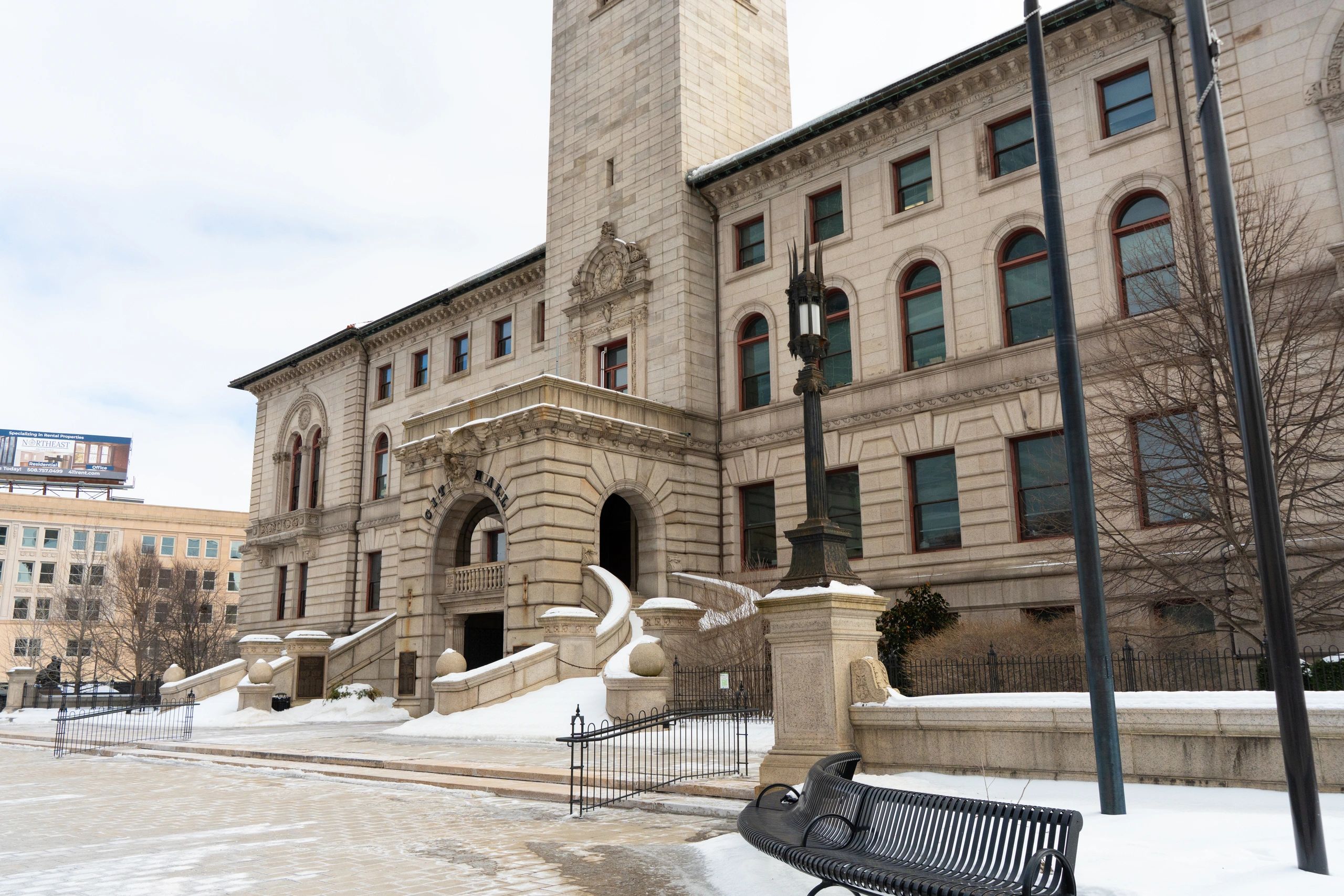
WORCESTER—And they’re back. With several new members elected in November now seated, Worcester’s City Council convenes this week for its first full meeting of 2026, opening the year with a sprawling agenda.
Near the top of the docket is a renewed push to examine the city’s social media policies, particularly as they apply to Worcester police officers and online conduct tied to the department and its union. A series of orders stemming from the Standing Committee on Urban Technologies, Innovation and Environment seeks to revisit testimony given in December by former councilor Etel Haxhiaj, who raised concerns that the city’s existing policy fails to address problematic posts made on the Worcester Police Union’s Facebook page.
The committee is asking for multiple reports from the city manager, chief information officer and city solicitor, including whether the police department operates under a different social media policy than other city employees, what technology — if any — could be used to monitor city-owned devices without infringing on First Amendment rights, and whether the policy itself needs a comprehensive update.
Transportation and mobility issues also feature prominently, led by returning Councilor Gary Rosen, who is back on the council after several years away. Rosen has filed a slate of orders focused on street safety and transit access, including a request for a detailed report on how and where speed humps are approved across residential neighborhoods, what standards are used and whether signage adequately warns motorists.
He is also calling for public hearings aimed at pushing the Worcester Regional Transit Authority to improve bus service, with a sweeping list of invited stakeholders ranging from riders and advocacy groups to Tufts University planners and MassDOT officials. Another Rosen order asks for an early city review of MassDOT’s planned bicycle and pedestrian upgrades along Pleasant Street, citing community concerns about safety, snow removal responsibilities and the overall design before construction begins.
Several councilors are also turning attention to how the city communicates with residents — and what happens when those systems fail. Vice Chair Khrystian King is requesting a full status report on Worcester’s emergency alert and notification platforms, including whether a new vendor is being considered and how the city plans to use the system moving forward for winter parking bans, weather alerts, trash delays and street closures. King is also asking the city manager to consider relief for residents ticketed during winter parking bans who say they never received notifications.
Economic development and permitting reform round out the earlier agenda items, with District 1 Councilor Tony Economou calling for the creation of an ombudsperson to help small business owners navigate the city’s often-confusing permitting process. Economou is also seeking a joint effort between development and inspectional services officials to simplify requirements, clarify what is truly mandatory versus merely requested and speed up approvals for businesses looking to open or renovate.
Other highlights on the agenda:
- Water quality and transparency: Council is asking for more consistent and public-facing information about the health of Worcester’s water bodies. One order seeks seasonal updates from the city’s chief sustainability officer on water quality data across local lakes and ponds, while another requests the full set of Lake Quinsigamond Commission meeting minutes from 2025.
- Funding push for Newton Square improvements: Long-discussed upgrades to Newton Square in Elm Park could move closer to completion. Councilors are asking the city manager to consider allocating funding in the fiscal year 2027 budget to finish planned improvements to the park.
- Long-overdue cable discounts for seniors: Rosen is reviving a consumer protection issue that has lingered for years: senior cable discounts. His order asks the city manager to require Spectrum to fulfill its contractual obligation to provide discounted cable service to Worcester seniors—including potentially retroactive relief.
- Pharmacy-based needle disposal: Rosen is also asking the city to draft an ordinance requiring retail pharmacies to accept sharps—including hypodermic needles and lancets—for safe disposal at no cost. Modeled after an ordinance already adopted in Boston, the proposal seeks to reduce improperly discarded needles in neighborhoods while expanding access to safe disposal options.
- Who decides snow days and when? With winter weather already disrupting daily routines, the council is questioning how school closure decisions are made. One order asks for a report on how, and to what extent, the Department of Public Works collaborates with Worcester Public Schools during snow events when determining delays or full closures.
- Is the 25 mph speed limit working? Newly elected Councilor Satya Mitra is asking whether Worcester’s citywide 25 mph speed limit is actually delivering safer streets. The requested report would examine enforcement feasibility, effectiveness and whether additional resources — including officers or monitoring devices — are needed.
Editor’s note: This story will be updated as agenda items are added or revised. Refresh this page for the latest developments.
Worcester City Council meets Tuesday, Jan. 13, at City Hall in the Esther Howland (south) at 6:30 p.m. It is also live streamed on the city’s website.
Have news, tips, or a story worth telling? Reach Editor Charlene Arsenault at carsenault@theworcesterguardian.org—because good stories (and great scoops) deserve to be shared.
- The Worcester Guardian is an independent nonprofit news organization. Support local journalism by making a DONATION today.
