
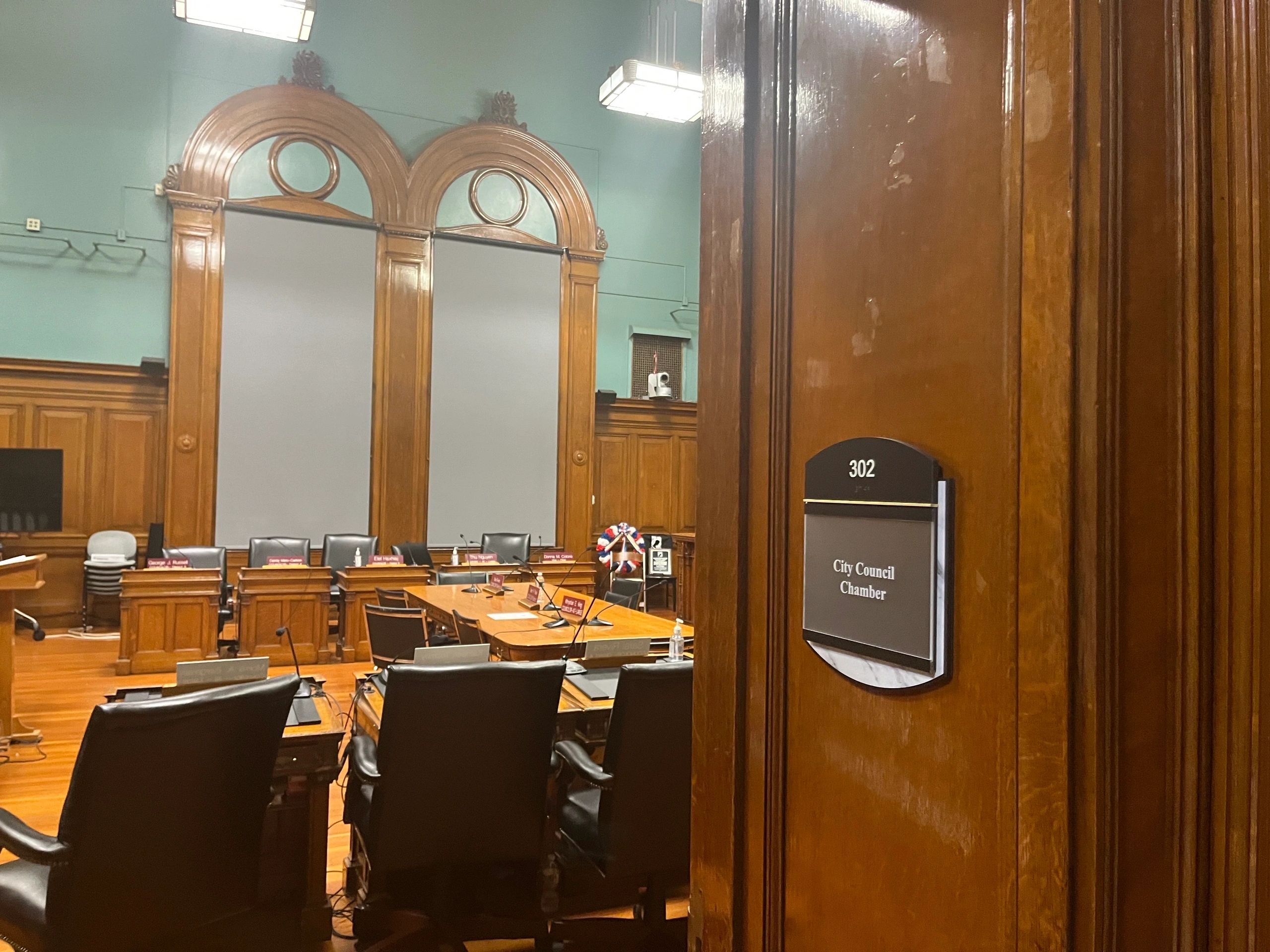
WORCESTER-A petition to allow unhoused people to camp in public spaces in the city was shot down by Worcester city councilors Tuesday, but not before passionate comments were made by both the councilors and the public.
Samantha Olney, who identified herself as a member of the city’s unhoused population and the director of Homeless Addicts Leadership Organization of Worcester, filed the petition, stating that her group believes allowing tents in city parks is crucial to addressing homelessness in the community.
Parks in the city are closed to the public from 10 p.m. to 5 a.m. unless otherwise posted.
Olney wrote in her petition that there should be guidelines for those camping in public parks to follow surrounding trash disposal, tent size, and capacity limits and that requests should be made to local organizations to help facilitate case management services.
“While tents in city parks is not a permanent ideal solution, it would create a temporary fix to the gap between lack of available appropriate shelter, lack of housing solutions, and the number of unhoused individuals within city limits,” Olney wrote in her petition.
Councilor At-Large Donna Colorio motioned to file the item, meaning it can’t go before the council again for 90 days and only then if it’s resubmitted. The council voted unanimously to file, but additional motions were made by councilors related to the issue that did pass.
District 5 Councilor Etel Haxhiaj and Councillor At-large Khrystian King both made motions asking that Olney and/or other members of the unhoused population be at the tables where decisions are being made to address homelessness including the city’s Task Force for Sustaining Housing First Solutions.
King also made a motion asking for a report on the legality of people sleeping in public places.
Multiple councilors credited both Olney and another unhoused individual, Mark Dufresne, for coming forward to share their experiences Tuesday.
“We want nothing more than to be productive members of the society that rejects us daily,” Olney said. “No one desires the life that we endure.”
Olney referred to the relationship between the homeless population and the city’s Quality of Life Task Force as a sick game of hide and seek and said she felt treated like “literal trash” that the task force could wash away by arresting them or issuing them notices to vacate.
Dufresne echoed Olney’s statements saying that he felt talked down to by the task force and that he feels like everyone deserves respect.
“I just want to acknowledge that I hear your pain,” Haxhiaj said before noting that encampment sweeps don’t solve the issue and causes “irreparable harm.”
The Quality of Life Task Force was brought up by speakers during the public comment period and by City Manager Eric Batista who gave a presentation explaining what the Quality of Life Task Force does later in the meeting.
The task force is an enforcement agency that works to create neighborhoods that are welcoming and thriving, “from assessment to action,” according to Batista.
That work includes addressing trash, illegal dumping, vacant and unsecured properties, unregistered vehicles on the street, needle removal, and more, according to Batista.
“They’ve done an unbelievable job. [Quality of Life Task Force leader Dan] Cahill and his team have a tremendous task and one component of the task is to deal and manage the situation of the unhoused,” Batista said. When they do work with the unhoused, the group coordinates with the city’s Homeless Outreach Team and works to provide individuals with services, according to Bastia.
He listed the task force’s accomplishments in 2023, including 3,000 site visits to problem properties to hold the owners accountable and collecting over 11,000 pieces of trash.
Batista said people need to stop villainizing the task force and the people on it when the issues leading to homelessness itself are the actual enemy.
Haxhiaj acknowledged that she doesn’t think putting people in tents will actually work as a solution to homelessness in the city because of the “mountains” of resources necessary that the city does not have to make it a dignified place to live, but said the city needs to continue to work on an interim solution while permanent supportive housing is being produced.
She called for a solution based on research and not fear mongering.
The majority of speakers during the public comment portion of the meeting were against having tents in parks, questioning if allowing it would draw more people to cities, prevent them from using parks for activities like sports, and even truly address the homeless crisis.
The councilors expressed concern for unhoused individuals, with Councilor At–Large Kate Toomey calling it a complex and emotional issue and saying the council does care.
District 3 Councilor George Russell said he receives calls from residents saying they can’t enjoy their homes anymore or that they don’t feel comfortable in their homes because of a nearby encampment.
“We need to be able to call our professional members and ask them to intervene to try to get help for those folks that are in encampments that are that close,” Russell said. “We cannot just say ‘oh well sorry’ to the homeowner, sorry to the tenant that’s working hard all day that wants to come home from work and enjoy their property.”
King said the city can’t keep doing what it’s done and asked Batista for progress on a proposed day resource center in the city. Batista said the city is still in negotiations regarding a property for the center but the owner and operator of the center would ultimately be a public agency and partner and the city is just acting as a mediator.
The current proposal for a day resource center would include permanent supportive housing and shelter space as well and is projected to cost $45 million to construct, according to Batista.
“It’s not a matter of the will or desire to get it done, it’s also how do we put these resources together to be able to move the project forward,” Batista said. The city has also run into obstacles with a proposed tiny homes project on Stafford Street due to a potential provider dropping out and the developer running into issues funding the project.
Councilor At-Large Morris Bergman raised asking local state legislators to get towns to contribute to the city’s efforts to address homelessness, stating that homeless individuals in surrounding towns come to Worcester for services.
The city’s housing first task force meets periodically to talk about strategies to address homelessness, according to Batista. The city manager said the task force is working with Joe Finn, the president of the Massachusetts Housing & Shelter Alliance. Finn is currently consulting with the different leaders in the field from universities across the country to develop proposals for housing first strategies that Batista said will help guide the city’s own strategic plan.
Kiernan Dunlop is an award-winning journalist who has spent the past five years reporting in Worcester, New Bedford, and Antigua and Barbuda. Her work has been published in Bloomberg, USA Today, Canary Media, MassLive, and the New Bedford Standard Times, among other outlets. She can be contacted at kdunlop@theworcesterguardian.org