
WORCESTER – Attempts by some Worcester City Councilors to regulate crisis pregnancy centers failed Tuesday with the majority of councilors voting to file the draft ordinances related to the centers.
The centers, which have been deemed “fake women’s health centers” by the nonprofit Reproductive Equity Now, are often accused of steering pregnant people away from receiving abortions and misleading patients about the services they offer.
The council voted 7 to 4 to file the draft ordinances, with Councilors Thu Nguyen, Khrystian King, Etel Haxhiaj and George Russell voting against the motion to file. Filing the draft ordinances means the council will no longer consider them.
Mayor Joseph Petty made the motion to file, saying he was worried about the unintended consequences passing the ordinance would have and “going too far.”
Councilor At-Large Thu Nguyen first called for a draft ordinance regulating crisis pregnancy centers in July 2022. On Tuesday they called for the council to either send the ordinances to the Municipal and Legislative Operations for further discussion or vote in favor of passing an ordinance that would fine crisis pregnancy centers found to employ deceptive practices.
However, in previous discussions of the ordinances the council voted down sending them to committee, so the council would have needed to suspend its rules to do so. Russell asked for a vote to suspend the rules, which failed 5 to 6.
The draft ordinances first arrived on the council floor on Aug. 22. City Manager Eric Batista said he hesitated in drafting the ordinances because after consulting the city solicitor they both felt that the ordinance would open the city up to lawsuits and said he expressed that to Nguyen.
Nguyen insisted draft ordinances be brought to the council floor. The first of the two draft ordinances would allow the city to fine centers should they be found to employ deceptive practices. The second would require any pregnancy service centers to post information about the services it offers and whether the center is a licensed medical facility.
Along with the draft ordinances, City Solicitor Michael Traynor shared his legal opinion about them, stating that he did not believe the ordinances would survive a First Amendment challenge. Traynor cited the 2018 U.S. Supreme Court decision that found California likely violated the First Amendment with a law compelling crisis pregnancy centers to provide patients with information about abortion care and other reproductive services.
Traynor specifically said in his opinion that the second ordinance, “despite its intentions,” was legally “dubious” and amounted to “government required speech.”
A discussion of the ordinances was initially held off by Councilor At-Large Donna Colorio, then tabled at subsequent meetings. During the Sep. 12 council meeting, Nguyen asked for additional legal opinion in addition to the city solicitors.
The timing of the next meeting, Sept. 17, did not allow enough time for Batista to get those opinions and the council voted 9 to 2 to table the item until he could.
In a letter to the city council dated Oct. 17, Batista said his administration contacted six firms for an outside opinion. Three declined to provide an opinion, one said it was an advocacy group and another did not answer, leaving the council with one outside legal opinion.
In an opinion dated Sept. 29, Stephanie Toti, senior counselor & project director of the Lawyering Project, said the first ordinance prohibiting deceptive practices is “nearly identical to a San Francisco ordinance prohibiting advertising practices by limited-service pregnancy centers.”
The constitutionality of the San Francisco ordinance was upheld by the U.S. Court of Appeal for the Ninth Circuit, according to Toti, finding that advertising and other commercial speech that is false or misleading is not entitled to First Amendment protection.
Toti added that she largely sides with the city solicitor’s opinion regarding the second ordinance that would require crisis pregnancy centers to post information about the services they offer and whether it is a licensed medical facility.
She said the draft ordinance had several similarities to the California statute that was struck down in National Institute of Family and Life Advocates v. Becerra, which she said makes it vulnerable to a constitutional challenge.
Toti said the city council could differentiate the ordinance by adding more detailed findings about “the harms that the disclosure requirement is intended to remedy and any gaps in the state law that the ordinance is intended to fill.”
Nguyen read Toti’s opinion Tuesday and said they “urge the city council to draft the deceptive advertising ordinance” or send it to committee.
King was also in favor of sending the item to be sent to committee, saying there was a lot to go over.
He asked the administration if the city solicitor had reviewed Toti’s opinion. Traynor wasn’t present at Tuesday night’s meeting but Deputy City Solicitor Alexandra Kalkounis said the department stands by the original opinion given by the solicitor and that the Supreme Court decision is the controlling case when it comes to precedent.
King went on to ask if the city solicitor provided any feedback to the city manager on the legal opinion provided by Toti and asked if the opinion had been fact-checked.
Batista said that Traynor wasn’t present to answer questions about his review, but that he did not have concerns about the city solicitor and the law department’s review.
Several members of the council that voted to file the ordinance insisted that the responsibility for regulating crisis pregnancy centers falls to the state. Petty called for members of the state delegation to come to the Municipal & Legislative Operations Committee to discuss what support they need at the state level to regulate the centers.
“Not one municipality has moved forward with these ordinances that actually have a crisis pregnancy center in their community,” District 1 Councilor Sean Rose said. “At the end of the day, for me, the writing is on the wall.”
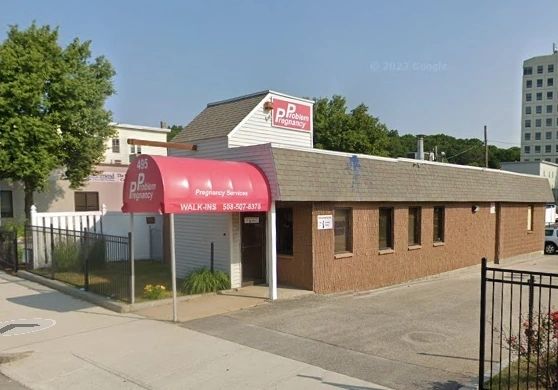
Worcester has two organizations that are considered crisis pregnancy centers within city limits: Problem Pregnancy on Pleasant Street and Clearway Clinic on Shrewsbury Street.
Clearway Clinic is currently facing a lawsuit from a client who claims an ectopic pregnancy went undiagnosed by the clinic and she then required emergency surgery that led to the removal of one of her fallopian tubes.
On a statewide level, the Massachusetts Attorney General’s office has issued a consumer advisory against crisis pregnancy centers. In the advisory the AG’s office wrote that crisis pregnancy centers do not provide abortion care or other forms of reproductive health “despite what they may advertise” and “often provide inaccurate and misleading information about abortion.”
Kiernan Dunlop is an award-winning journalist who has spent the past five years reporting in Worcester, New Bedford and Antigua and Barbuda. She’s been published in Bloomberg, USA Today, Canary Media, MassLive, and the New Bedford Standard Times, among other outlets. She can be contacted at kdunlop@theworcesterguardian.org