
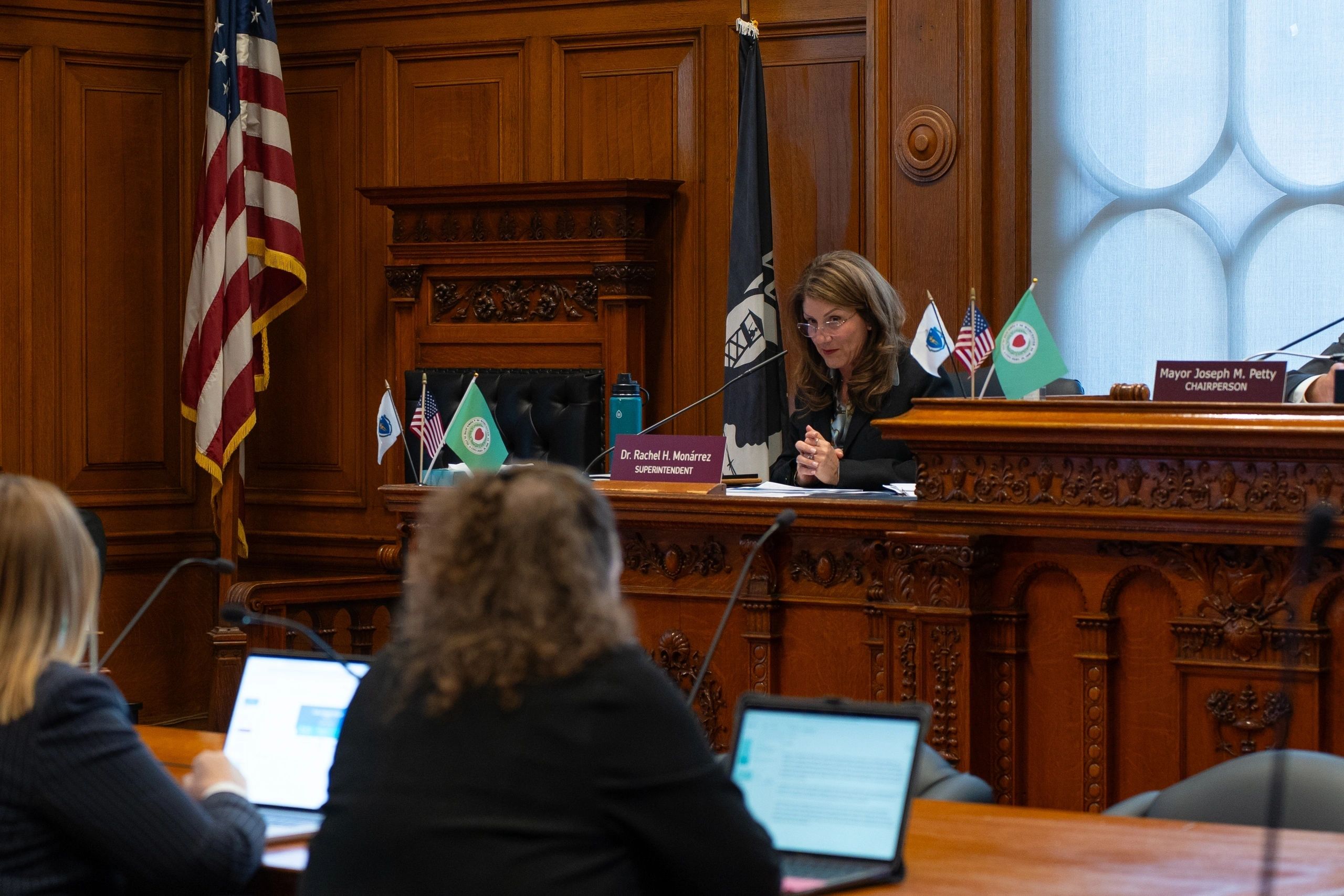
WORCESTER—The Worcester School Committee’s first public hearing on the proposed fiscal year 2026 school budget was quiet, but offered a key peek at a major shift in how the district plans to spend its money: equity-based budgeting.
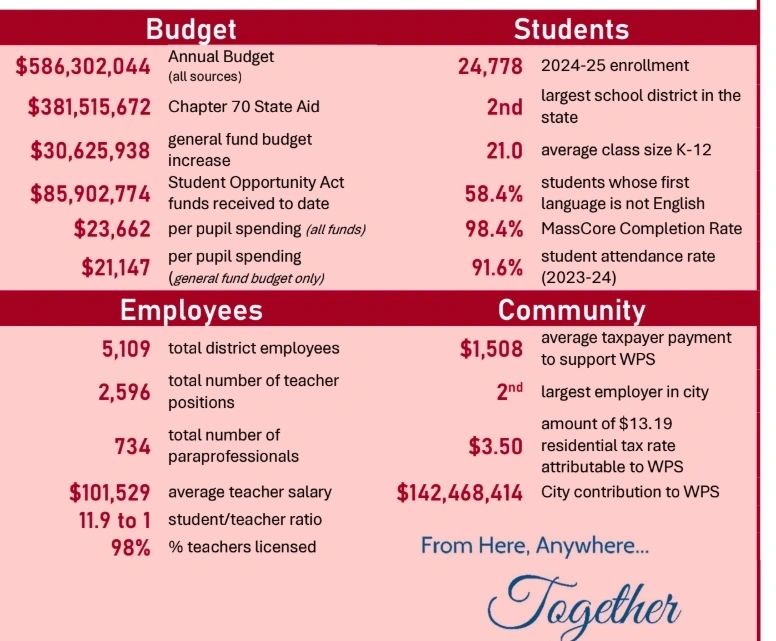
The $586.3 million budget proposal marks the first year the district is embracing an approach designed to prioritize funding for schools with the highest need. It was developed by Deputy Superintendent Brian Allen and Superintendent Rachel H. Monárrez and informed by months of community feedback.
“We went through this year collecting feedback from a wide range of stakeholders,” Allen said at the May 19 hearing. “From principals and educators, a family and community engagement roundtable, with the students through the Student Advisory Council and then through the CPAC (Citywide Parent Planning Advisory Council) as well. We really wanted to hear from each of these groups what equity budgeting could look like, what does it mean to them, and we wanted to take that feedback as a part of our decision-making process.”
These discussions led to three core themes for equity-based budgeting: strengthening Tier 1 instruction and professional development, increasing staffing for student support and instructional improvement, and expanding student learning opportunities. With limited additional funds available, school officials prioritized two key areas for the upcoming year: enhancing collective efficacy through common planning time and expanding after-school opportunities.
The first initiative includes a $240,000 investment to provide additional common planning time at six high-needs elementary schools, along with the addition of eight culture and climate assistants at secondary schools. The second focus supports more after-school and secondary-level programs, including funding for late bus transportation.
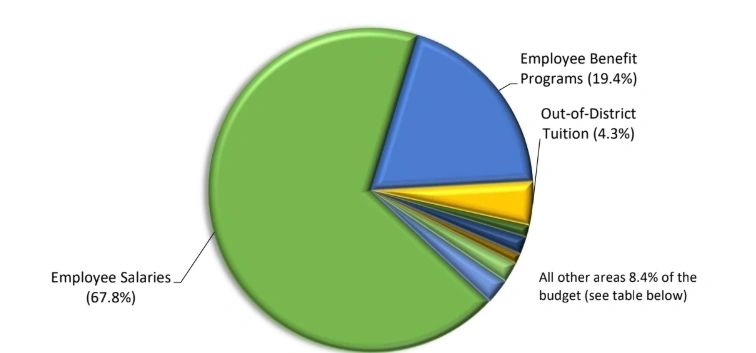
The full budget book, recently posted on the district website, shows an overall increase of $33.8 million, or 6.1%, over FY25. The majority of funding comes from state aid. The district expects a total revenue increase of $38.2 million, and a total cost increase of $34.4 million.
Equity-based budgeting helped drive two of the budget’s top priorities:
- Enhancing collective efficacy through common planning time
- Expanding after-school opportunities
For the first, the district is investing $240,000 in six high-needs elementary schools for additional planning time and will add eight culture and climate assistants at the secondary level.
For the second, the district plans to expand secondary-level after-school programs and introduce late bus transportation to make those programs accessible.
Allen’s presentation focused on these broad priorities and the district’s ongoing commitment to its strategic plan. It was not intended to be a line-by-line breakdown, but rather to offer a framework for understanding the district’s direction heading into FY26 and beyond.
Only two members of the public spoke at the hearing, both advocating for converting newly created elementary enrichment positions into library media specialists to better support school libraries.
The school committee continues budget discussions in a joint session with the city council on May 27. The next scheduled school budget session will be held June 5 at City Hall. A vote on the final plan is expected June 18.
Jason Bleau can be reached at bleau.jason@yahoo.com