
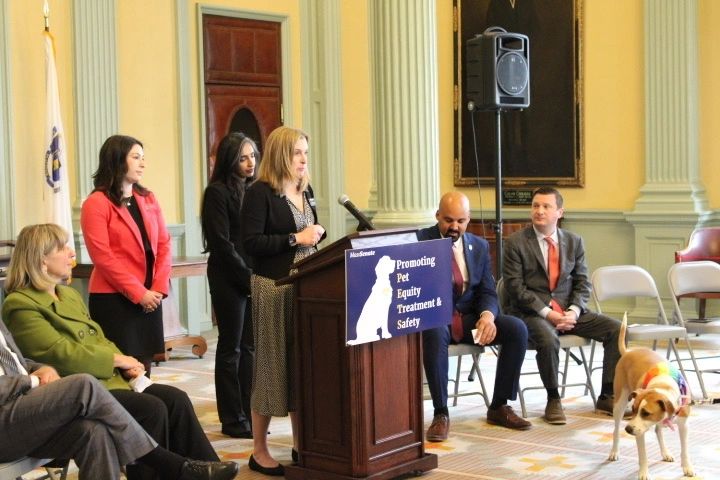
WORCESTER—The Massachusetts Senate has unanimously approved a wide-ranging animal welfare bill that would ban the retail sale of cats and dogs, expand anti-cruelty protections and limit breed-based restrictions in housing and insurance.
The legislation, known as the PETS Act, passed on a 38-0 roll call vote and now heads to the House of Representatives. If enacted, it would mark a significant shift in how pets are sold, protected and regulated across the state.
At the center of the proposal is a ban on for-profit sales of cats and dogs in pet stores — a move aimed at cutting off what lawmakers describe as the “puppy-mill-to-pet-shop pipeline.” Under the bill, pet shops would still be allowed to partner with shelters and nonprofit organizations to offer animals for adoption.
The measure also includes a series of provisions aimed at expanding access to pet ownership and strengthening protections for animals. It would require the state to establish a uniform pet ownership policy in public housing, prohibit breed and size discrimination in those settings, and prevent insurance companies from factoring a dog’s breed into coverage decisions.
State Sen. Michael Moore, D-Millbury, said the legislation reflects a broad push to improve both animal welfare and access for pet owners.
“Yesterday’s unanimous, bipartisan vote to pass the PETS Act is a testament to the Senate’s commitment to protecting animals here in the Commonwealth,” Moore said in a statement. “Ending the sale of dogs and cats in pet stores, banning unnecessary animal testing, bolstering anti-cruelty penalties, and establishing protections for pet owners in public housing are all important steps toward improving life both for Bay Staters and our furry friends.”
Moore added that additional measures he supports — including restrictions on pet ownership following animal abuse convictions and requirements for courts to consider pet wellbeing in divorce proceedings — were not included in the final bill but remain priorities.
Beyond retail sales and housing access, the legislation targets animal welfare practices more broadly. It would prohibit certain forms of non-medical animal testing, extend existing cruelty protections beyond dogs to cover all household pets, and establish civil penalties to strengthen enforcement of animal protection laws.
Lawmakers also adopted an amendment expanding a 2022 law governing research animals, requiring facilities that test on dogs and cats to assess their health and, when appropriate, make them available for adoption.
Supporters of the bill, including advocacy organizations and legislative leaders, framed the measure as part of a broader effort to align public policy with evolving views on animal welfare.
In a statement included in the Senate announcement, Senate President Karen Spilka said the legislation “makes it clear” that pets should be treated as family and reflects a continued push to expand protections and access statewide.
Advocates also pointed to the bill’s potential impact on reducing the number of animals entering shelters and improving conditions for animals already in homes. Organizations including MSPCA-Angell and the Animal Rescue League of Boston said in statements that the legislation would help prevent cruelty, support pet retention and reduce reliance on large-scale commercial breeding operations.
The proposal comes as a growing number of states have moved to restrict retail pet sales tied to commercial breeders, reflecting a broader national shift in animal welfare policy.
The bill now moves to the House, where lawmakers will determine whether to advance or amend the legislation before it can reach the governor’s desk.
Have a story tip, community concern, or insight to share? Email Editor Charlene Arsenault at carsenault@theworcesterguardian.org.
The Worcester Guardian is a nonprofit newsroom serving Central Massachusetts. Help keep independent reporting alive by making a donation today.
