
WORCESTER—If you sneezed or bent over to get a mint from your messenger during the most recent city council meeting, you may have missed it.
A six-month financial snapshot showing Worcester’s nearly $1 billion FY26 budget is tracking largely as planned, despite a $2.7 million cut in state aid.
With no discussion and a unanimous roll call vote, councilors accepted a financial update covering the first six months of FY2026 — a report that, while breezing by on the agenda, offers a detailed look at the city’s fiscal midyear position.
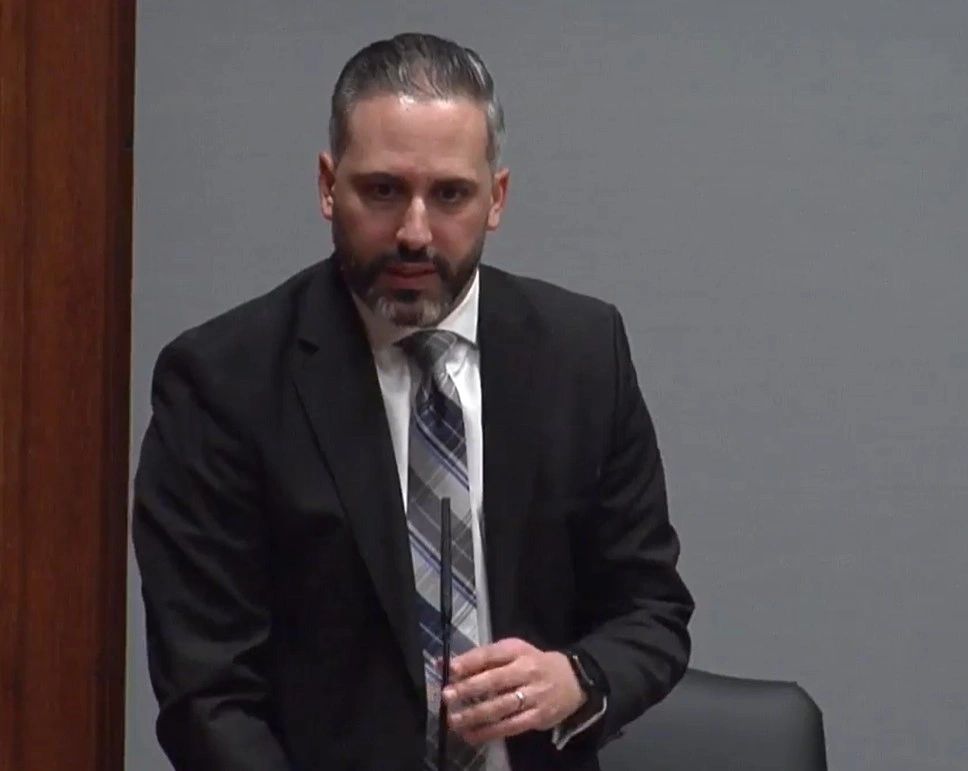
The update, shared with council by City Manager Eric Batista and prepared by Chief Financial Officer Timothy McGourthy, is an overview of the budget period ending Dec. 31, 2025, representing the halfway point of the fiscal year.
“This report represents the first six months of Fiscal Year 2026,” Batista wrote in his letter to councilors. “Recognizing we are halfway through the fiscal year, property tax collections and local receipts are stable with no cause for concern at this time.”
According to the report, revenues received as of Dec. 31 total 48% of the city’s FY2026 budget, while spending stands at 51% of the budgeted amount. Batista noted that expenditures are “slightly lower than this same time last fiscal year, primarily due to the timing of financial transactions.”
Property tax collections—the city’s largest revenue source—are at 47% of the FY26 budget through the first six months, McGourthy wrote. He pointed out that tax collections are billed quarterly and “are generally weighted toward the second half of the fiscal year after actual real estate and personal property tax bills are issued.”
Local receipts total $27 million, or 46% of budgeted projections, which McGourthy described as “slightly higher than this same time last fiscal year.”
One notable shift since the FY26 budget was adopted is a reduction in anticipated state aid.
“Based on the Commonwealth’s final FY26 Budget, we received a decrease of approximately $2.7M in budgeted state aid, with impacts on both the municipality and Worcester Public Schools,” Batista wrote.
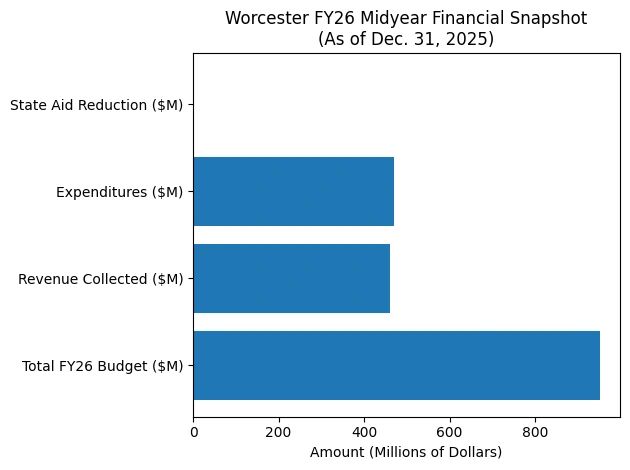
McGourthy further relayed that general government aid decreased by approximately half a million and school aid by approximately $2 million compared to initial projections.
Despite that decrease, the administration reported no immediate concerns.
“As with revenues, we have not identified any issues with expenditures at this time,” Batista wrote, adding that departments are being asked “to be thoughtful with their budgets as we navigate the financial needs of the municipality throughout the fiscal year.”
The report also includes updates on enterprise funds.
Batista wrote that “we do not see any issues in our enterprise funds,” noting that Green Hill Golf Course revenues are similar to last fiscal year at this time, while water and sewer operations “appear generally stable.” Enterprise expenditures are running higher than the prior year due to the timing of debt service charges, the report states.
McGourthy noted that certain fixed costs, including contributory pensions, are expended at the beginning of the fiscal year and will be offset with future departmental credits.
“Administration & Finance will continue to keep you apprised of financial updates on a monthly basis,” he wrote.
The council accepted the informational communication by roll call and referred related items to committee without further debate.
Have news, tips, or a story worth telling? Reach Editor Charlene Arsenault at carsenault@theworcesterguardian.org—because good stories (and great scoops) deserve to be shared.
The Worcester Guardian is an independent nonprofit news organization. Support local journalism by making a DONATION today.