Just weeks after his 17th birthday, Travis Monroe’s body was found in the middle of the road. It was never determined to be more than a pedestrian hit-and-run accident, but some, including Monroe’s mom, suspect there was more involved in his death
WORCESTER—It’s been 17 years since Christi Berry last spoke to her son, Travis Monroe. They were on the phone; Berry told him to take a shower and get something to eat, and they’d talk in the morning about a curfew he had broken. Then she told him she loved him.
The discussion about the broken curfew never happened. On Oct. 1, 2006, at 8:33 a.m., a police officer knocked on Berry’s door to tell her Monroe was dead, just three weeks after his 17th birthday.
“On Oct. 1, 2006, at about 5:40 a.m, Worcester police received a 911 call reporting a possible body in the roadway on Fales Street at Gunnarson Road,” Public Information Office Lt. Sean Murtha said. “At first it was thought to be a possible assault or murder and the Detective Bureau was called in. It was further determined that it might have been a pedestrian hit-and-run crash.”
Years have passed, yet the case remains unresolved. Although Berry acknowledges her son was hit by a car, she suspects there may be more to the events leading up to the fatal incident.
“Deep down in my heart, I wanted it to be an accident, but it’s not adding up,” she said.
The week before Monroe died, his mother said, he had been suspended from school for taking an extra lunch. His parents kept a tight rein on him while he was home, and on Friday, Sept. 29, 2006, Monroe and his father, Curtis Berry, argued, and Monroe left the house. He didn’t come home, and the next day, Sept. 30, his mother found him at the Greendale Mall, but he ran from her.
Monroe returned home around 8:30 p.m. that night, but his father didn’t let him in. After he spoke to his mom – who thought he was inside the home – Monroe left and went to the movies at Showcase North with some friends. Witnesses say they saw Monroe stumbling up Fales Street, around 2 a.m. and again at 4:30 a.m. His body was found in the middle of the road, near Gunnarson Road, around 5:30 a.m. One might assume his unsteadiness was caused by intoxication, but Monroe’s autopsy showed no evidence of drugs or alcohol in his blood.
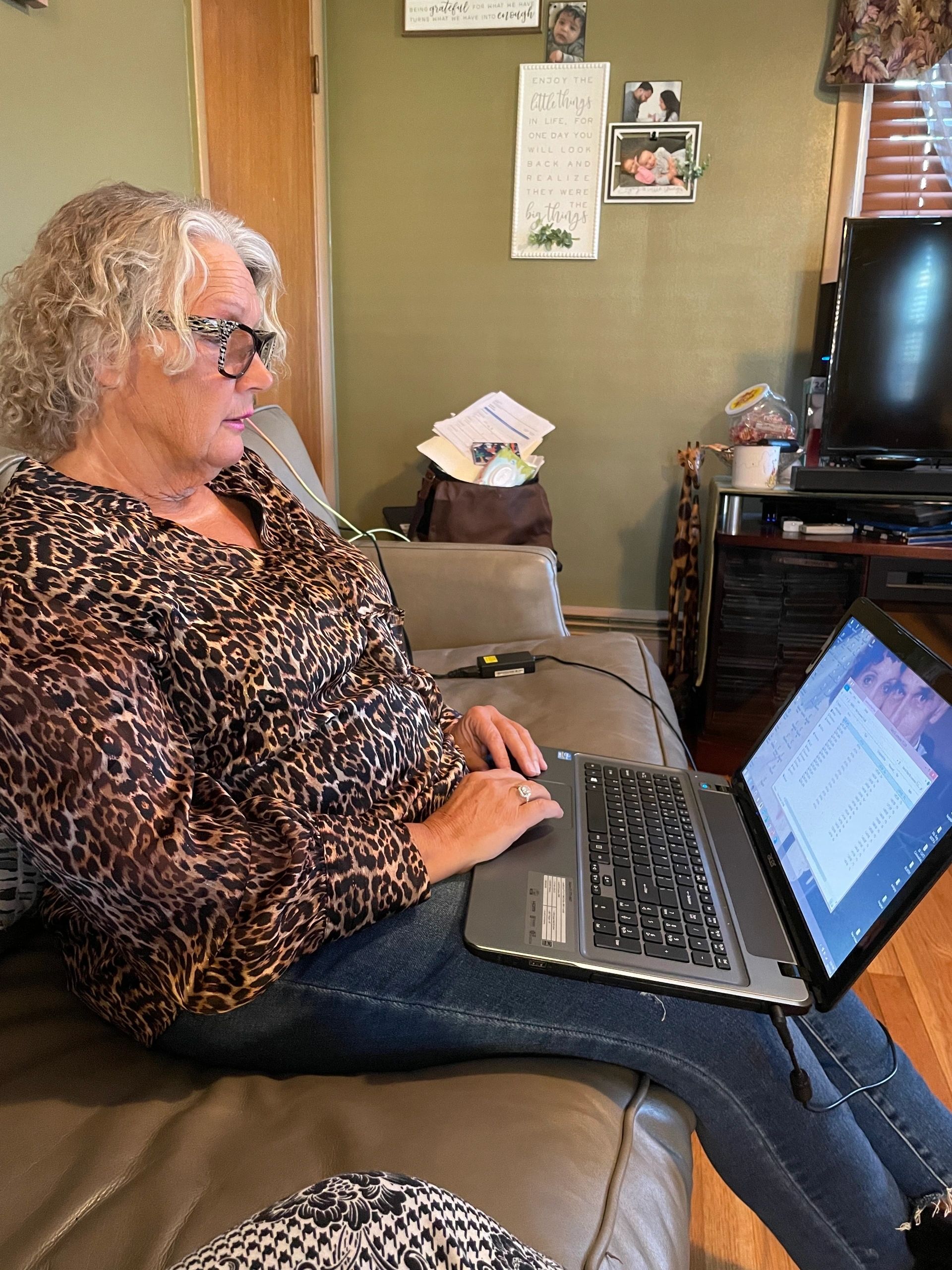
That’s a detail that has haunted Berry. She can understand not wanting to confront a strange man in the middle of the night, but she can’t understand why no one alerted the police.
“People saw him stumbling and no one called,” she said. “No one called in a well check, for someone to check on him. As a parent, I would rather have my child detained by the police, for his own protection, than get that knock on the door that my kid is dead.”
Initially, the police said Monroe’s death was caused by a hit and run, but it seems there was a difference of opinion from the start. While Monroe’s death was caused by “blunt impact of the head with fractures of skull and lacerations of brain,” state Medical Examiner Elizabeth Bundock’s initial report stated “the manner of death is not at all clear,” meaning she could not tell for certain how the fatal blow happened. Monroe’s death certificate says the manner of death “could not be determined.”
Then-Assistant District Attorney Jeffrey Goldstein wrote a memo to then-District Attorney John Conte, stating, “It certainly appears that his death was not the result of a motor vehicle incident.” Goldstein wanted to change the investigation’s focus from a hit and run to a homicide via an assault, and as a result, investigators met with Bundock on Dec. 15, 2006, to go over their findings. While Bundock acknowledged there was “more of a probability that the cause of death … was due to a motor vehicle strike,” she declined to change the death certificate.
Murtha said the case remains under investigation. Monroe, however, is not on the city’s list of unsolved cases; Murtha acknowledged that is an error and said it is being rectified. Berry is concerned this error might prevent information from coming forward, saying that if a potential witness claimed to know something about Monroe’s death, it might be dismissed by others as bragging, instead of being brought to the police.
As Berry tried to come to terms with her son’s death, she realized that she “didn’t speak the language” of the police and other officials. So, she went back to school, first earning an associate degree in criminal justice from Quinsigamond Community College, and eventually receiving a Master’s Degree from Clark University in Community Planning and Development, and Youth Planning and Development.
“My Associate’s was for Travis, but my Master’s was for me,” she said.
While at Quinsig, she met Bill McCarthy, a professor who has become a family friend and her mentor.
“The education was perfect for her,” McCarthy said.
Berry said one of the reasons she went back to school was to learn how to fight for crime victims, or for the loved ones the victims leave behind.
“There has to be a system that works together,” she said. “There is no one person to go to, who can connect all the pieces and agencies.”
She also believes EMTs should have body cameras, as police officers do.
“When a victim is outside, the scene can be compromised by weather quickly,” she said. “This would give a record of how it looked when they arrived.”
Berry has several boxes full of reports, crime scene and autopsy photos, and personal notes, and is convinced there is more to Monroe’s story than his being hit by a car.
“I’m trying to logically piece things together because as a mom, you want to figure out how he died,” she said.
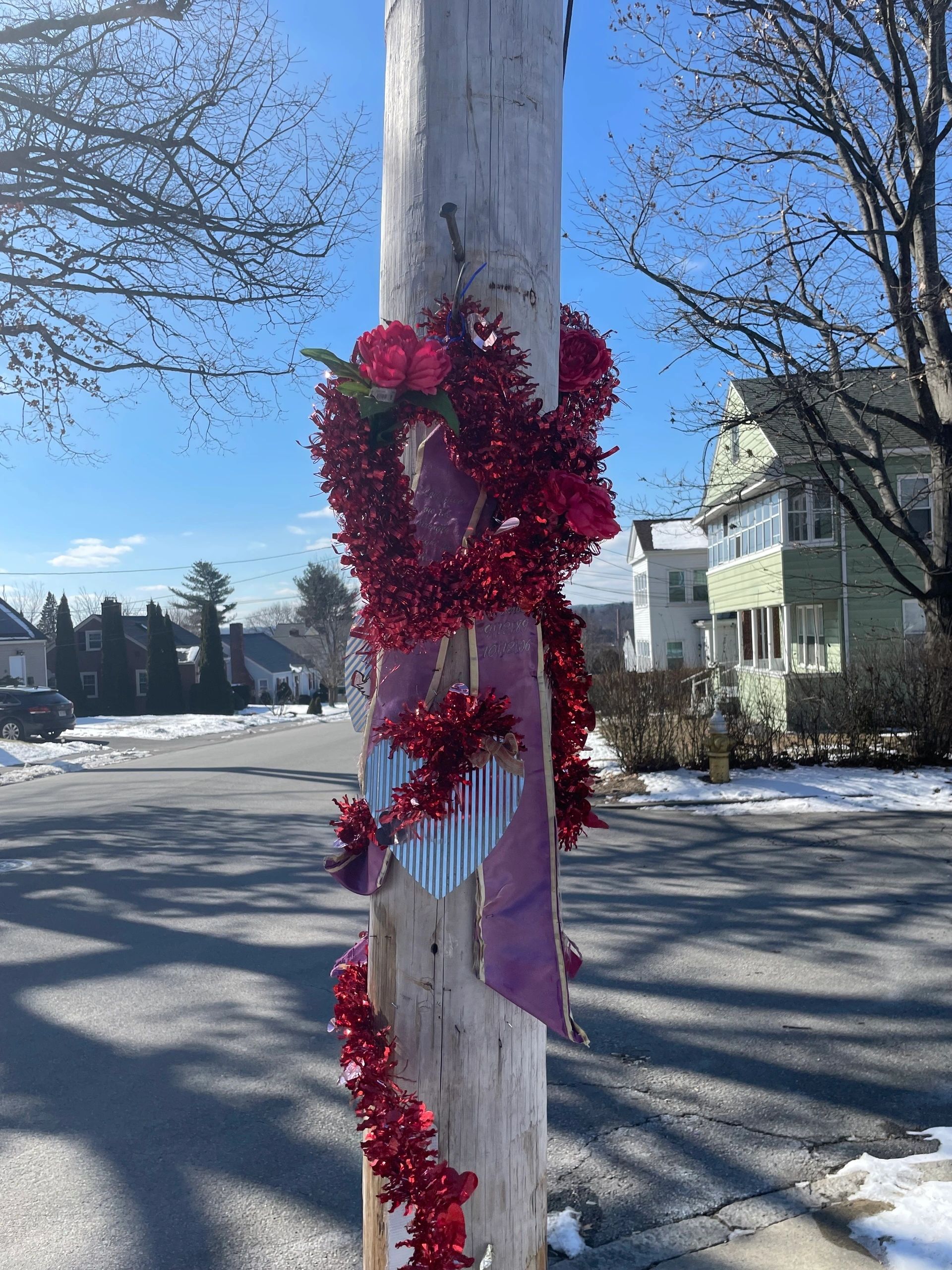
All these years later, there are still things that don’t add up for her. The car and driver who allegedly hit Monroe were never identified, and Berry believes there are still witnesses who were not interviewed. There was a poem on the makeshift memorial on Fales Street, a first-person account of a young man being hit and killed by a drunk driver, which seemed to hold personal details. When asked, the author – a classmate of Monroe’s – said it was written before Monroe’s death and was dedicated to him after the fact.
Monroe’s body was found in the middle of the street, but Berry says there were marks on his back that line up with the storm grate in the gutter. Crime scene photos show what appears to be blood in three spots on Fales Street, but Monroe’s injuries were so catastrophic he would have been unconscious, and investigators agreed that Monroe was hit where he stood, and not moved.
His mother is not convinced.
“How did he get into the middle of the road?” asked Berry. “He was in a fetal position, with his head split, that was the final blow, but they’re not focusing on what happened before. If he was on the side of the road, and unable to move, how did he get to the middle of the street?”
Berry has obtained photographs from Monroe’s autopsy. The pictures and handwritten notes indicate there is “QLIM” – quality limited evidence which would, according to the Code of Massachusetts Regulators for the Massachusetts State Police, require exhaustive DNA evidence to be helpful. A note on the printed photographs says “recovered trace retained with evidence.” However, in the case jacket listing all of Monroe’s belongings, no mention of any sample is made.
Berry said this box was lost; Communications Specialist Joe Cersosimo, from the Worcester Police Department, said that “all reports” on the case have been provided to both Berry and the DA’s office.
“You can see there are a number of questions,” McCarthy said. “We are hoping someone will come forward. There is only so much Christi can do.”
McCarthy noted several things that might prompt someone to come forward after all these years. Perhaps an observer has died or gone to jail, and their acquaintances feel more comfortable speaking. Perhaps someone has simply had a change of heart.
“We hope to find someone willing to be a champion for Travis,” he said.
Berry speaks candidly of her traumatic childhood and her years in foster care. She said her background has prepared her to use her anger for good – but more than that, she strove to be the mother she didn’t have.
“Now I’m going to see what it’s like because I want to be the parent who will fight for you,” she said. “I was so thankful to be a mom. I was so grateful for the time we had.”
Monroe’s birth was traumatic, Berry said, and as a result, he had some physical and educational challenges from the beginning. Berry said he had early intervention services and an IEP all through school. She described Monroe’s early educational experiences as a fight to get him what he needed. He was eventually diagnosed with bipolar disorder and took daily medication to keep him regulated.
“We went through so much to get him stable,” Berry said. “He went through a lot. He had PT and OT until the day he died. A lot of his peers didn’t know because I had him mainstreamed.”
Monroe’s parents worked hard to give their sons – Travis and his brother, Curtis Jr. – a different life. Monroe had just earned his learner’s permit. The hardest part about seeing his body, Berry said, was seeing that he had been fingerprinted in an attempt to identify him – this young Black man who had no history with the police. At his wake, Berry learned he had passed the MCAS test.
“He would have been the first in our family to walk across the stage in a cap and gown,” she said. “I tried so hard to break the cycle and then they killed him.”
If you have information about this case, please send an anonymous text to 274637 (TIPWPD) or an anonymous web-based message at worcesterma.gov/police. Calls can also be made to the Worcester Police Detective Bureau at 508-799-8651. Information from the following sources was used in this story: Unsolved Worcester podcast with Dan Yeager, “This is Worcester” with Bill Coleman, and Telegram & Gazette archives.
This is the latest in The Worcester Guardian’s series about cold cases – unsolved incidents still under investigation by the Worcester Police Department. According to the WPD’s public information officer, Lt. Sean Murtha, the department has 75 unresolved homicides and 10 missing or endangered persons. The Worcester Guardian’s “Unsolved Chronicles” delves into these cold cases and mysteries that happened in Worcester, Massachusetts. Stay tuned for more in this series.
Christine M. Quirk is the former editor of MotherTown and has written for the Telegram & Gazette, Bay State Parent and Times & Courier. She is a novelist and educator and lives with her family in West Boylston. She can be reached at cmqwriter@gmail.comTrav