
Sometimes a glimpse of a possible future can begin with something as small as a drop of water.
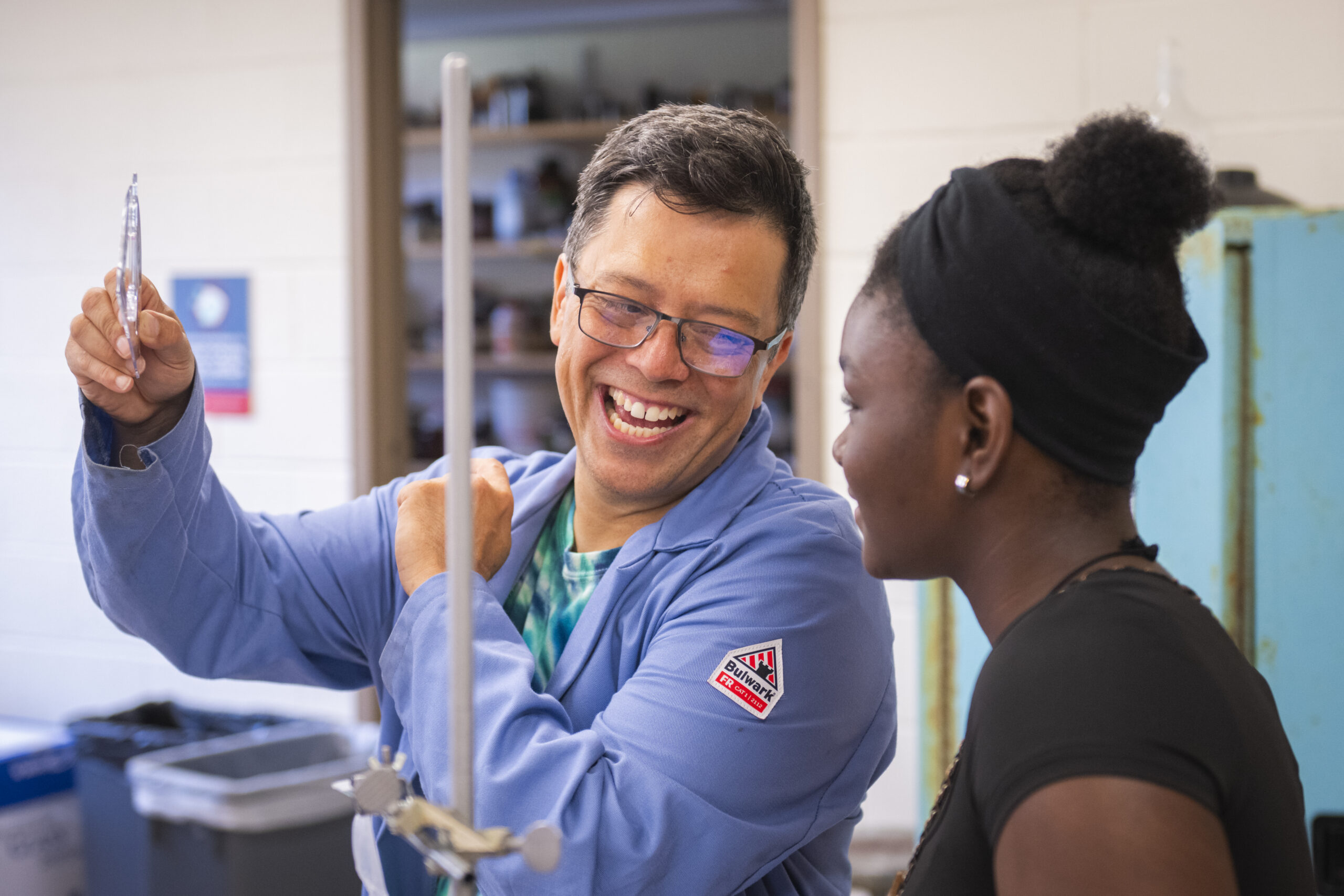
Nearly 100 teenage girls spent four days on the Clark University campus this summer experimenting in laboratories, working alongside professors and students, exploring STEM careers and getting a firsthand look at college life as part of a new partnership between Clark and Girls Inc. of Worcester.
Participants in Girls Inc.’s Eureka! program worked with Clark faculty in fields ranging from biology and chemistry to physics, data science, interactive media and climate resiliency. The intensive program also included sessions on leadership, economic independence, professional development and preparing for high school, college and careers, according to an announcement from Clark.
Eureka! is Girls Inc. of Worcester’s five-year STEM program for girls in grades 8 through 12, combining science, technology, engineering and mathematics with academic support, career exploration and leadership development.
The four-day program marked the beginning of a new learning partnership between the Worcester nonprofit and Clark. More than 10 Clark faculty members and 35 students and staff volunteered, according to the university.
“Clark University has been thrilled to host Girls Inc on campus this summer,” Evan Wilson, associate dean of the college and a coordinating member of Clark’s Collaborative for Community Engagement, said in the announcement.
Clark spent months developing the program, coordinating faculty and workshops and making classrooms, laboratories and other campus resources available to the participants.
For the students, that meant considerably more than a campus tour.
In one two-hour chemistry workshop, Professor Julio D’Arcy had students investigate how water droplets behave differently depending on the surface material beneath them. Each participant worked alongside a Clark student serving as a mentor and scientific guide while exploring the concepts behind what they observed.
“An ordinary water droplet can open the door to extraordinary scientific questions,” D’Arcy said in the announcement. “Our goal was to show students that discovery often begins by looking more closely at the world around them.”
The goal was also to make college—and careers that may once have seemed distant—feel more tangible.
Girls Inc. of Worcester has worked with girls in the city for 110 years. Its Eureka! program is designed not only to expose participants to STEM fields but to build confidence, leadership skills and the ability to advocate for themselves as they move through high school and toward college and careers.
“We are incredibly grateful for our partnership with Clark University,” Tiffany Lillie, CEO and executive director of Girls Inc. of Worcester, said in the announcement. “This experience is building the skills, confidence, and self-awareness they need to succeed in higher education and beyond.”
According to the university, spending time in academic buildings and classrooms and speaking directly with professors also gave participants a chance to envision themselves as college students and consider careers as scientists, researchers and other STEM professionals.
The program concluded July 16 with an exhibition in which participants presented reflections on what they had learned, explored and created during their time at Clark.
“Hosting Girls Inc has offered us the opportunity to introduce local young people to college and share resources connected to personal and professional development, all the while connecting them with faculty experts ranging from biology, chemistry, interactive media, data science, physics, and climate resiliency,” Wilson said in the announcement.
“We hope they leave the program feeling excited for their future and thinking creatively about how they can engage in STEM fields to solve complex issues facing our world.”