
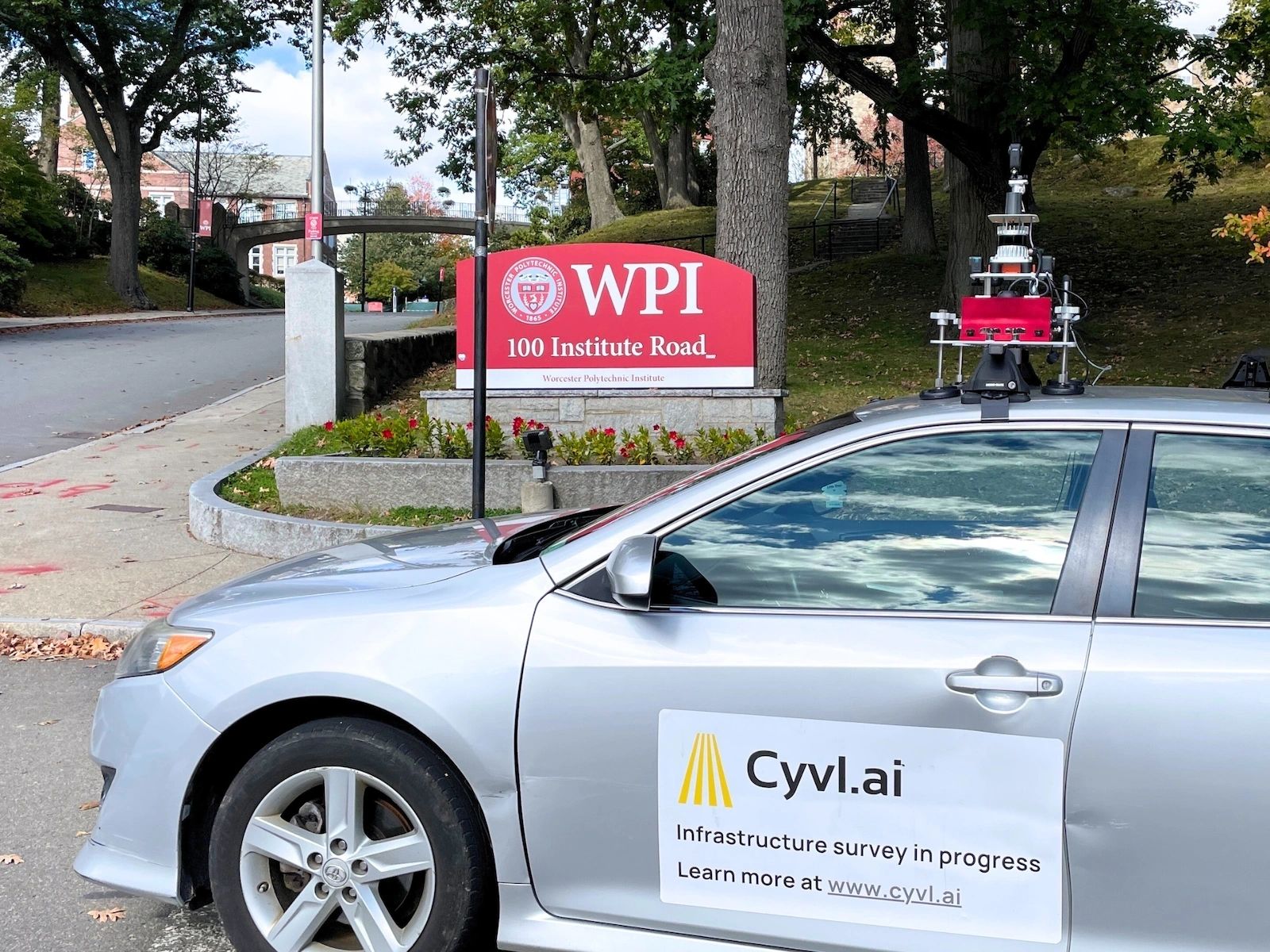
Worcester is one of many towns now relying on Cyvl.ai’s technology to better understand its roadway and pedestrian needs. The company is working with more than 100 cities and towns in 20 states, including 20 municipalities in Massachusetts, and they’ve even expanded into Australia
WORCESTER—The 430-mile network of streets and sidewalks throughout Worcester have just been digitally scanned and inventoried thanks to a start-up company that is out to improve infrastructure mapping.
Working his first summer job at the public works department in a small town in Connecticut, Daniel Pelaez saw first-hand the difficulties of mapping the infrastructure around town. Cataloging potholes, bumpy roadway and areas in need of repair was laborious and inefficient. Fast forward to when Pelaez was at Worcester Polytechnic Institute and learning about sensors. That’s when Pelaez and two classmates first came up with idea for sensors that could do this same for infrastructure mapping. Cyvl.ai was born in the beginning of 2022.
“We help governments better manage their physical assets,” says Pelaez.
Worcester is one of many towns now relying on Cyvl.ai’s technology to better understand its roadway and pedestrian needs. The company is working with more than 100 cities and towns in 20 states, including 20 municipalities in Massachusetts, and they’ve even expanded into Australia. The technology can also focus on street signage, paint markings and roadside trees or other vegetation.
“I’m happy to be bringing our technology back to Worcester,” says Pelaez.
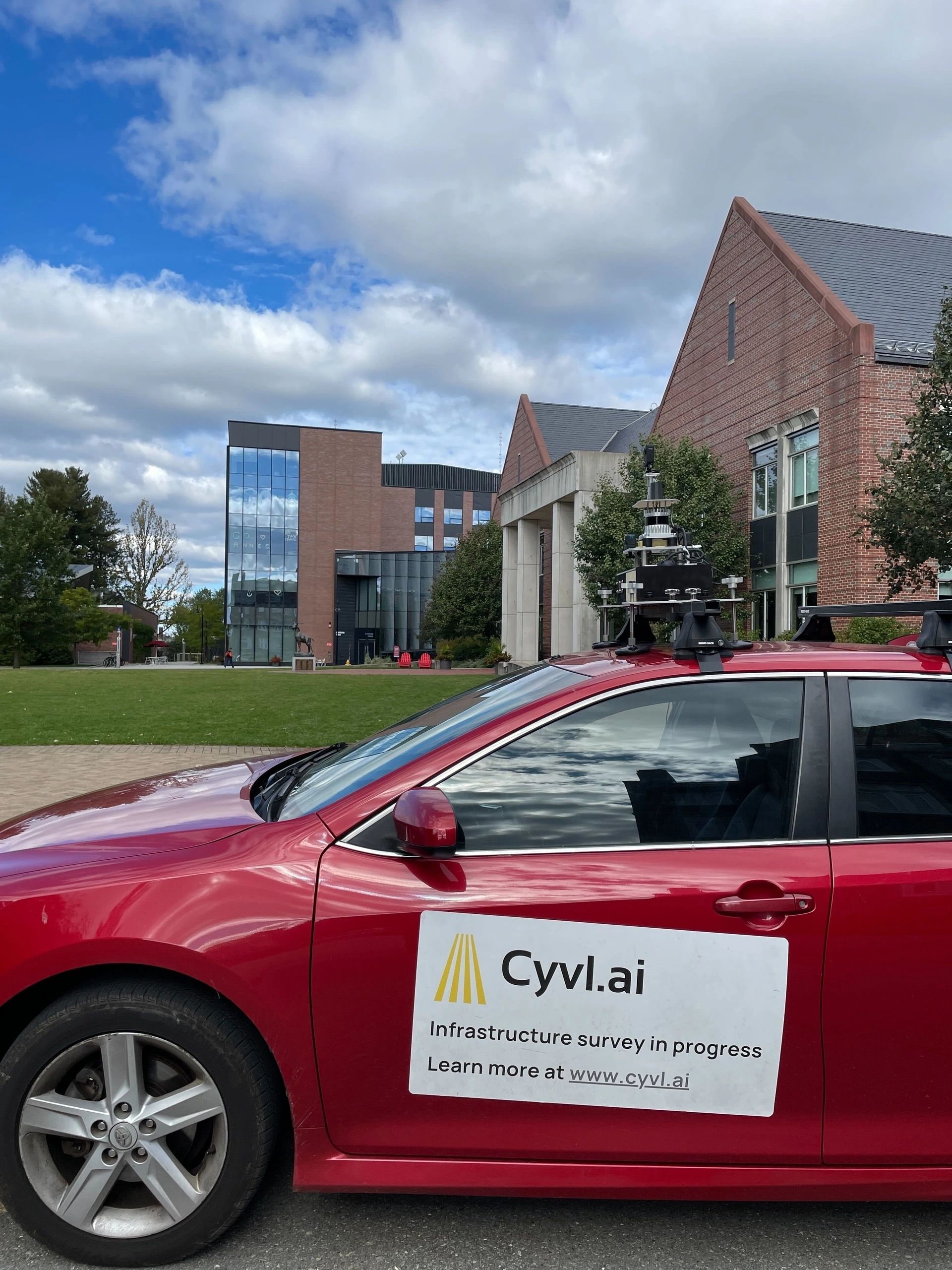
In the span of just about a week and half, Cyvl.ai, along with the Woburn-based consulting firm Environmental Partners, drove every street in Worcester with sensors that create a 3D profile of roads and objects. Cyvl.ai combines 3D mapping technology with Artificial Intelligence algorithms to image every inch of the pavement and sidewalks. The result is high resolution imagery that can be uploaded and accessed for further evaluation. The information can then determine areas in need of repair, whether curbing is deteriorating and if the sidewalks are ADA compliant.
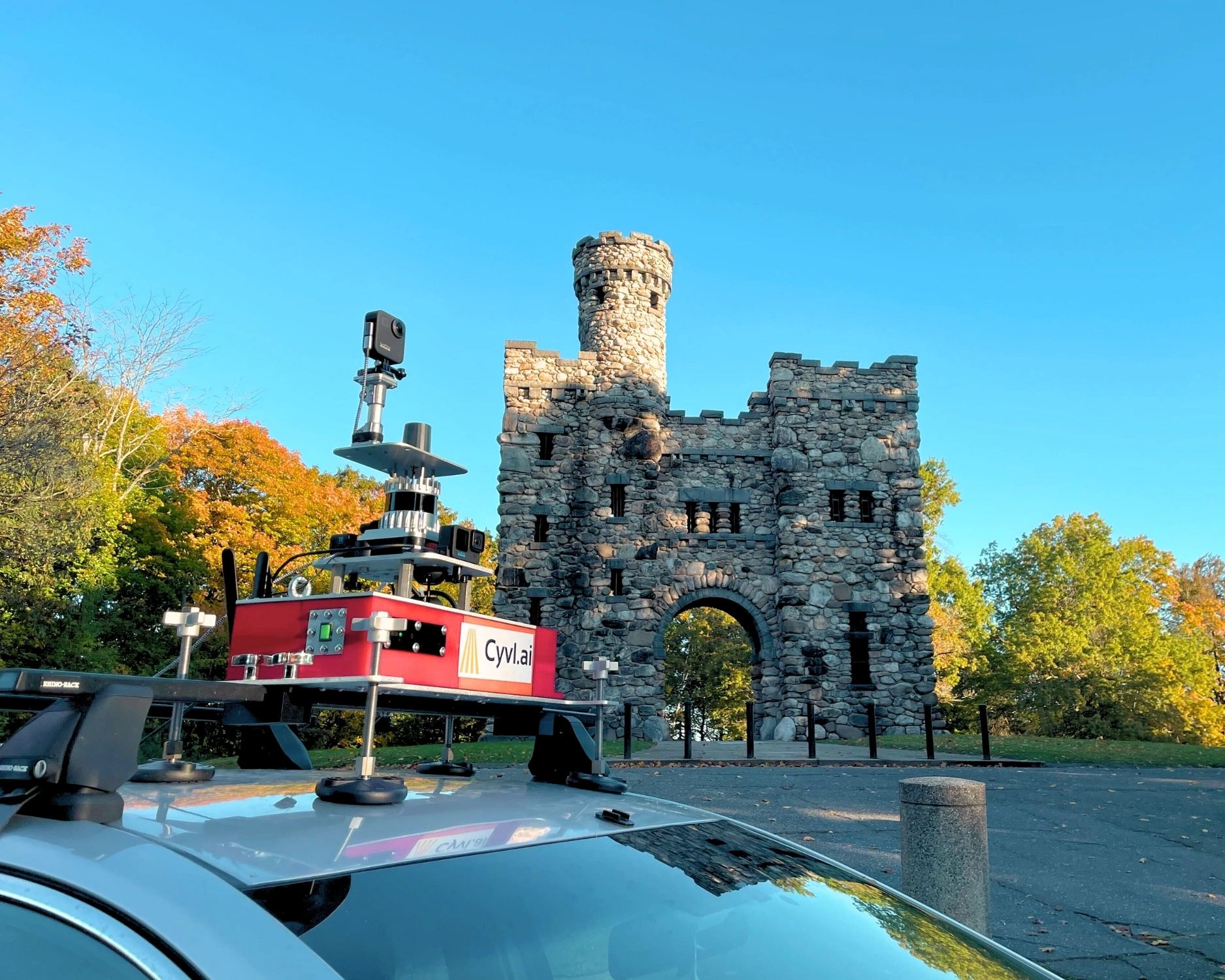
In the past, this type of inventorying of streets, sidewalks, needed repairs and more was done manually, with individuals recording observations, taking photographs, and assessing the quality of the infrastructure. It could often take six or eight months to accomplish this in Worcester, said Stephen Rolle, commissioner of transportation and mobility.
“It takes so long to capture that data and it’s expensive,” agreed Pelaez about the old-fashioned way of this infrastructure inventorying.
The digital data provides the city with the opportunity to map out paving plans, infrastructure repairs, and other needs over the next 20 years, explained Rolle.
“This technology is fine grained and detailed,” added Todd Kirrane, assistant director of the transportation and mobility department. “The old way was time consuming and not scientific.”
Kirrane explained that all of the data collected will allow the city to analyze the best treatments and repairs in accordance with the city’s budget. He added that Environmental Partners will advise to the city on the best ways of addressing the findings within their budget.
Rolle said the contract with Cyvl.ai and Environmental Partners is $290,000, which includes the scan, the detailed reports and budgetary recommendation over the next five, 10 and 20 years. Rolle expects Cyvl.ai to continue to produce updated progress reports as the need arises. He also added that beyond potholes and roadway work, the city is working to complete its ADA Transition Plan to ensure sidewalks are compliant and accessible. This technology is another tool to aid that process, he added.
Bridget Samburg is a freelance editor, reporter and ghostwriter. She has written for Boston Magazine, The Boston Globe and Yankee Magazine, among other outlets. She can be reached at bsamburg@comcast.net