
WORCESTER—There’s a big occurrence coming up that’s got the scientific community abuzz. And that has the socials yapping and curious about it, too. Well, turn around, bright eyes. It’s a (nearly) total eclipse of the sun coming up on Monday, April 8.
So, what is the big deal with this spacey event, and will we be able to witness it in all its glory?
Let’s explain this first, for the kids not paying attention. A solar eclipse happens when the Sun, Moon and Earth align either partially or entirely. During the eclipse, the Moon shifts between the Sun and Earth, creating a shadow on Earth that either blocks the light from the Sun completely or entirely in certain regions.
“The mechanics of a solar eclipse are fairly simple,” JoAnn Adams, museum educator at the EcoTarium, told the Worcester Guardian. “The Moon passes between the Earth and the Sun and creates a shadow that crosses the Earth. The reason that we get to see a total solar eclipse is a little more complicated and has to do with the sizes of and distances between the Moon, the Sun, and the Earth. The Sun has a diameter that is 400 times bigger than the diameter of the Moon. And the Sun is 400 times farther away from the Earth than the Moon is. This ratio gives us a beautiful view of the Moon completely covering the disc of the Sun.”
Get it?
“Eclipse seasons,” occurring twice a year, mark a rare celestial event. A total or near-total eclipse is especially exhilarating because it’s a rare occurrence—like the annual debut of the Shamrock Shake or stumbling upon an Albino deer in the woods.
April 8th’s solar eclipse will cross through North America, starting in Texas and moving through several states before exiting in Maine. According to the Massachusetts Department of Elementary and Secondary Education, a total solar eclipse will be visible from many parts of the United States, but no location in Massachusetts will experience totality.
However, should weather cooperate, some parts of the state will see over 90% coverage of the sun. The eclipse begins shortly after 2 p.m. and lasts about two and a half hours.
“The eclipse will last from about 2:15-4:38 p.m. in the Worcester area, with max eclipse time here at 3:38 p.m.,” said Adams. “At the moment of maximum eclipse, the Moon will cover about 93% of the Sun as seen from Worcester.”
The last such event occurred on Aug. 21, 2017. But the upcoming 2024 eclipse promises more spectacular results, with a wider path of totality spanning 108 to 122 miles across North America and passing over more cities and densely populated areas, according to NASA.
“This astronomical event doesn’t happen in our area very often, which makes it a special occurrence,” said Adams. “During [the 2017 solar eclipse] we only saw about 63% totality, which is still pretty cool, but the nearly 95% totality that we will see on April 8th should be much more impressive. The next solar eclipse that will cross over a large portion of the United States won’t be until 2045.”
In Worcester, Adams said the best place to view the eclipse is at the EcoTarium, which holds an all-out Eclipse Celebration from noon to 5 p.m. on April 8. To celebrate the “closest approach to totality until 2079,” the museum is breaking the rules and offering free admission all day.
Attendees can gather on the Sundial Plaza with a chair, a blanket, or even a whole picnic to watch the Moon cover the Sun. The day’s events also include several programs about the planets and astronomy in the Planetarium. At 3:28 p.m., organizers expect it to be “maximum eclipse” time, which is when it’s best to put on your protective glasses.
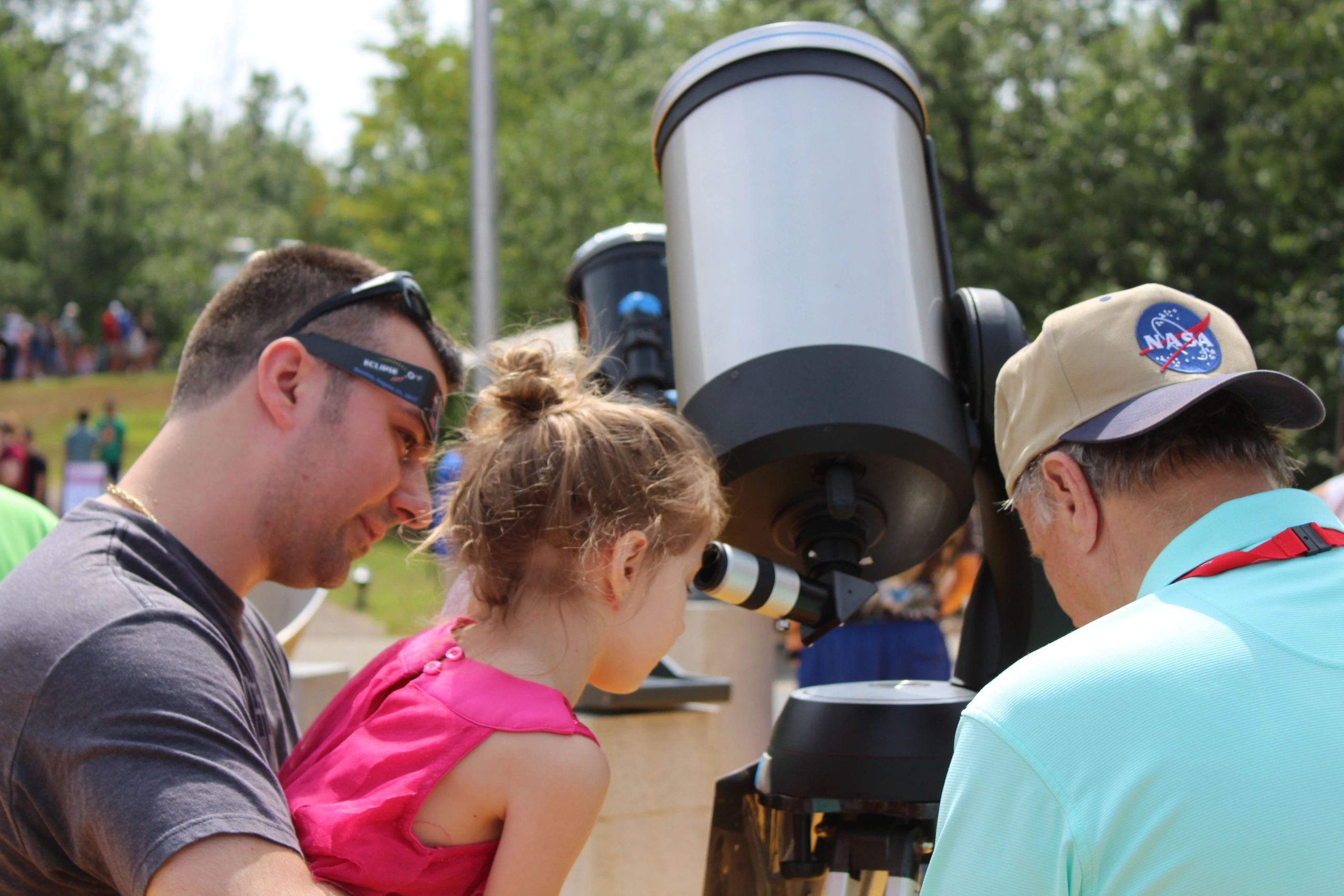
“If you’re able to head a few hours north to the path of totality, I highly recommend it,” said Adams. “Here in Worcester, the best place to view the eclipse will be at the EcoTarium. We’ll have several telescopes equipped with solar filters and free eclipse glasses. We will have the planetarium open to view the eclipse from across the world and have our friends from WXLO and Aldrich Astronomical Society offering a variety of programs in addition to our Museum Education Team of educators who will be presenting eclipse-related programming and providing assistance with our telescopes.”
Katie Chappell, director of education and exhibits, also maintains that the EcoTarium is the “best place to view the eclipse in Central Massachusetts,” but if unable to make it to the museum or head further north, “visit any of the 60 parks located across the city such as Green Hill Park, Elm or Institute Park, the Worcester Common or even right outside your own front door.”
The Village Worcester is also hosting an eclipse viewing event at Castle Park in the Main South area of Worcester. The event includes art, music, food and more.
“We are planning a really fun event for community members on eclipse day,” said Sha-Asia Medina, executive director for the Village Worcester. “We have been working with a local NASA ambassador and together we have more than 250 NASA eclipse glasses to share, tons of activities, and a lot of fun in store for all who join us on Monday.”
It’s also possible to watch the solar eclipse live online. NASA is streaming live on NASA TV, with commentary from experts and astronauts on board the International Space Station.
A countdown to the big event is also displayed on the Eclipse Watch page.
“While a total solar eclipse happens every 1- 3 years, the events are not always visible as they are usually only visible from the middle of the ocean,” stressed Adams, who added that the 2017 eclipse was the first time people were able to witness such a thing across the entire continent for the first time in 100 years.
“Our 2024 eclipse is similar,” said Adams. “While it is not coast to coast this time, it will pass across dozens of states here who will be able to view it in either partial or totality. So while you are able to travel a few hours north to see it in totality, here in Worcester you still will see about 93% totality.
“The really cool and interesting part of a totality of the eclipse if when looking at the sun during the peak portion of the eclipse, the sun will look like a thin crescent due to the moon covering the sun and the really exciting part for us here in Worcester is the close proximity to totality and this is the closest our area will get totality until the year 2079.”
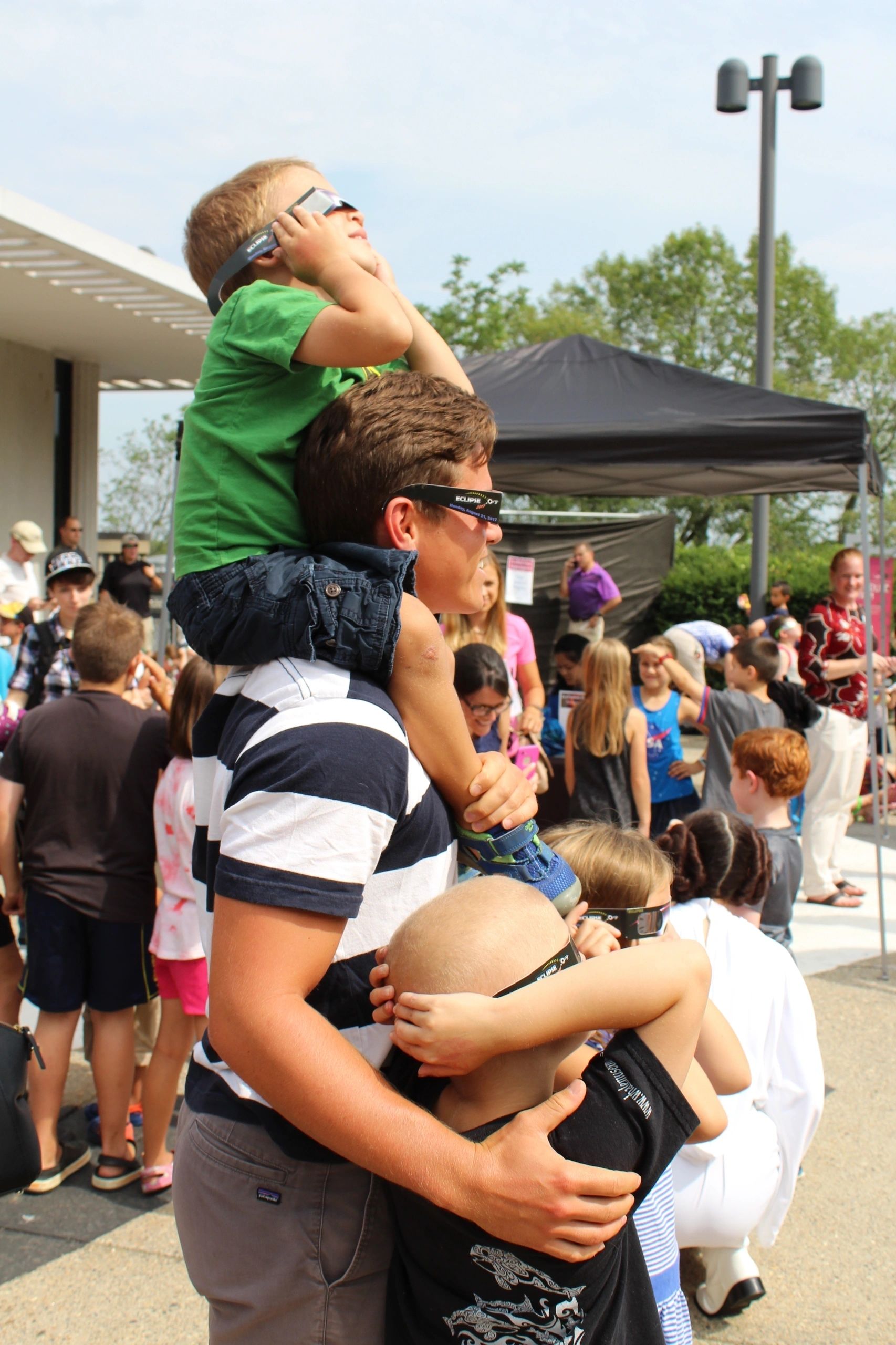
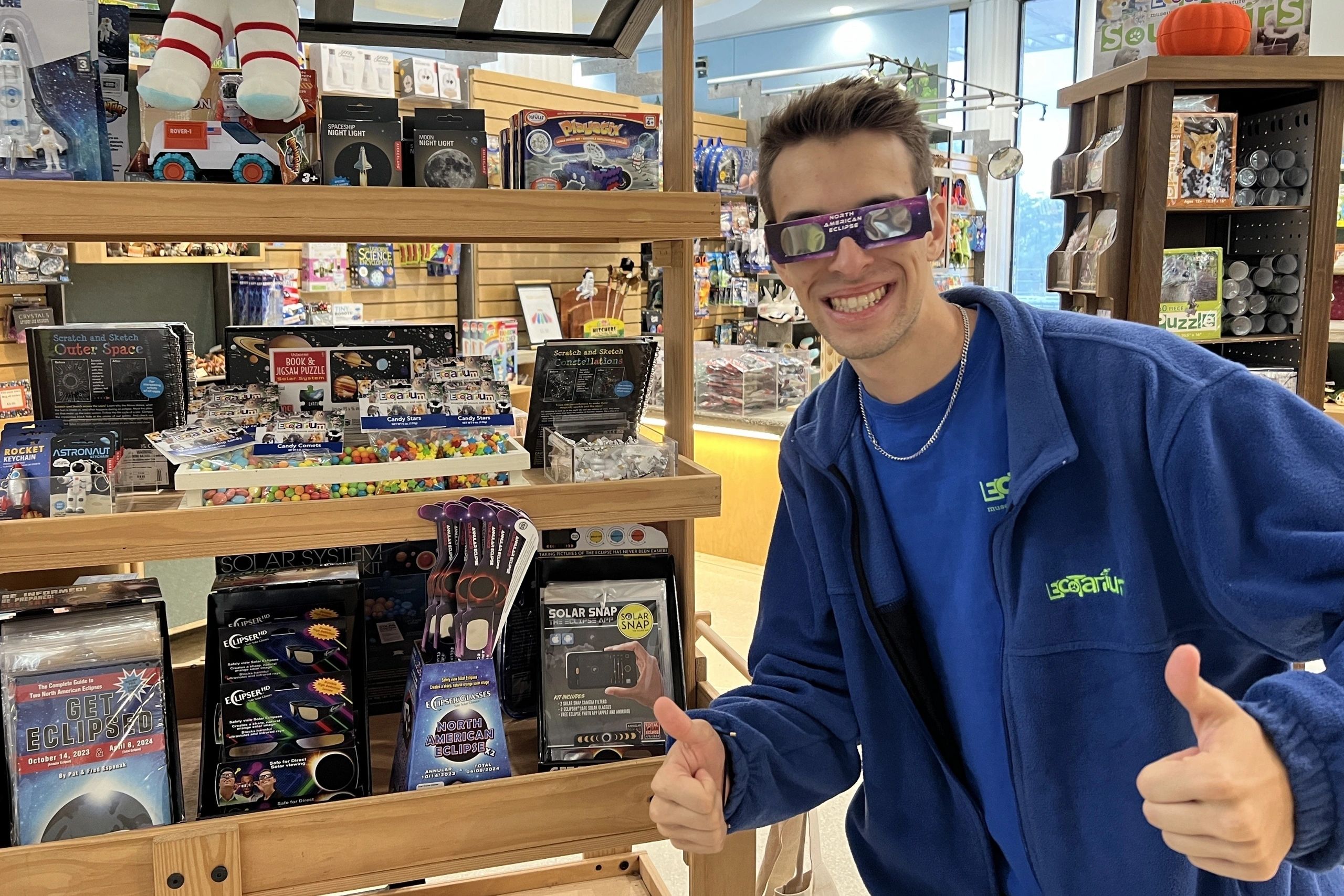
When viewing the eclipse, it’s safest to use solar filters and glasses. The EcoTarium is handing out these eye protectors, but you can order them on Amazon or at Eclipse Glasses. Some community organizations and libraries also have them available.
“You should never look directly at the Sun without eye protection, even during a partial eclipse,” stressed Adams. “If you can’t make it to the EcoTarium, absolutely get a pair of eclipse glasses that are rated for looking at the sun. Then all you need is a clear view of the sky. At the moment of maximum eclipse, even the remaining 7% [of light] is enough to damage our eyes. You are only able to safely remove your glasses if you are in the path of totality where it is at 100% coverage which while the eclipse will last multiple hours, will only be totality and therefore safe for about 3-5 minutes.
Adams added that instead of eclipse glasses, viewers can create something called a “pinhole projector” using a piece of paper or cardstock and a thumbtack, pin, or pen tip.
“There are some great instructions online for how to create these, such as from our friends at NASA,” she said.
So, while the Worcester area won’t get a total eclipse of the Sun, 93% is pretty darned good, and it’s not worth the FOMO to pass on the rare opportunity.
Charlene Arsenault can be reached at carsenault@theworcesterguardian.org
As the Worcester Guardian marks six months of delivering free, independent digital news to our city, our dedication to this mission strengthens. Please consider a tax-deductible donation to support our ongoing commitment to providing hyperlocal news coverage to Worcester.