
WORCESTER—As you dig into your Thanksgiving turkey next week, take a peek out your window.
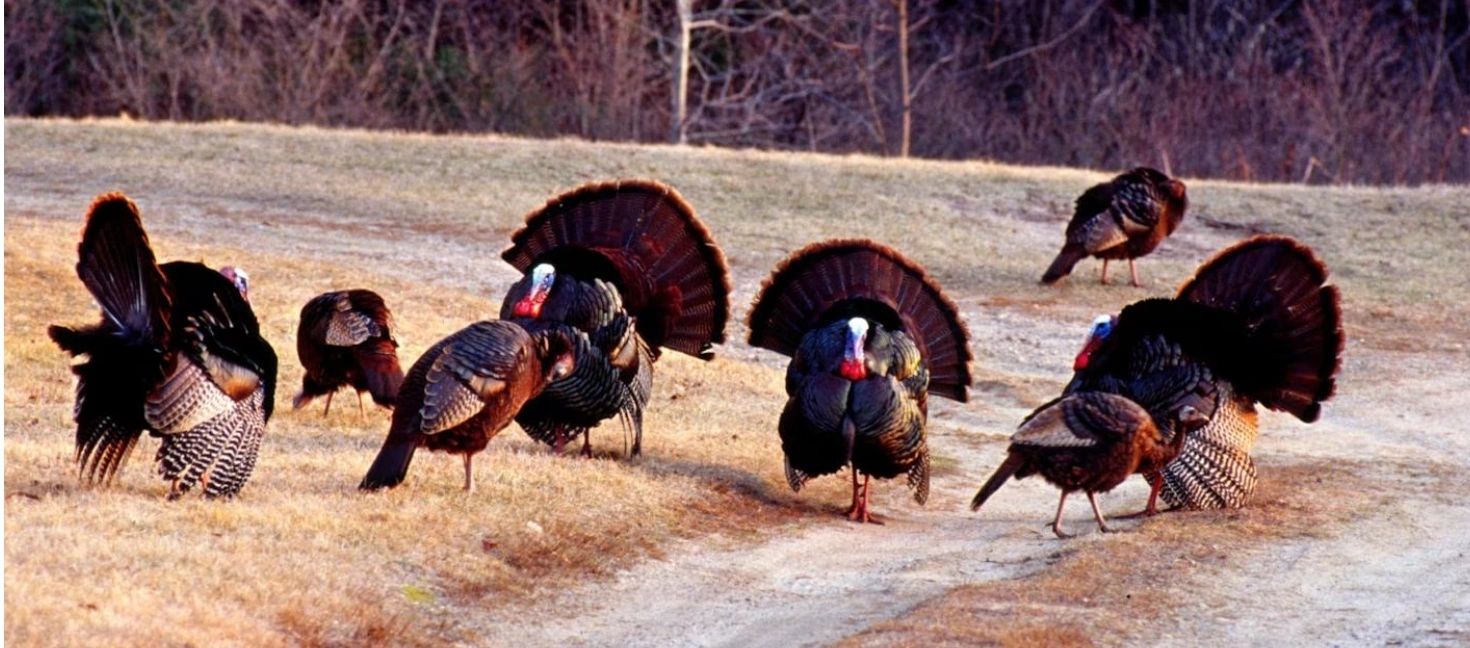
There is a fair chance you will see the lucky survivors of the holiday _ wild turkeys _ scratching at your lawn.
“There’s a lot of turkeys in the city,’’ Worcester Animal Control Officer Patrick Cherry said. Most sightings tend to occur on the east and west sides of the city, near the woods and railroad tracks. “We see them all year-round.’’
These wild turkeys are a different bird than the domestic variety, which are raised for meat. Although wild turkeys can be eaten, Cherry described the meat as “tough’’ and less appealing to most palates than the farm-raised type.
Barely 50 years ago, a wild turkey sighting was a novelty at best.
Wild turkeys are on the comeback trail in Massachusetts. When Pilgrims landed in the state in 1620, the birds were plentiful, according to Massachusetts Division of Fisheries and Wildlife.
But as the human population grew, wild turkey numbers diminished. Settlers hunted the birds for food and cleared the land for building, firewood and agriculture, with devastating consequences for the birds.
A little more than 200 years after the Pilgrims arrived, wild turkeys had vanished from the landscape by 1851. As recently as 50 years ago, a wild turkey sighting in Massachusetts was a novelty at best.
But just as human activity obliterated the state’s bird numbers, efforts by biologists brought them back.
Several initial attempts attempts to restore the population to Massachusetts in the early to mid 1900s failed. But in the early 1970s, with support from federal legislation, biologists’ luck turned.
Thirty-seven wild turkeys were captured from southwestern New York and released in southern Berkshire County. By the fall of 1978, the flock expanded to about 1,000 birds. Between 1979 and 1996, 561 turkeys were relocated in 26 releases across 10 counties.
The numbers flourished. Today, Mass Wildlife estimates the state wild turkey population at between 30,000 and 35,000. They live everywhere in the state except for Nantucket, wildlife officials report.
While they thrive in forests and on farmland, they also can be found in suburban and urban environments, including Worcester.
So what does that mean for city residents?
There have been occasional incidents, Cherry reports, including reports of the birds going after people and cars in the parking lot of UMass Memorial Hospital.
Contrary to what some believe, the birds can and do fly, heading to trees for overnight roosting. The birds can get “pretty big,’’ Cherry said, weighing in at 35 to 40 pounds.
Should they strike a vehicle, “they can do a lot of damage. They can go through your windshield.’’
But turkeys also provide benefits. They eat bugs, ticks and grubs, providing something of natural pest control. And they are not known to harm pets, Cherry said.
Still, not everyone appreciates having the birds in their backyards.
“You don’t want them to become too acclimated,’’ Cherry said. To deter them, make noise by banging items, such as a garbage can lid. They will tend to move along, he said.
Cherry has been known to be something of a Pied Piper, leading unwanted birds from yards into nearby woods, where they will, in many cases, happily relocate.
Yards should not be appealing to the birds. He suggests residents not follow the example of a woman who called to complain about wild turkeys in her yard and wondered why they wouldn’t leave.
As Cherry investigated, he determined that she was feeding them _ a sure way to keep them around.
Don’t feed the birds, Cherry urged. “People sometimes fear they will starve,’’ he said. “No, they won’t. They’ll survive.’’
After all, as history has shown and despite human threats through the generations, wild turkeys are survivors.
Sandy Quadros Bowles is a journalist with more than 40 years of experience in print and online journalism. In her free time, she enjoys traveling, reading and interacting with any and all animals that cross her path. She can be reached at sqbfreelance@gmail.com