
WORCESTER—If you walk into Sarah Sanders’s classroom at Burncoat Middle School in early spring, you might hear something strange: the crack of a bat—rendered in metaphor.
In Worcester, where baseball is a hometown heartbeat and poetry often gets benched in classrooms, Sanders has found a way to merge the two—and she’s not just making kids write odes to Fenway Franks. She’s giving them a reason to care.
“I look at the data,” said Sanders, a 16-year educator and Burncoat’s librarian, who also teaches Advanced Research Seminar and News Media. “Worcester’s seventh and eighth graders were scoring well below the state average on poetry questions in the MCAS. So I thought, what if we bring in something they already love?”
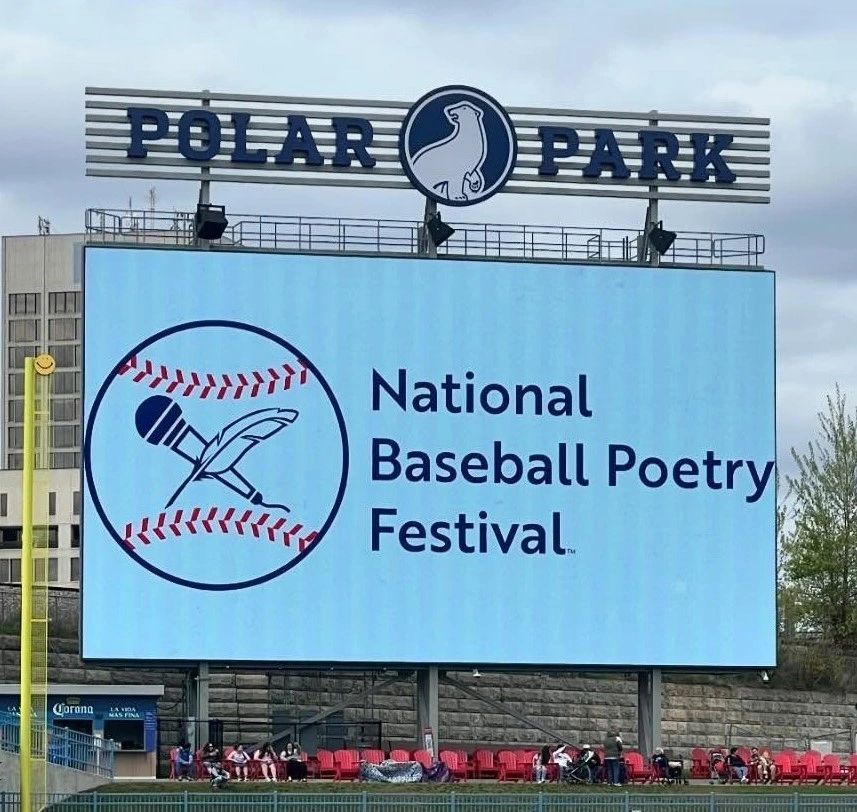
That “something” turned out to be baseball. Now, thanks to the National Baseball Poetry Festival, happening May 2–4 at Polar Park and venues across Worcester, Sanders’s students and others like them are stepping up to the plate—not just to write poems, but to perform them for a live audience.
The Youth Poetry Reading on Saturday, May 3, is shaping up to be a showstopper: 60 young writers from across the country deliver their original poems inside Polar Park. Three of these poets even throw out the first pitch. For many, it’s their first brush with literary recognition—and their first chance to stand on a professional baseball field.
“April is National Poetry Month and the start of baseball season,” Sanders points out. “So this contest hits at the perfect time. It’s an ideal opportunity to encourage participation—and the chance to stand where the WooSox play? That’s the kind of thing kids remember for the rest of their lives.”
But the true standout here may be the lesson plan Sanders designed, now in use by teachers nationwide. Her approach pairs “Casey at the Bat” with a toolkit of literary devices, guiding students to write their own work with a poet’s eye and a fan’s heart.
“I created a simple lesson based on the strategies in Small Teaching K-8, the book I co-authored with James Lang,” she explains. “It’s freely available on the Festival’s website. We use ‘Casey’ as a mentor text and break it down—tone, imagery, word economy. It’s poetry with real stakes.”
One student’s poem, “Curveballs,” began in Sanders’ classroom and may soon be read aloud before thousands. It was sparked during a visit from bestselling poet Aimee Nezhukumatathil last fall. “Having a living, working poet read from World of Wonders and answer students’ questions really inspired them,” Sanders says. “One of my students even went to see her speak at Holy Cross and asked a question in front of a packed house of college students. That’s confidence—and that’s poetry working.”
It turns out that learning poetry outside, while talking about baseball, also does wonders for student mental health. “We take our learning outside to practice using sensory details, and research shows outdoor education lowers depression and anxiety. It’s poetry, fresh air, baseball—it’s a win-win-win,” Sanders says.
She’s also seen academic benefits: “Poetry is an incredible tool for teaching word choice, tone, theme, and imagery in digestible bites. Great poets say more with less—kind of like a good pitcher, really.”
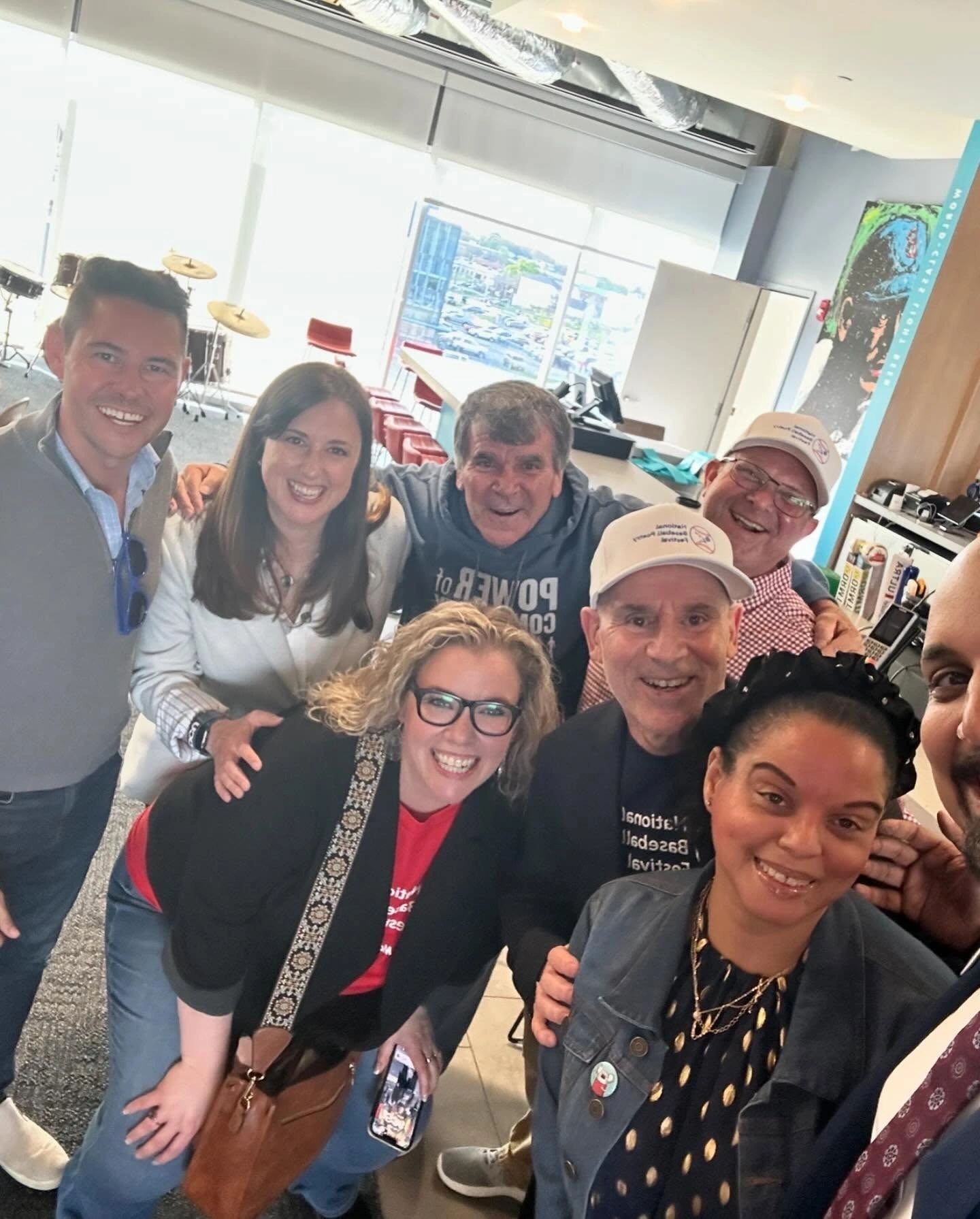
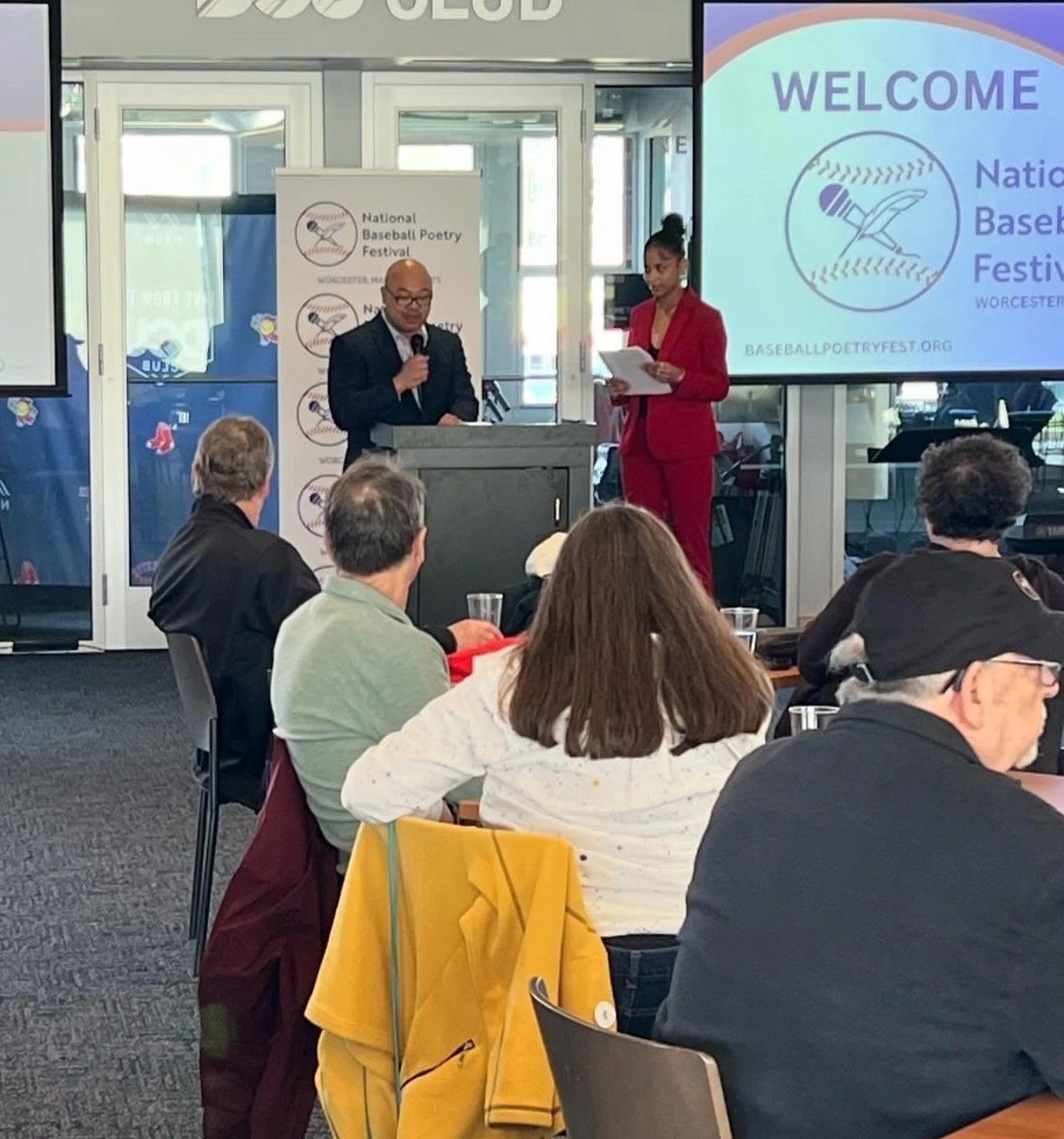
The festival itself is no small affair. Friday kicks off with a welcome reception at Polar Park featuring poets, musicians, community leaders, and even longtime NPR host Bill Littlefield. Saturday’s lineup includes the Youth Poetry Reading, a poet-to-poet conversation with Oliver de la Paz and Ethelbert Miller at the Jean McDonough Arts Center, and an open-mic night at Electric Haze. Sunday wraps things up with more baseball and reflections.
Festival Director Steven Biondolillo often reminds his team that poetry and sport have long shared a stage, even as far back as ancient Greece. Sanders, a Division I athlete turned English major, agrees: “This Festival feels like home to me. It connects the parts of my identity that don’t always get to share a space.”
As for what’s next, Sanders hopes the festival becomes as standard in schools as science fairs or field day. “I’d love for it to be a universal experience,” she says. “Not just in Worcester, but across the country. Baseball belongs to everyone. So does poetry.”
National Baseball Poetry Festival, the event lineup:
Friday, May 2
4 p.m. – Welcome reception
Polar Park in the DCU Club
Mingle with poets, artists, singers, community leaders—and poet/Boston radio legend Bill Littlefield—while taking in the view from the DCU Club above the field.
Saturday, May 3
2 p.m. Youth poetry reading
Polar Park
Cheer on young poets reading their winning baseball-themed verses in a public celebration of youth voice and creativity.
3:30–5:30 p.m. – Poet-to-poet reading
Worcester PopUp at the Jean McDonough Arts Center, (20B Franklin St.
A quieter moment to soak in thoughtful work and conversation with featured writers including Ethelbert Miller and Oliver de la Paz, Worcester’s own Poet Laureate.
7:30–11 p.m. – Open mic night
Electric Haze, 26 Millbury St.
Live performance, spoken word, surprise guests—and maybe even a curveball or two. The mic is open and the vibes are strong.
Featured guests include nationally acclaimed poets, contest winners of all ages, civic leaders like Mayor Joe Petty and Senator Robyn Kennedy, and hometown heroes including Dr. Charles Steinberg of the WooSox.
Full schedule at: www.baseballpoetryfest.org
Have news, tips, or a story worth telling? Reach Editor Charlene Arsenault at carsenault@theworcesterguardian.org—because good stories (and great scoops) deserve to be shared.
The Worcester Guardian is an independent nonprofit news organization. Support local journalism by making a DONATION today.