This past year, the Worcester Cultural Coalition welcomed a new leader and considered it a year of transition. The partnership has grown to more than 80 membership organization that hosts events that draw some 2.7 million visitors to the city annually
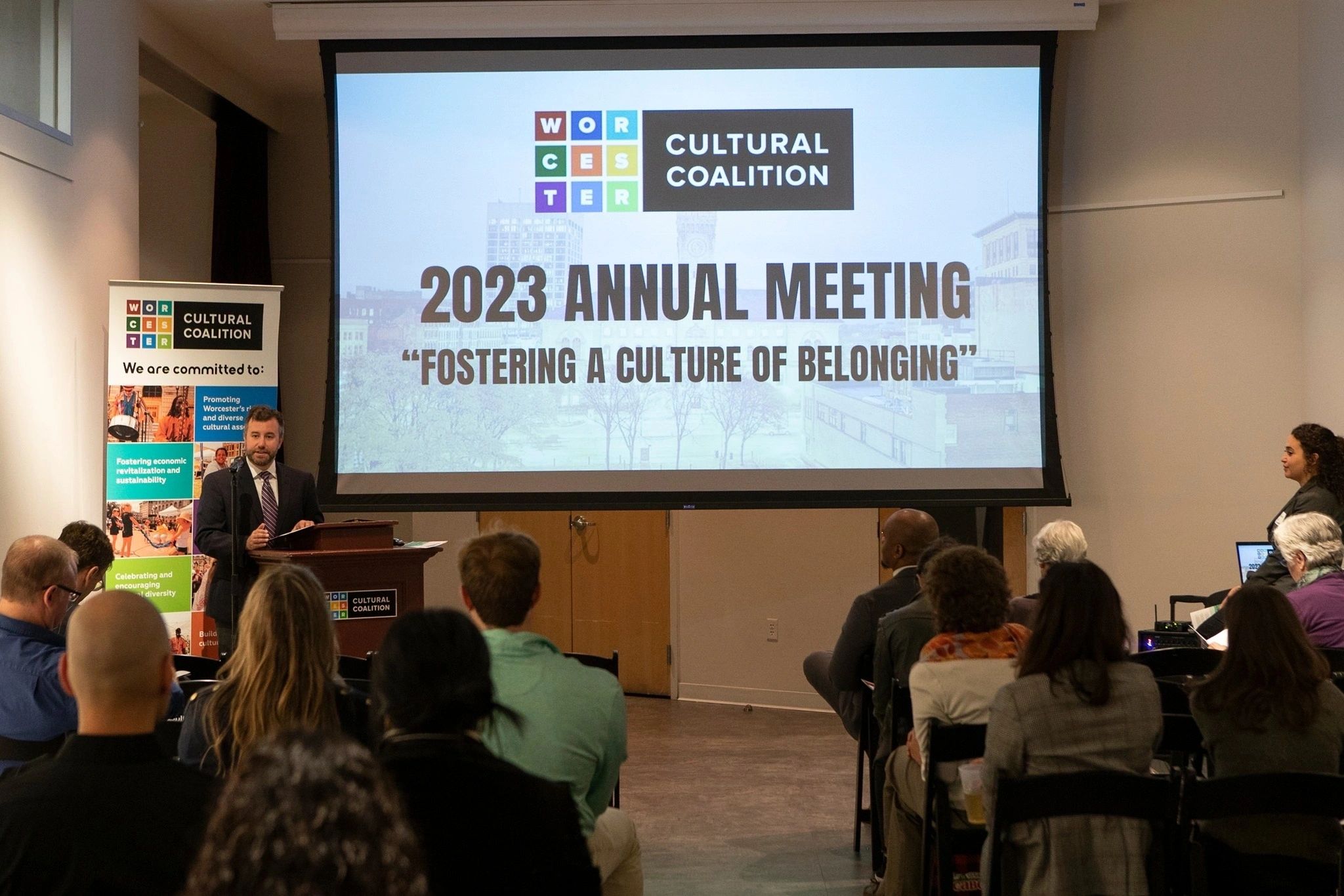
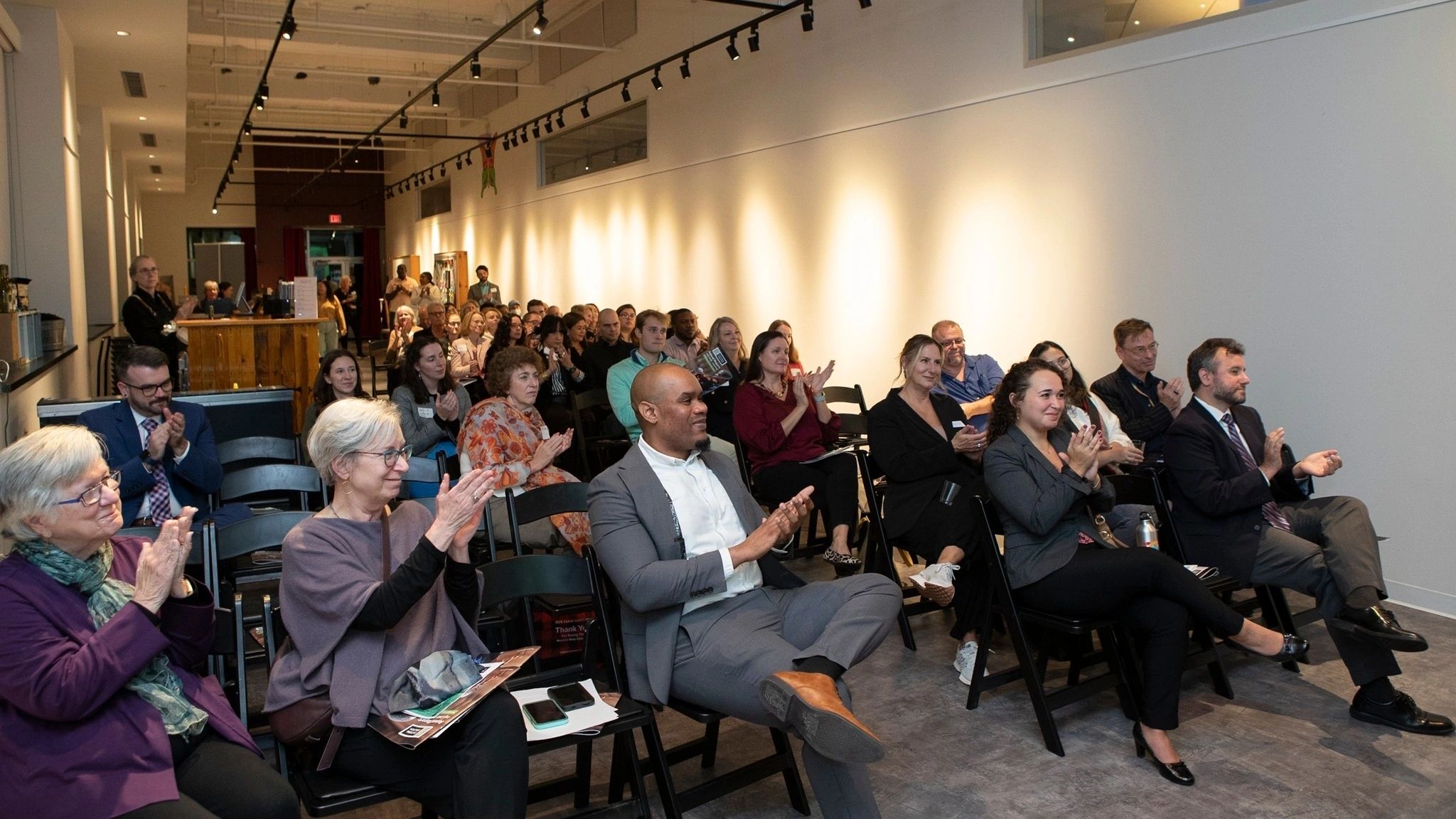
WORCESTER —Recapping a successful year, and conveying a whole lot of optimism for the one ahead, the Worcester Cultural Coalition recently held its annual meeting at the Jean McDonough Arts Center (JMAC). Speakers at this well-attended event highlighted recent growth and shared some exciting plans.
The Worcester Cultural Coalition (WCC) is a public-private partnership, founded in 1999 with 12 member organizations originally. It now has more than 80 member organizations, which host more than 2.7 million visitors annually to its events.
WCC Board Chairman Eric Butler said this past year was one of transition for the coalition and its member organizations, including the appointment of a new Executive Director Fabian Barracks, who is also the city’s cultural development officer.
“
Over the past year, we have found a strong and capable leader,” Butler said. “He has demonstrated a great energy and passion for the mission of the coalition, his love for the arts and the endurance and ingenuity he has displayed in his past professional experiences.”
Barracks shared his vision for the commission, which is to make the arts in Worcester a catalyst for becoming a better community at large. He asked those in attendance to imagine a Worcester that is the true essence of a welcoming community.
“It’s a place that radiates organic collaboration, vibrancy, and above all, belonging,” he said. “Now, picture a cityscape that is adorned with the tapestry of diversity, where people from all corners of the world can proudly call Worcester ‘home.’”
Barracks said he envisions more “festivals of inclusivity,” bringing Worcester together and making everyone feel accepted, and where people can be their authentic selves without fear of judgment. He also hopes that the culture will spread into organizations and institutions beyond the arts community.
“We understand that a culture of belonging is not just the responsibility of a few, but it is the shared duty of all,” he said. “Now, envision institutions that mirror the values of our diverse community – schools, organizations, businesses, actively promoting inclusivity and equity. They recognize that diversity is not just an asset, but is our greatest strength.”
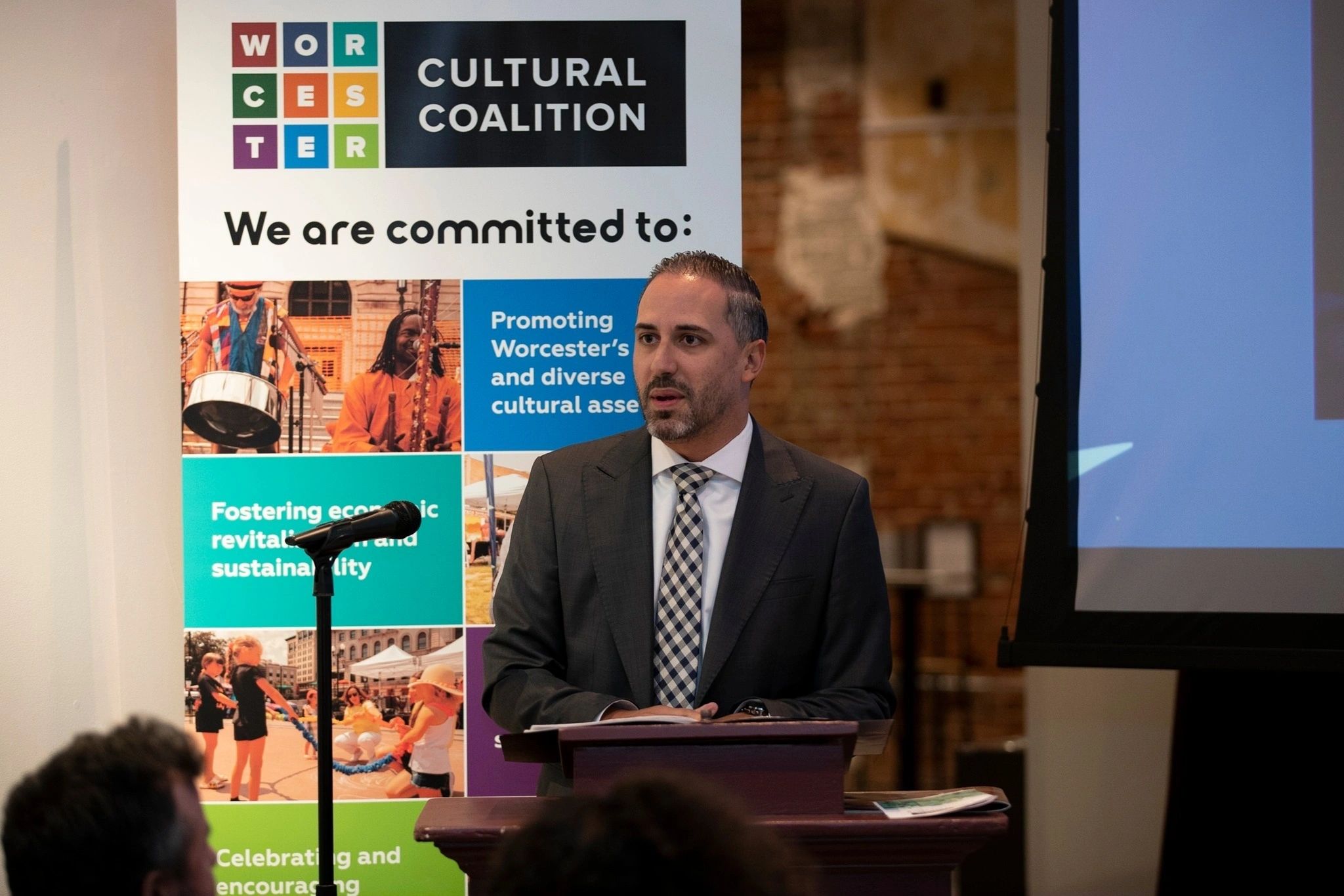
The coalition, Barracks said, will prioritize examining itself first, to make sure it is reflecting the city’s diversity and reaching everyone. It will also need to advocate for diversity in situations in which arts aren’t necessarily involved, including socio-political issues.
“We have a duty to advocate for social and systemic transformation,” he said. “It is our shared responsibility to break those barriers that prohibit us from becoming a truly supportive and welcoming city.”
City Manager Eric Batista said the city is committed to the arts community and looks forward to more collaborations. He also agreed with Barracks on the direction Worcester should take regarding the arts.
“We, as a city cannot be authentically a creative city if we exclude, or overlook, the unique experiences and perspectives across the spectrum of our arts community,” Batista said. “We must make spaces for all of our residents, including our most recent arrivals. We need to lead the way in creating a sense of community for all of them.”
The means of approaching those goals, Barracks said, will include asking for input from member organizations, as well as other organizations and individuals.
“We need the input of everyone to be more intentional in realigning our priorities,” Barracks said, “before carving our social climate.”
One upcoming change will be the city’s streamlining of special event permitting, making it easier for more community events to take place.
Treasurer Ellen Dunlap gave an overview of the coalition’s financial report, which showed that the revenue trends have all increased over the past three years, including income from the JMAC, but the real improvement has been in the grants.
“These trends are dwarfed by comparison by what we draw in our grants,” she said, adding that in 2021, $300,000 in grants were received, followed by $425,000 in 2022 and $646,000 in 2023. Those grants and other revenues have enabled expansion of programs and the ability to help member organizations.
JMAC Managing Director Olivia Scanlon said that the center, which is a program of the WCC’s and operated in partnership with the Hanover Theatre for the Performing Arts, has reorganized its management structure, and has made some other infrastructure improvements. The JMAC has held 375 events in the past fiscal year, many of them were able to be fully-funded or subsidized through grants.
The coalition also elected (unanimously) three new board members: Sha-Asia Median, the director of The Village Worcester, a new Afrocentric cultural, learning and healing center; Christi Collari, Director of Community Outreach for ValleyCAST, the arts and culture arm of OpenSky Community Services; and Evelyn Darling, executive director of the Downtown Worcester Business Improvement District.
Governance Committee Chair Tracy Kraus said the candidates were chosen from organizations that align with the WCC’s goals, but who fill gaps that might not yet be represented in the coalition.
“Each year, we look at the organizations that are currently represented on the board, and we look to see how they’re representing the entire culture,” Kraus said. “This year, we have a slate of new board members.
Steve Smith can be reached at steve@stevephotographysmith.com
