
The city council voted Tuesday to send the city’s homelessness strategy back to the administration for revisions after a lengthy debate over a proposed ordinance that would prohibit camping on public property and fine people who fail to comply with orders to leave encampments.
The proposal, part of City Manager Eric Batista’s “Disrupting the Cycle” framework, was first presented to the council Sept. 15 but held until this week’s meeting. The larger strategy calls for identifying unhoused people, gathering better data, evaluating what is and isn’t working and examining available resources, including shelter capacity.
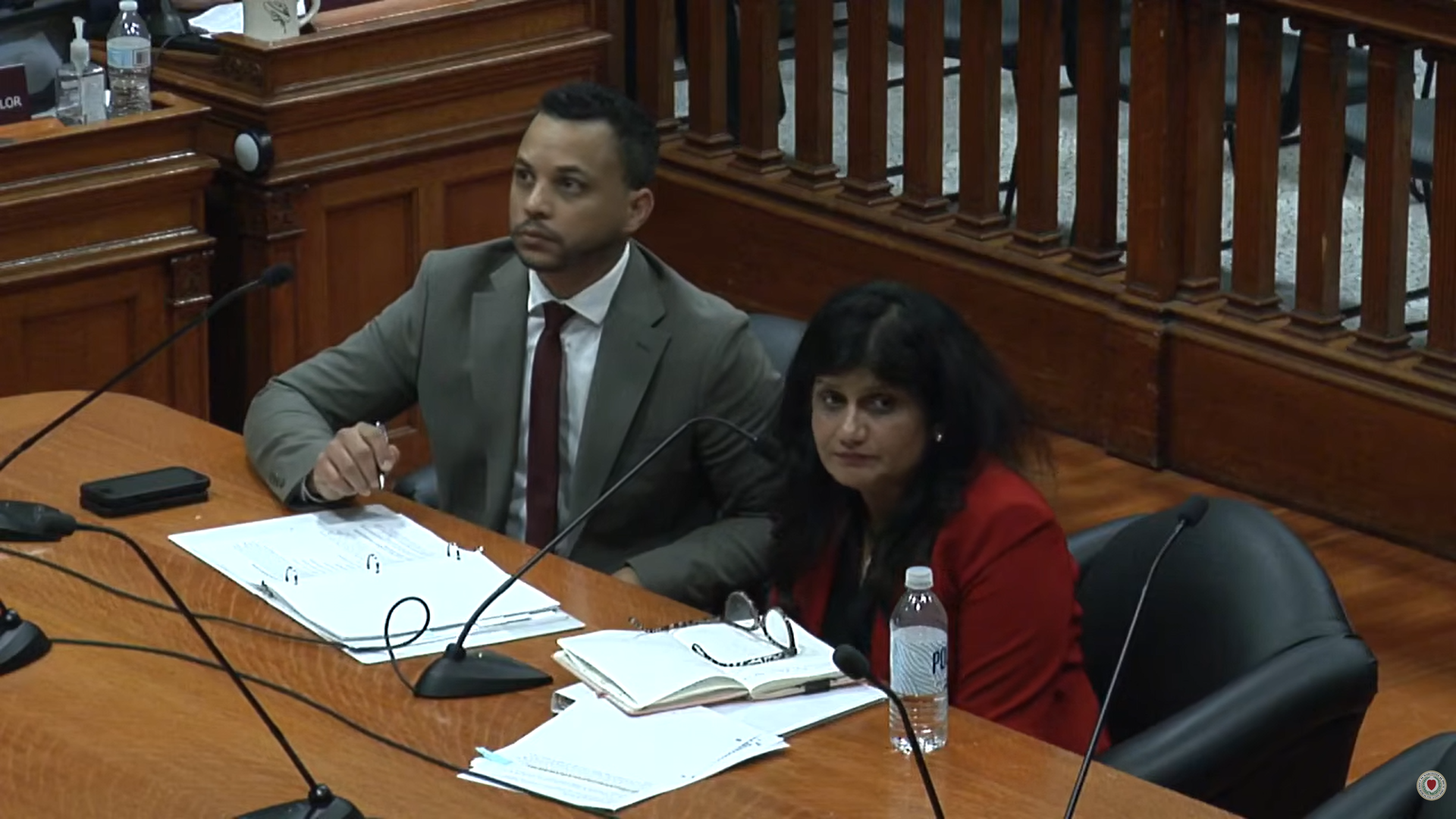
Health and Human Services Commissioner Seema Dixit, who said she helped the administration develop the plan, said the proposed camping ordinance is one part of that larger framework and is intended to help connect people with needed services.
“The encampment ban ordinance is just a proposal towards ensuring that we don’t leave any effort in making sure the services are available,” she said, “and they are well-coordinated in the city to reach these populations, because for them to live in the encampment is not safe—for their own safety, as well as their offspring.”
Councilor Gary Rosen said the city’s report does a good job showing what hasn’t worked but argued the proposed plan isn’t “the right plan” because it criminalizes the state of being homeless.
“This plan needs a lot of work,” Rosen said. “It’s a start. I couldn’t support fining people for being homeless. Many have mental health challenges and issues. Many have addiction issues. Many are older. We know the growing population of seniors across the country. Many are on fixed incomes. They can’t afford the ridiculous rents, especially ones we have in this city that are so oppressive.”
Rosen moved to send the plan back to the administration, incorporating suggestions raised during the meeting and seeking additional input from service agencies and others who interact with unhoused people.
“There are some good things in this plan that I could support,” Rosen said. “Right now, I would reject the plan. Get rid of the fines. I would never vote to fine the homeless.”
Mayor Joe Petty said he also does not want to criminalize homelessness and wants the city to show dignity and respect while connecting people with services, rather than removing them from one location without another place for them to go. He suggested looking at best practices from cities across the country and revising the plan with more permanent solutions in mind.
“We go take an encampment down, what then?” Petty said. “They just go to another neighborhood, then they come back. How do you handle that. Where are the beds? Where are the services?”
Council Vice Chairman Khrystian King noted that the city already has ordinances addressing issues such as loitering, trespassing and blocking the public way.
The new element, he said, is fining individuals.
“It is nothing more than an ordinance that creates a situation where folks are unsheltered, and perhaps arrested, making additional barriers,” King said.
Batista said the $25 fine was not part of much of the discussion leading up to the proposal and was added later, after most of the report was in place. He said agencies involved in developing the report had not been consulted about the penalty.
“There was no feedback from the partners on the $25 fine,” Batista said. “They were not aware of that, as it was added later as part of the process.”
“That’s a glaring omission,” King said, before asking Dixit who spoke for unhoused people during discussions about the fine.
“There was no input received from them,” Dixit said. “This was something when we finalized the plan, as well as the ordinance that was submitted.”
King then asked that the proposed fines, which he termed the “Homeless Incarceration Act,” be eliminated.
Councilor Robert Bilotta said the answer is resources.
“We need more housing,” Bilotta said. “The answer to this is affordable housing. We need rent control. We also need to do more when it comes to a variety of housing – low-barrier housing, non-congregate, supportive housing, housing first—and unfortunately, due to the fed cuts coming, supporting housing and a lot of the funding for this is going to get worse, and its’ really sad. But, what I think we can do here is invest in solving this problem. It takes resources. It takes money. We invested over $150 million to build Polar Park. We should be investing more in this problem.”
The council heard nearly two more hours of public comment on the proposal Tuesday, after about 90 minutes of comment the previous week. The vast majority of speakers opposed the proposal.
Rhiannon Snide, a staff attorney at the Central West Justice Center, said she regularly works with unhoused people and argued the ordinance would impose penalties without guaranteeing that alternative shelter is available.
“There’s no requirement that resources be available, before these criminal penalties take effect,” she said. “People will be punished simply because there’s nowhere to go.”
Meg Coffin, CEO of Your Access Advocates Inc., said the larger problem is a lack of housing.
“The waitlist for accessible low-income housing with the Worcester Regional Housing Authority is 30 years,” Coffin said. “Recommending this at a time when inflation is so high, and we’re seeing huge cuts to Medicaid funding, just in few short weeks, makes it even more unbelievable.”
Mike Kane, director of economic development and public policy for the Worcester Regional Chamber of Commerce, said the chamber supports Batista’s proposal, arguing that encampments create problems and costs for local businesses.
“They are engaging in illegal behaviors, while increasingly impacting our businesses, their customers and employees, and community public spaces,” Kane said. “Unfortunately, the current situation with the single adult population in need of services is causing business recurring cleanup costs for human defecation, discarded needles and trash, along with mounting expenses for private property repairs, security and growing concerns regarding customer and employee safety.”
The council rejected a motion by King to file the proposal, effectively ending consideration of it in its current form. Councilors instead voted to send the report back to Batista and his staff for revisions. The vote was 8-1, with King abstaining. Councilor Kathleen Toomey, who was absent, recused herself.
