
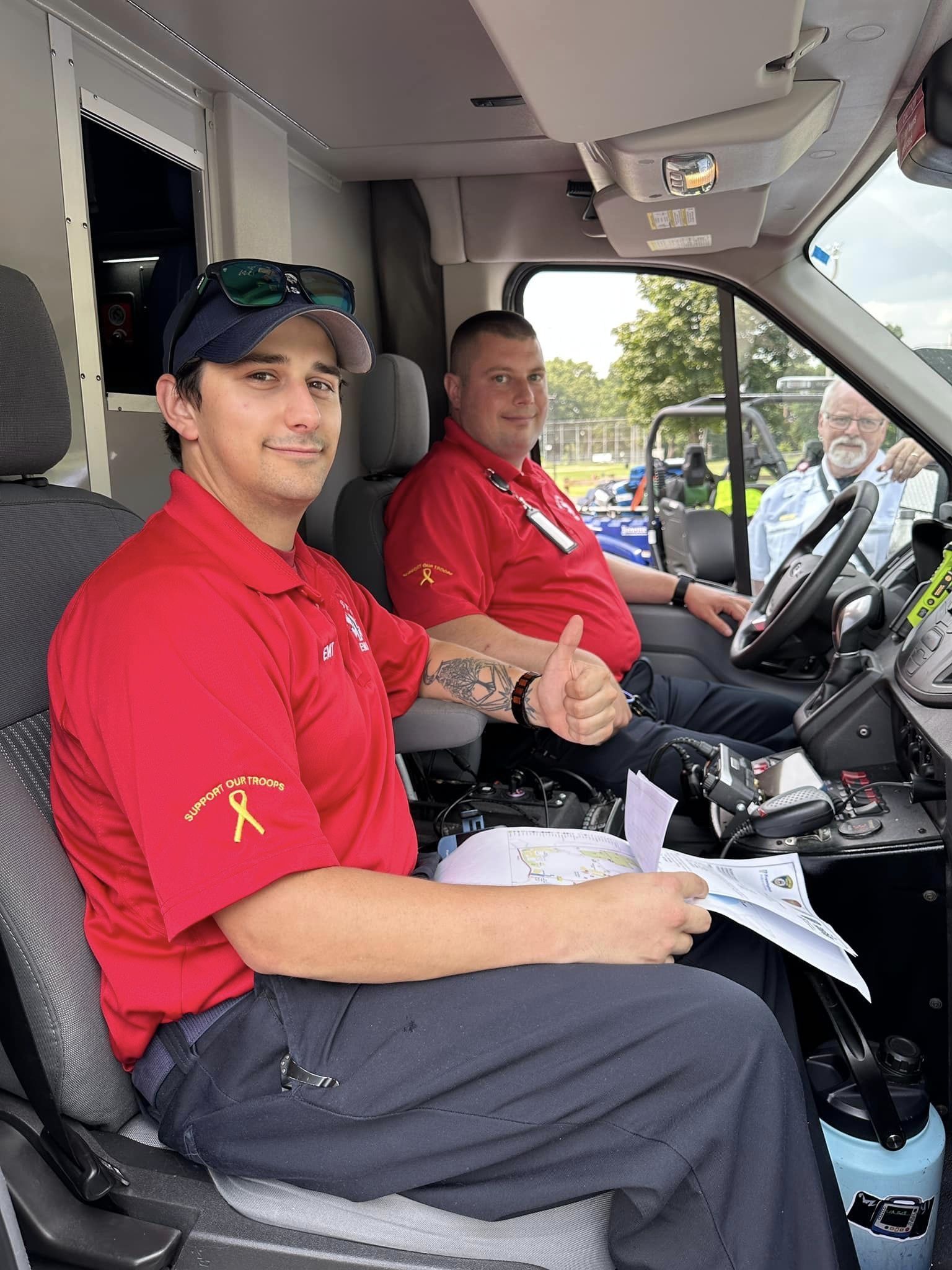
Worcester paramedics can now bring blood directly to some of the city’s most critically injured patients, allowing transfusions to begin before they reach the hospital.
Worcester EMS launched its prehospital blood program Sept. 1 after receiving approval from the Massachusetts Department of Public Health’s Office of Emergency Medical Services in July. The service, operated by UMass Memorial Health and serving Worcester and Shrewsbury, is the first ground ambulance service in Central Massachusetts authorized to carry and administer blood products in the field.
The blood products are not carried on every Worcester ambulance. Instead, they are kept aboard a designated supervisory vehicle that can respond to serious incidents throughout the EMS system.
“Blood products are currently carried on a designated Worcester EMS supervisory response vehicle operated by the lieutenant on duty, rather than on every ambulance,” Worcester EMS Chief Norman Soucie said. “The lieutenant responds to serious incidents across the system and can bring blood products directly to the scene when a patient is identified as a candidate for prehospital transfusion.”
The program is intended for a relatively narrow group of patients suffering severe traumatic bleeding and hemorrhagic shock, a life-threatening condition in which substantial blood loss prevents adequate blood flow to the body’s organs and tissues.
Massachusetts EMS protocols permit approved paramedics to transfuse low-titer Type O positive whole blood or packed red blood cells to trauma patients who meet specific clinical criteria. Criteria can include severely low blood pressure, low blood pressure combined with an elevated heart rate, certain cases of traumatic cardiac arrest or a shock index above the state threshold. Paramedics are also instructed to first make sufficient attempts to control obvious bleeding.
“The waiver applies to trauma patients in hemorrhagic shock caused by severe blood loss,” Soucie said. “As this is a new protocol and is limited to a specific group of critically injured patients, Worcester EMS cannot yet estimate how often it will be utilized.”
“The goal is to ensure blood is available when needed most, allowing treatment to begin as early as possible in the field,” he added.
Bringing treatment closer to the patient
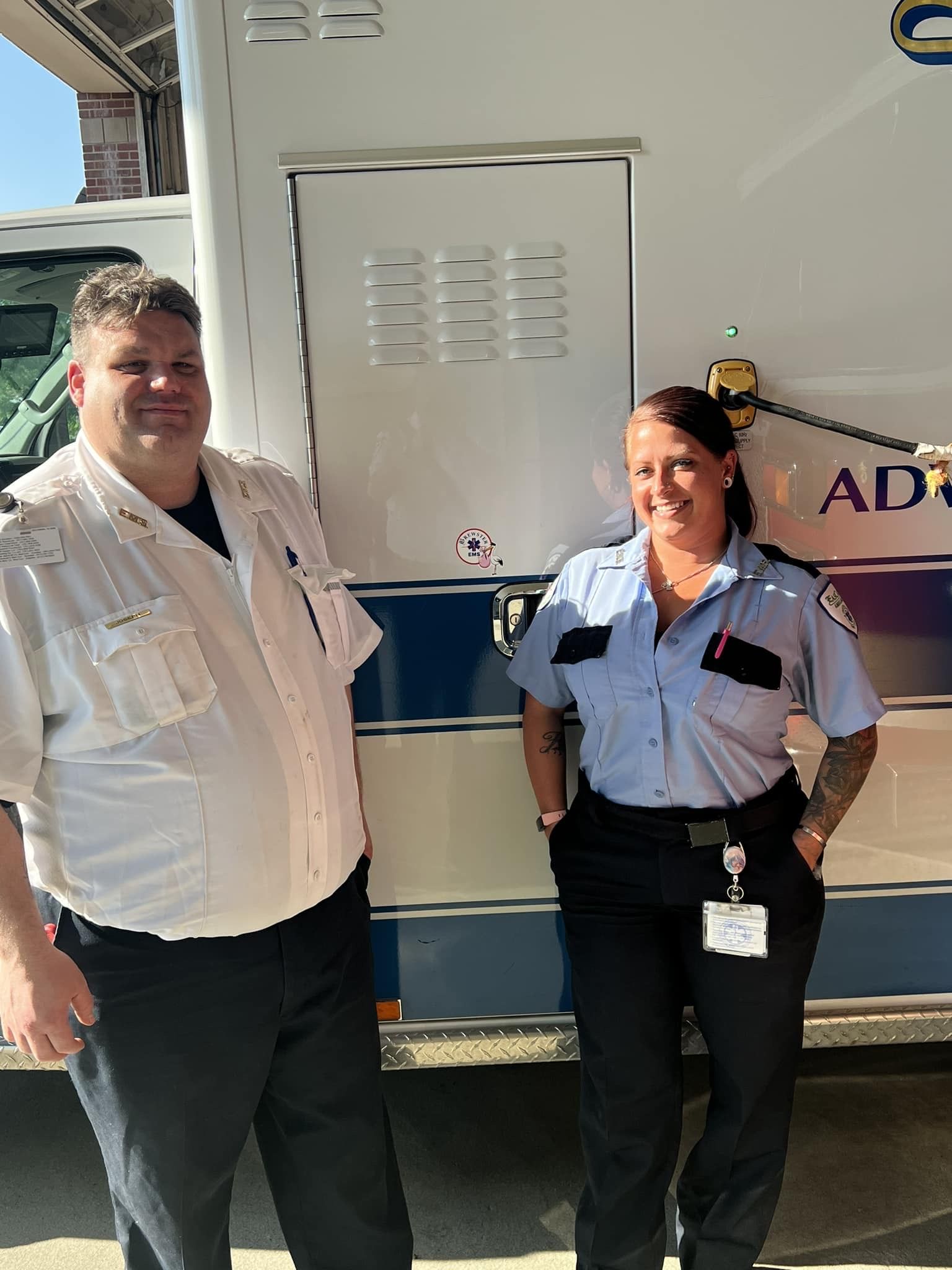
The rationale behind prehospital transfusion is straightforward: A patient who has lost a dangerous amount of blood may benefit from receiving blood sooner rather than waiting to reach an emergency department or trauma center.
Domenic Corey, a practicing paramedic who is director of innovation at Brewster Ambulance Service and a senior lecturer at Northeastern University, said prehospital blood is part of a broader effort to move time-sensitive emergency treatment closer to patients.
“There is increasingly convincing evidence that earlier blood product administration saves lives in hemorrhagic shock, and WEMS bringing blood to patients means patients who could benefit are able to receive that blood earlier,” Corey said.
“This means both more patients can receive blood — i.e. before they are clinically dead — and patients who need blood often need less of it since it can start helping them earlier.”
Research generally supports the importance of early resuscitation with blood products in major hemorrhage, though questions remain about the best product and approach.
Two large randomized trials published in the New England Journal of Medicine in 2026 compared whole blood with blood-component therapy given before patients reached the hospital. Neither found whole blood superior to component therapy based on the studies’ primary mortality measures.
The findings did not show that prehospital transfusion itself is ineffective. Rather, they suggest that whether whole blood offers an advantage over other blood products remains unsettled.
That distinction is important as EMS systems increasingly adopt blood programs. The question is not only whether blood can help a severely bleeding patient, but which patients should receive it, how early it should be given and how EMS systems can safely maintain a scarce and tightly regulated medical product outside a hospital.
Training and storage oversight
Bringing blood transfusions into the 911 system involves considerably more than adding another medication or piece of equipment to an ambulance.
Soucie said participating Worcester paramedics underwent classroom education, hands-on training and competency testing designed to meet both state requirements and UMass Memorial Health standards.
“The comprehensive training ensures blood products can be administered safely and effectively before patients reach the hospital,” Soucie said.
Worcester EMS also partnered with the blood bank at UMass Memorial Medical Center’s University Campus to manage the blood supply.
“Blood products are stored in specialized temperature-controlled coolers within the designated response vehicle and are validated to ensure they remain within required storage parameters,” Soucie said.
The hospital blood bank oversees inventory and replaces units after they are used or when necessary to maintain the program’s readiness, he said.
Massachusetts requires participating ambulance services and their medical directors to work with an approved blood bank and establish written procedures covering the acquisition, storage, monitoring, administration and tracking of blood products. The program requires specific approval from the Office of Emergency Medical Services rather than being automatically available to every paramedic service.
The protocols also require a full quality review of cases involving blood transfusions.
A DPH spokesperson said every prehospital use of blood is entered into the Massachusetts Ambulance Trip Record Information System, or MATRIS, the statewide database used by licensed ambulance services to report EMS data.
“Every prehospital use of blood is tracked in MATRIS, the statewide EMS database, and reviewed by OEMS staff for appropriateness and effectiveness based on patient findings,” the spokesperson said. “In addition, every service is expected to perform QA analysis of their own uses of blood, even before the data are submitted to DPH.”
The reviews are intended to determine whether transfusions are being given to appropriate patients and whether programs are operating safely as the practice expands.
State expects more programs
Worcester is the first ground ambulance service in Central Massachusetts to implement the program, but state officials do not expect it to be the last.
“DPH expects prehospital blood transfusion programs to become more common,” the department spokesperson said. “A regional service model will work best, with certain services providing blood transfusion to surrounding communities; that goal is part of the review process.”
State documents show that regional availability is part of Massachusetts’ approach to approving the programs. Rather than requiring every ambulance agency to maintain its own blood supply, the state envisions approved services functioning as regional resources capable of bringing blood to neighboring EMS systems when appropriate.
That model could broaden access while reducing the logistical burden of maintaining blood products across a large number of ambulances.
The approach also comes with challenges.
“Benefits include faster treatment of shock especially after injury,” the DPH spokesperson said. “Challenges include making sure the blood is given appropriately and safely and properly tracked. These aspects are included in the program design.”
Blood products require controlled storage conditions, careful inventory management and monitoring for potential transfusion reactions.
Under the state protocol, patients receiving blood must have their vital signs reassessed at least every five minutes. Approved paramedics may administer a second unit if a patient continues to meet the clinical criteria after the first transfusion.
Part of a broader change in EMS
The blood program follows a series of changes that have expanded what Massachusetts paramedics can do before patients reach a hospital.
Worcester EMS already provides interventions such as antibiotics, advanced airway management and mechanical ventilation. Worcester EMS and UMass Memorial Medical Center also launched an early prehospital sepsis treatment program in 2019 under a state special-project waiver. Data gathered through the effort later contributed to Massachusetts incorporating prehospital sepsis treatment into statewide EMS protocols.
Corey said that progression reflects changes in how emergency medicine views the period before hospital arrival.
“The addition of blood products to the interventions available through the 911 system aligns with the mission of EMS — bringing life-saving care to patients wherever they are hurt or sick,” Corey said.
“Paramedic level ambulances recently added IV antibiotics and ventilators, and basic life support ambulances have nearly doubled the number of medications they can carry in the past decade,” he added. “These trends all align with the evolution of modern emergency medicine to think big picture about how the healthcare system as a whole can save lives in emergencies, both before and upon arriving to the hospital.”
For Worcester EMS, the practical effect is that paramedics treating some of the most seriously injured patients no longer have to wait until they reach the emergency department to begin replacing lost blood.
How frequently the new capability will be used and what effect it will have on patient outcomes in Worcester are not yet known.
State-required case reviews and data collection could help answer those questions as Worcester and other Massachusetts EMS systems gain experience providing blood transfusions in the field.
