
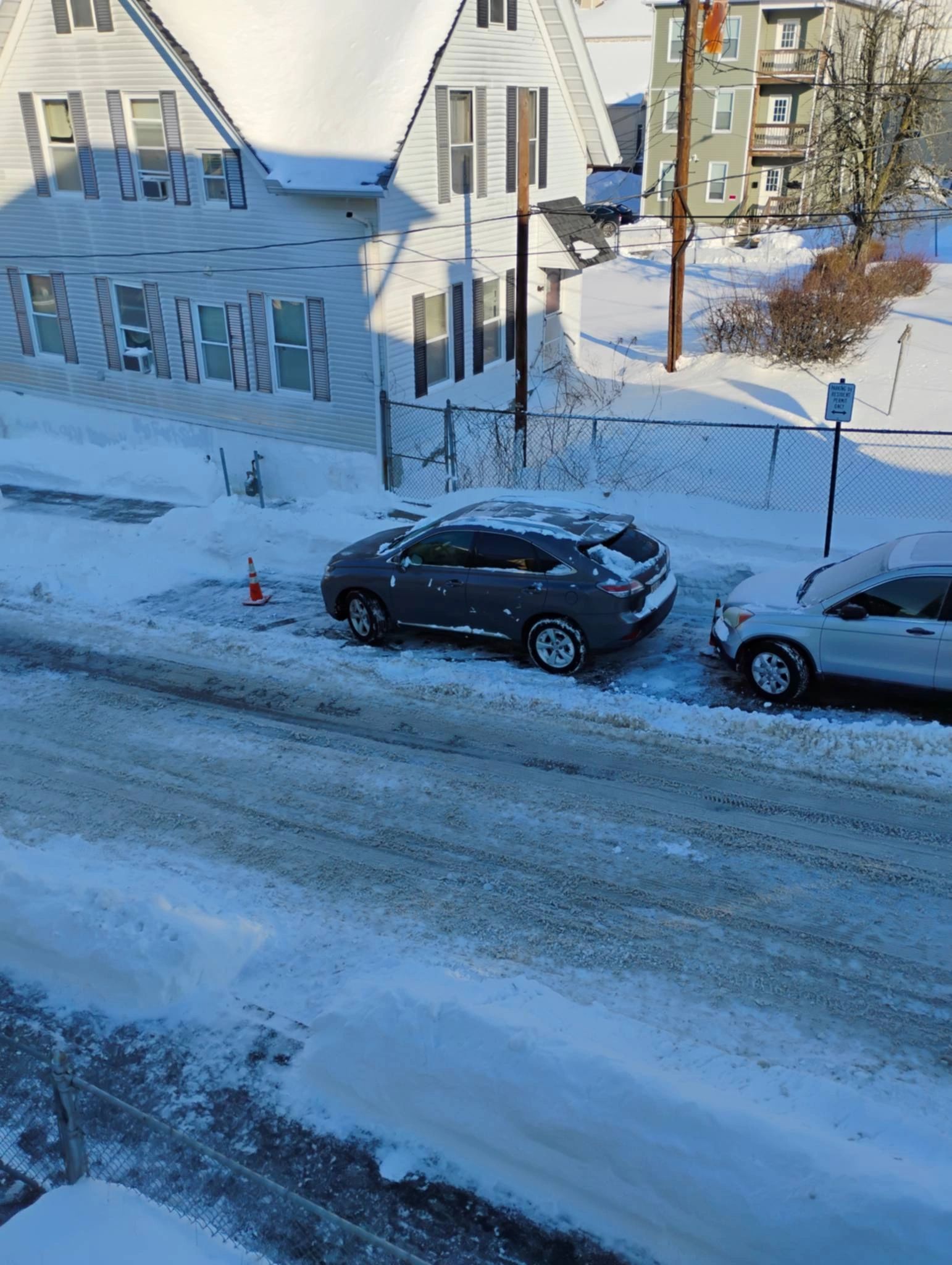
WORCESTER—As plows continued circling Worcester neighborhoods days after a major winter storm, questions about the city’s snow-clearing strategy resurfaced at City Hall, with residents, councilors and city leaders offering sharply different assessments of what worked, what fell short and what needs to change.
Council orders review after resident complaints
At the Worcester City Council meeting Tuesday, Jan. 20, councilors said they had heard repeated complaints from constituents who believe streets and sidewalks are not being cleared quickly enough after storms.
In response, the council ordered a review of the Department of Public Works’ winter operations, requesting details on pretreatment practices, plow deployment timing, and the number of operators and pieces of equipment in use during last weekend’s snowfall.
Investments made, frustrations remain
The criticism comes despite years of investment aimed at strengthening snow removal efforts. City officials noted that Worcester has increased its snow-removal budget, purchased new equipment and continued to recruit private plow operators, who earn between $115 and $185 an hour, with potential end-of-season bonuses.
Councilor-at-Large Morris Bergman said the complaints mirror his own experience.
“My own street is a hill, quite treacherous at times, and I noticed that — I certainly don’t expect to get treated any different than anyone else — the snow removal, the ice treatment, comes very late,” Bergman said. “Doesn’t seem to come when it’s needed. It seems to come almost after the fact.”
City cites pretreatment gaps, equipment upgrades
City Manager Eric Batista told councilors that Worcester does pretreat roads with salt, but said brining has not been consistently used in recent years due to internal disagreements within DPW.
“We pretreat our roads,” Batista said. “We do salt in our roads. We haven’t been brining probably in the last two to three years. There’s been differences of opinions that have occurred at the administration level at DPW, and that’s something that we’re addressing right now.”
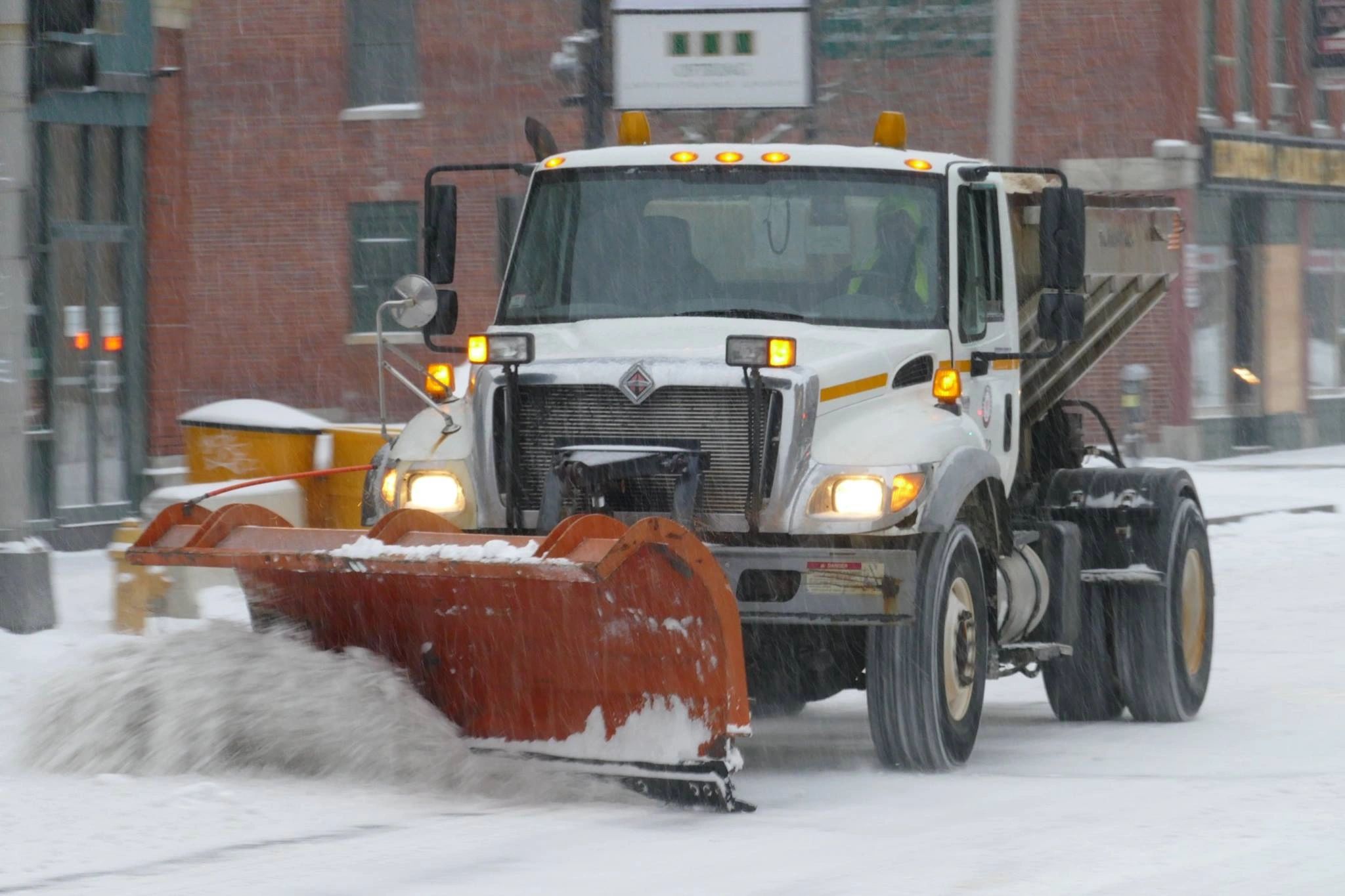
Batista said the city is working to modernize its approach by investing in new pretreatment equipment and training staff to use it. “The equipment was outdated, and so we’ve purchased brand new equipment, state of the art, currently one of the best out there, particularly for brine,” he said. “We’re going to be putting that forward. We purchased it already. Our hope is to get that live and going right now.”
Residents weigh progress against ongoing problems
Adam Thielker, who lives in Worcester, said he views recent changes at City Hall as a potential step forward, even as challenges persist.
“I think that the city manager’s creation of a Department of Transportation and Mobility is a significant step forward,” he said. “I think that the snow removal efforts will always be a challenge, but I know that the drivers and administrators take their responsibilities seriously.”
Other residents raised concerns about how snow removal affects neighborhoods directly. Jermoh Kamara, who ran for councilor-at-large in the last city election, praised the work of plow crews but questioned where snow is ultimately pushed.
“Great work done and very hard work in this snow,” Kamara said. “But more effort to not push snow into people’s yards should be addressed. The city announced that residents shouldn’t push snow into the street; meanwhile the city is pushing snow into people’s yards. That’s not fair.”
Staffing and contractor shortages cited
From the administration’s perspective, Batista said staffing remains the most significant obstacle, echoing challenges faced by municipalities statewide.
“Staffing is the number one issue when it comes to operations, not just in the city, but across the state,” he said. “Having the number of staff to operate the equipment and the right number of contractors is the biggest challenge.”
Batista added that Worcester is not losing contractors because they refuse to work with the city, but because some are leaving the industry altogether. Of the city’s $6 million snow-removal budget, he said $5.5 million is dedicated to operations, with $500,000 reserved for capital investments. The city has purchased more than 10 pieces of equipment in the past year, he said.
Oversight questioned as conditions vary by neighborhood
Some councilors questioned whether that spending is producing consistent results. Bergman pointed to what he described as multiple layers of oversight within DPW that have not prevented ongoing problems.
“We’ve got supervisors and inspectors, double layers of people getting paid to make sure that Edgewood Street and other streets like that are getting done well,” he said. “And we’ve got three layers of something not going right.”
At the neighborhood level, residents described wide disparities in conditions. Jamie Gallagher, a Vernon Hill resident, said side streets there remained largely uncleared.
“Vernon Hill side streets are still being cleared as we speak by residents at this point,” Gallagher said. “We have to shovel our own sidewalks and most of us do, but it ends up in the street because there’s nowhere to put it.”
Others compared Worcester’s response unfavorably to nearby cities.
“During the first day of the [recent] storm they did quite well,” said Jen Daly, a Worcester resident. “I was impressed. But a storm of this magnitude needs more salt and widening of roads. They dropped the ball on this. I drove into Boston this evening and the main roads there were all down to pavement.”
Another Vernon Hill resident, John Yanczewski, described severe conditions on his street following the storm.
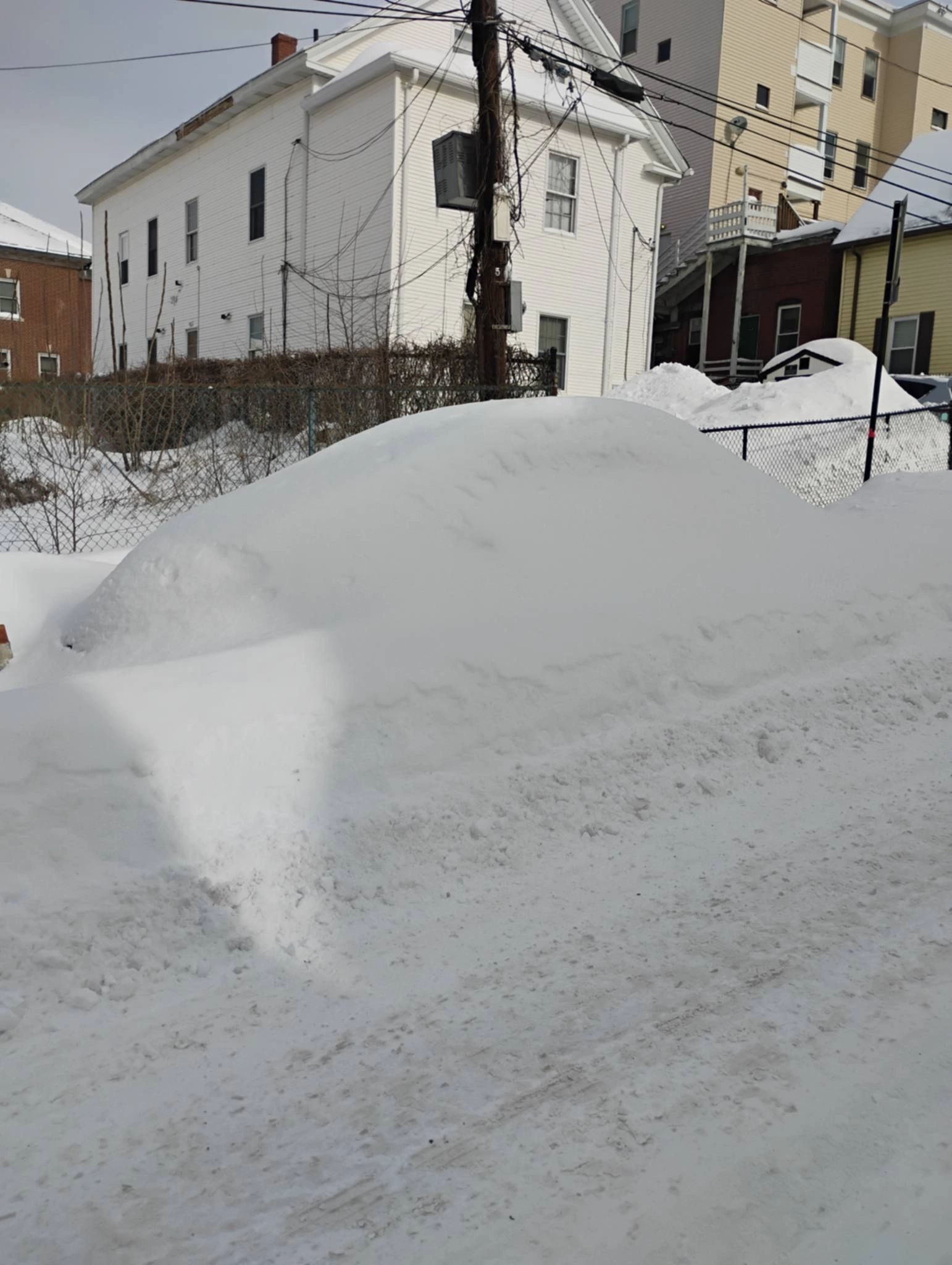
“My car was buried under three feet of snow sideways because of the ways these plowers don’t know how to do their jobs,” he said.
Yanczewski later acknowledged that the city returned to address the issue.
“The city did have a truck show up overnight and re-plow and sand the street,” he said. “It’s not perfect or to my satisfaction but if it helps the school and those who actually live on the street, well I guess it’s better than nothing.”
Some context also came from private contractors working during the storm. Savas Kosmidis, co-founder of Worcester-based Mass Landscaping & Snow, described to the Worcester Guardian the snowfall as one of the most challenging events in the past decade, noting that while low temperatures kept the snow lighter and the lack of strong winds prevented severe drifting, conditions could have been far worse. He also pointed to widespread violations of winter parking bans as a major obstacle, saying double-parked vehicles can prevent plows from accessing entire streets and slow cleanup efforts citywide.
Council sets stage for deeper review
Looking ahead, Councilor Khrystian King called for a more detailed and transparent review of snow operations through the city council’s public works committee.
“I’ll make a motion that we get the proper stakeholders so they can speak to the strategy and snow operations to the appropriate committee—public works—for a discussion forthwith,” King said at the council meeting, “so that committee can take it up and there can be some more transparency.”
The city provided additional details on snow operations during the recent storm. Tom Matthews, media and public relations administrator for Worcester, told the Worcester Guardian that on Sunday, Jan. 25 at 7:30 a.m., the city began general plow operations with 72 municipal vehicles and 295 private contractors treating the roads. Crews worked through the night and continued clearing roads until 4 p.m. on Monday, Jan. 26, during which 19 inches of snow accumulated, with three more inches falling later that evening.
From 3-11 p.m. Monday, a second shift of plow operators worked to clear streets, and at 7:30 a.m. Tuesday, Jan. 27, general plowing resumed with 40 municipal vehicles and 210 private contractors. In total, 250 pieces of equipment focused first on main arteries before moving to residential streets, intersections and areas near schools.
DPW Commissioner John Westerling praised the crews’ efforts, saying, “I’m very proud of the team that we’ve assembled. They worked under the worst of conditions to keep our city open and safe and have continued to work tirelessly through the week.”
City officials noted that some cleanup challenges remained due to residents shoveling snow into streets or parked cars obstructing plows. Officials reminded residents that they are responsible for clearing sidewalks within 10 hours of a storm, including crosswalks and curb ramps and warned that fines of $75 per day may be issued for noncompliance.
The review is expected to give city councilors and residents a clearer picture of how Worcester’s snow response is functioning, where disagreements remain and what changes—if any—may be needed as winter continues.
Matt Olszewski can be reached at mattoskier@gmail.com
