
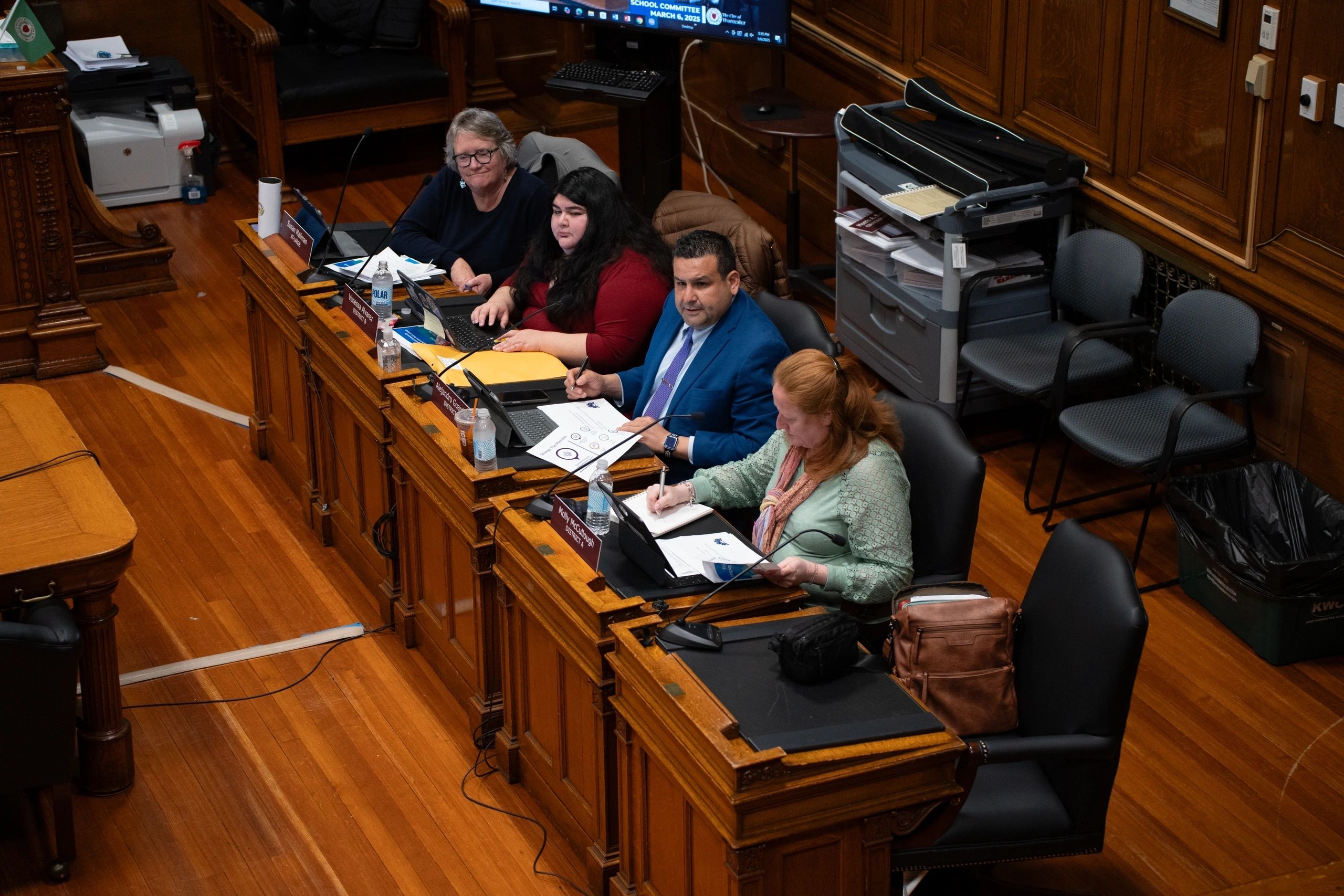
WORCESTER—After a month-long hiatus, the Worcester School Committee meets Thursday, Aug. 16, with a packed agenda focused on student learning, staff development, and district operations.
The session will be Superintendent Brian Allen’s second since moving up from deputy superintendent, and he plans to present progress on education goals in a presentation called “Vision to Action.” The report responds to a July 10 request from committee member Molly McCullough for updates on current academic year objectives, progress made, and feedback to shape the 2025-26 school year.
Allen’s report covers several district-wide priorities, including acquiring and retaining talent, modernizing and maintaining safe facilities, and ensuring equitable educational resources. Staff and student learning goals emphasize culturally responsive policies, reflective teaching practices, and continuous adaptation using student data, research, and best practices. The superintendent shares key performance indicators, examples, statistics, and an entry plan for the upcoming school year.
A major item on Thursday’s agenda is the district’s proposed mastery-based grading system. As the Worcester Guardian reported last week, the plan has been under development for two years and was unanimously approved for discussion by the Finance, Operations, and Governance (FOG) subcommittee on Aug. 5.
The new system, set to launch in high schools this fall with a potential middle school rollout in 2026, allows students to retake tests and assignments to demonstrate mastery. While students will still receive letter grades, the calculation method will be more transparent and reflective of actual understanding.
“The teachers should be having ongoing feedback conversations with the students,” said Magdalena Gainas, the district’s director of compliance & school improvement, “so that if they do not master those standards, they’re given an opportunity to look at the material again and another opportunity to master it.” FOG members noted the proposal strengthens consistency while preserving teacher autonomy and requested midyear surveys and diverse educator representation for data collection.
The committee also reviews updates on the AIR (American Institutes for Research) audit of special education, detailing progress across 16 focus areas, including standardized documentation, quadrant structure streamlining, inclusive education training, and staffing improvements.
Other agenda highlights include:
- Cash to help the kids: Acceptance of multiple grants, including $61,200 from the Nellie Mae Education Foundation, $84,000 for DESE/21 CCLC/Summer Enhancement programming, a $70,280 FC215 Genocide Education Grant, $30,000 Perkins Program Improvement and Equipment Grant, and $560,000 for early college support.
- Rice Square to WEM: Update requested by member Dianna Biancheria on sixth-grade students from Worcester East Middle school’s participation, transportation, staff assignments, and extracurricular involvement.
- Cell phone policy review: Member Maureen Binienda requests alignment with the state’s new bell-to-bell policy for the 2025-26 school year, recommending adopting this policy for Worcester schools. This state school cell phone ban legislation has passed the Senate but has yet to pass the House.
- Civic engagement initiative: Member Molly McCullough recommends a discussion about coordinating with Worcester’s Clean City Initiative to educate students, staff, and families about community responsibility.
- Safety and programs: Member Alex Guardiola requests updates on the school liaison officer partnership with the Worcester Police Department and exploration of an Army JROTC program at a Worcester high school.
The Worcester School Committee meets on Thursday, Aug. 16, at City Hall in the Esther Howland (south) Chamber at 4 p.m. It is also live streamed on the Worcester Public Schools’ website.