
Editor’s note: This story has been updated to include developments and public comment from the May 5 city council meeting
In Worcester, potholes aren’t just a seasonal nuisance. They are practically a fifth season, bringing damaged tires, angry 311 calls and endless discussion at city council meetings, where residents regularly take to the mic during public comment to vent about cratered roads and rough rides.
Last week, one resident took that frustration a step further.
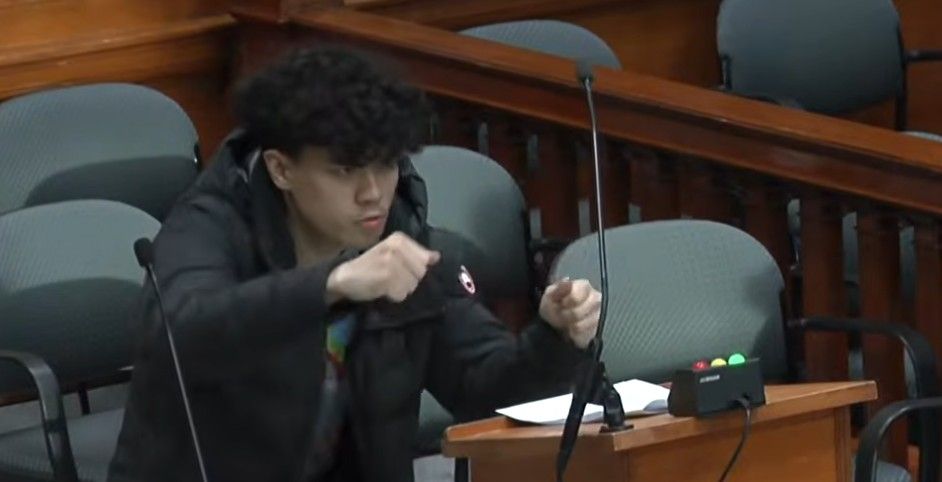
During public comment, Worcester resident Wilson Lam criticized the city’s road conditions while physically acting out the experience of driving over potholes. Swerving and bouncing in front of councilors, Lam described the damage he said the roads have caused to his motorcycle and tires.

“I’ve had to change my tire two times, and I’ve had damage just [to] my motorcycle,” Lam said. “It’s a safety hazard. … Please fix the potholes.”
The demonstration, which was punctuated by motorcycle engine noises, simulated holding handlebars and swerving, and Mayor Joe Petty’s notably deadpan response, briefly transformed an otherwise routine public comment period into one of the meeting’s more surreal moments. Petty, unfazed, paused after the performance and simply responded: “Okay, item number please” and then “OK, thank you. Next.”
Beneath the humor, however, was the same frustration residents and councilors have been voicing for months—that road conditions in parts of Worcester have deteriorated beyond what many drivers believe can be solved through temporary patching alone.
The moment also showed how politically visible the issue has become in Worcester, where potholes routinely dominate 311 complaints, neighborhood discussions and City Council debate during the winter and spring months.
Other than debates over the best steak-and-cheese or pizza—and the city’s snow cleanup—few topics rile up residents more, including members of the City Council.
But behind the eye rolls and complaints is a city infrastructure problem officials say has been building for years.
At last week’s council meeting, a long-awaited report from the Department of Public Works laid out what city officials say is driving Worcester’s worsening pothole problem: aging roads, heavy traffic, repeated utility cuts, years of deferred maintenance and a winter that hit hard and lingered. The report also offered a blunt acknowledgment from the administration that residents’ frustration is justified — and that the city’s current approach has not kept pace.
“My administration takes full accountability for the frustrations voiced by residents who have been navigating potholes throughout the winter months,” City Manager Eric Batista wrote in a letter to councilors. “We can always do a better job.”
The numbers help explain the mood. Worcester recorded 1,751 potholes in 2020, according to the report. That number stayed roughly flat in 2021, then climbed to 2,624 in 2022, dipped slightly in 2023, then jumped again to 3,868 in 2024. In 2025, the city logged 3,683 potholes. As of the report this month, Worcester had already recorded 1,553 in 2026.
In the last 12 months alone, city officials said, more than 4,500 work orders were generated for potholes — and each work order can include multiple holes.
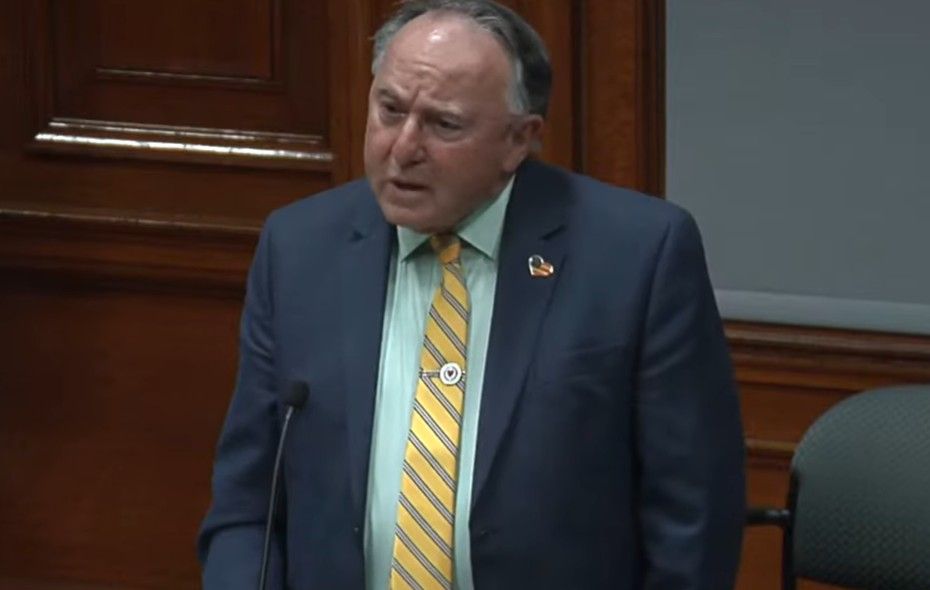
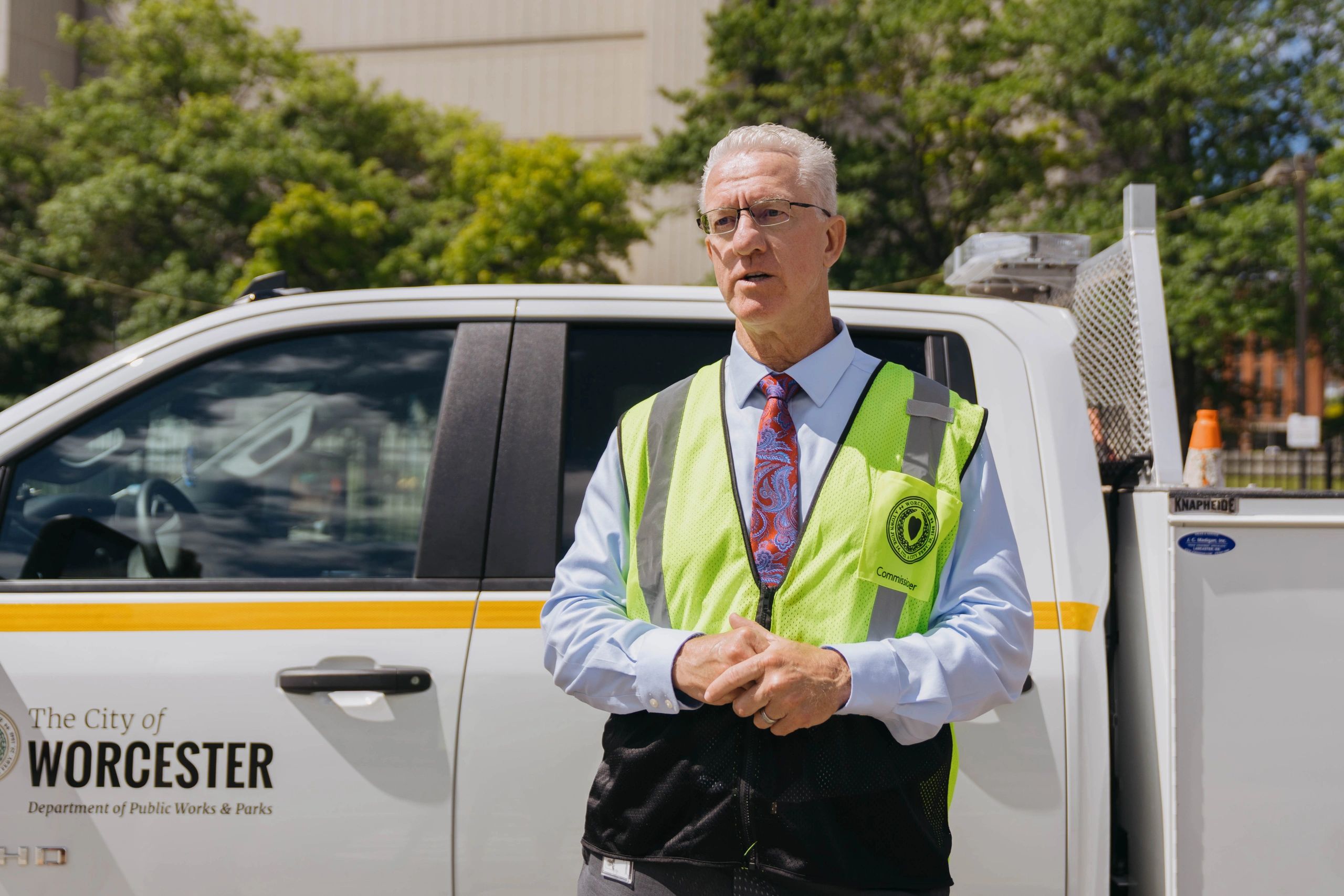
Public Works Commissioner John Westerling told councilors that potholes are not really the underlying problem so much as the visible symptom of one.
“Potholes are not the root cause,” Westerling said. “They are a symptom of the problem.”
That problem, he said, is a large and aging roadway system that has taken years of wear from traffic, weather and utility trenching. Prior to 2022, Worcester largely relied on a reactive “worst first” model that focused on roads after they had already deteriorated badly, rather than investing more heavily in pavement preservation to keep them from falling apart in the first place.
The city is now trying to change that. Westerling pointed councilors to Worcester’s pavement management plan, which calls for a more proactive approach and significantly higher annual investment. He said the city had historically been spending about $13 million a year on roadway work, while the pavement management analysis recommended closer to $19 million annually to improve overall road conditions.
“The plan was approved by the city council last January,” Westerling said.
Still, that long-term strategy offers limited comfort to drivers trying to avoid axle-snapping craters in the present.
Councilor Tony Economou, who said he had discussed the issue with Westerling earlier that same morning, praised the city for bringing the report forward but said residents need relief faster.
“What can we do immediately to help alleviate this problem,” Economou said.
He argued that the city’s current response system has often been too scattered, with crews chasing individual 311 calls around the city rather than repairing entire corridors more efficiently.
“If you owned a small business, and you were doing this, you’d be out of business,” Economou said.
That inefficiency became one of the clearest themes of the night.
Batista said Worcester’s 311 system, while making it easier for residents to report problems, has also dramatically increased demand and revealed just how widespread the issue is. Before 311, residents had to call a departmental number directly. Now, pothole reports come in more easily and in greater volume.
“Providing that access, which is exactly what we wanted to do, provide access to our residents to be able to submit these requests, has provided that increase,” Batista said.
But, he added, the city has not adjusted operations quickly enough to match that surge in requests.
Part of the frustration, councilors said, stems from how the 311 system looks from the outside. Residents have complained that pothole tickets are sometimes shown as closed before the hole is actually filled — a practice city officials said they are rethinking.
“That is something that we have been looking at,” Westerling said. “We need to do a better job.”
The city’s answer now is to stop relying so heavily on individual 311 tickets as the main guide for repairs and instead move to a route-based strategy. Rather than sending crews to isolated potholes all over the city, Worcester plans to follow sanitation routes and repair streets more systematically — starting with major roads, then working through neighborhoods.
“We are pivoting from prioritizing 311 work orders and going to be following sanitation routes,” Westerling said.
That shift drew support from several councilors, who said residents are especially angered when one pothole is repaired while another, just feet away, remains untouched.
Councilor Morris Bergman, who has repeatedly pressed the city on potholes, said that is one of the issues he hears about most.
“There are many, many, many good workers that work for DPW,” Bergman said. “I’m just suggesting that the skipping potholes when they’re within vicinity of other potholes, it’s something that happens more often than it should.”
Westerling said the route-based approach is meant to solve exactly that problem. He added that crews or supervisors would be expected to cover an entire assigned route rather than just a handful of reported holes.
Batista acknowledged that the new method could also mean some residents wait longer than they expect after submitting a 311 complaint.
“But we feel as though that’s a proactive approach to address as much as we can the entire city,” he said.
The city is also grappling with a more basic constraint: time and staffing.
For roughly two weeks in March, Worcester deployed as many as 10 pothole crews a day, depending on weather and available staff. Since April 1, however, pothole work has been competing with spring street sweeping, sanitation coverage and other duties handled by many of the same workers.
That overlap led to another debate at the council meeting: whether the city should temporarily ease up on sweeping to concentrate more fully on pothole repair.
Councilor Gary Rosen said he thought the answer was yes.
“If you want to fill the 2026 potholes, you need crews to do it,” Rosen said.
Westerling pushed back somewhat, noting that street sweeping is not cosmetic. It helps remove debris, improves conditions for pedestrians and bicyclists, and prevents sand and other material from washing into catch basins.
Councilor Khrystian King echoed that point, warning against treating sweeping as optional when road debris can pose serious risks to people outside of cars.
“There is a significant safety component as relates to street sweeping,” King said.
The city’s materials problem has also been more complicated than it might seem. During winter, Worcester often relies on cold patch, which is faster and more flexible but temporary. For longer-lasting repairs, crews need hot mix asphalt — and for much of the season, the nearest available plants were in the Boston area, meaning trucks had to make long daily trips just to bring back usable material.
“We lost two hours every day just in picking up the materials,” Westerling said, adding that a seasonal plant in Millbury recently reopened, cutting down significantly on travel time for asphalt pickup.
The city is also now looking at a mobile batching unit that would allow Worcester to produce its own hot mix asphalt using recycled millings, even in colder months. Westerling said he had recently visited Newton, which already uses similar equipment and “absolutely love it.”
Councilors sounded intrigued by the idea, especially if it saves labor time and helps crews make more durable repairs faster.
The city is also testing Aquaphalt, a more expensive but all-weather patching material, and is considering overtime and private contractors to supplement staff.
Even with those changes, though, some councilors made clear they are not convinced Worcester has yet shown the urgency residents want.
Councilor Satya Mitra said the city needs a clearer, more measurable plan — not just an explanation of why potholes happen.
“We should have a plan,” Mitra said. “I think we should have an answer.”
Bergman echoed that skepticism, saying he appreciated the report and respected Westerling, but remained unconvinced that Worcester has a winning strategy yet.
“I don’t see a game plan here that I think is going to be a winning game plan,” Bergman said. “I hope I’m wrong.”
For Batista, the broader point is that potholes cannot be treated as a one-off issue disconnected from the rest of Worcester’s infrastructure challenges.
“This is a long term approach,” he said. “There’s immediate things that we can do.”
For residents bouncing from crater to crater — or reenacting the experience before the City Council — that may not sound entirely satisfying.
But it is the reality city officials laid bare last week: Worcester’s pothole problem is not just about patching holes. It is about whether the city can rebuild a maintenance system strong enough to stop losing ground.
And in Worcester, that may be the real road test.