
WORCESTER—In a world built on concrete — and increasingly reckoning with the environmental cost of it — researchers at Worcester Polytechnic Institute say they have come up with a way to turn a major climate problem into part of the solution.
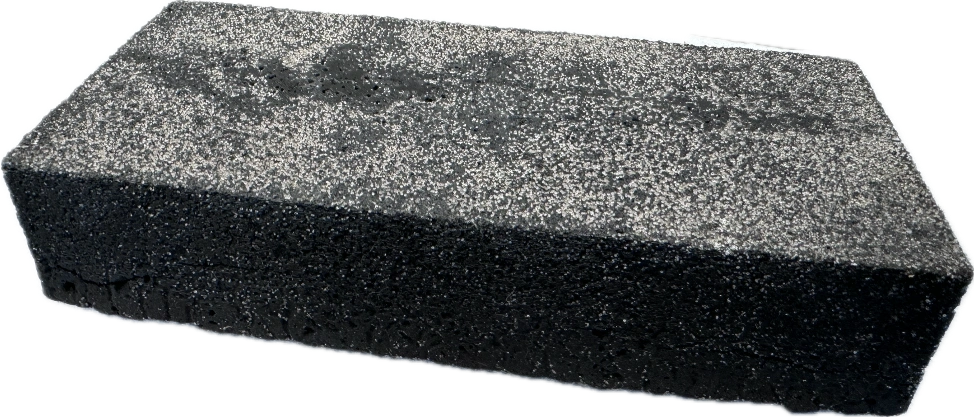
WPI scientists have developed a new carbon-negative construction material that is strong, durable and recyclable and that actually removes carbon dioxide from the atmosphere as it is made. The work, recently published in the journal Matter, describes what researchers call enzymatic structural material, or ESM, a bioinspired alternative to traditional concrete.
The research was led by Nima Rahbar, the Ralph H. White Family Distinguished Professor and head of WPI’s Department of Civil, Environmental, and Architectural Engineering. According to the announcement, ESM is created using an enzyme that converts carbon dioxide into solid mineral particles, which are then bound together and cured under mild conditions. The material can be molded into structural forms within hours — a sharp contrast to conventional concrete, which requires energy-intensive production and long curing times.
“Concrete is the most widely used construction material on the planet, and its production accounts for nearly 8% of global CO2 emissions,” Rahbar said in an announcement. “What our team has developed is a practical, scalable alternative that doesn’t just reduce emissions—it actually captures carbon.”
Producing a single cubic meter of ESM sequesters more than six kilograms of carbon dioxide, according to the release, compared with roughly 330 kilograms of CO2 emitted during the production of the same amount of conventional concrete.
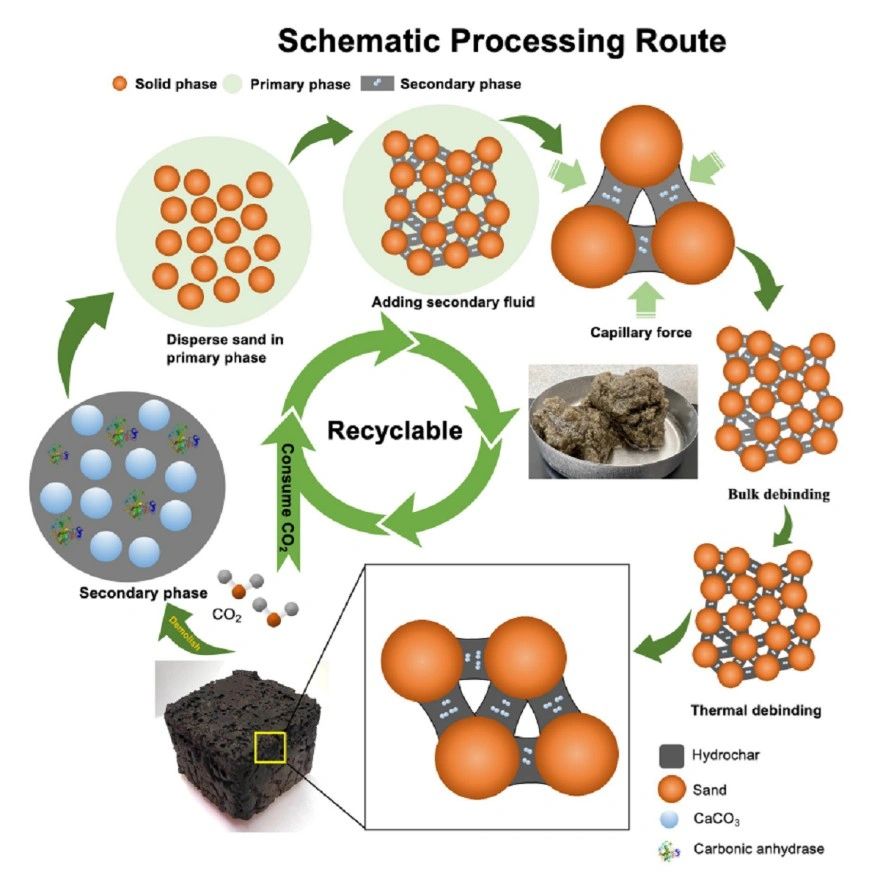
Beyond its environmental benefits, researchers say ESM’s rapid curing time, adjustable strength and recyclability make it suitable for real-world construction uses, including roof decks, wall panels and modular building components. Its ability to be repaired rather than replaced could also reduce long-term costs and construction waste.
“If even a fraction of global construction shifts toward carbon-negative materials like ESM, the impact could be enormous,” Rahbar said in a statement.
The technology could have broad implications, particularly for affordable housing, climate-resilient infrastructure and disaster relief, where materials that are lightweight, quickly produced and durable can speed rebuilding efforts. Because ESM relies on low-energy processes and renewable biological inputs, the researchers say it aligns with global efforts to move toward carbon-neutral infrastructure and more circular manufacturing systems.
While the material is still in the research stage, the findings position Worcester — and WPI — at the center of a conversation about how the built environment might one day help combat climate change rather than contribute to it.
Have news, tips, or a story worth telling? Reach Editor Charlene Arsenault at carsenault@theworcesterguardian.org—because good stories (and great scoops) deserve to be shared.
The Worcester Guardian is an independent nonprofit news organization. Support local journalism by making a DONATION today.
