
WORCESTER—If you’ve ever dealt with a crusty coffee machine or showerhead clogged with that cruddy buildup, you’ve met the household version of a problem that plagues water treatment systems around the world: scaling.
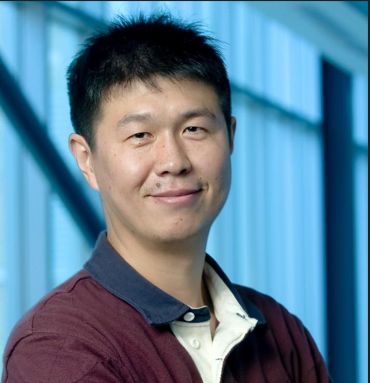
But instead of a vinegar soak and a toothbrush, Worcester Polytechnic Institute professor Xiaowei Teng has a more high-tech remedy in mind.
Backed by a grant just shy of $400,000 from the National Science Foundation, Teng is leading a project to explore how battery electrodes — the kind normally found in aqueous energy storage systems — might be repurposed to tackle the mineral buildup that slows, clogs, and sometimes shuts down industrial-scale water purification systems.
Yeah, we don’t quite understand it, either. But we don’t need to understand the whole process to welcome the result.
“Scaling happens when scale-forming-cations (SFCs) are deposited on membrane surfaces or within equipment,” Teng told the Worcester Guardian. “Over time, this reduces the amount of water that can flow through a water treatment system, lowers efficiency, and can even shut down equipment.”
WPI describes the project as a partnership between Teng and Heath Turner, a professor of chemical and biological engineering at the University of Alabama. Together, they aim to study an electrochemical system that selectively removes SFCs — positively charged ions in minerals such as calcium, magnesium, strontium, and barium — without generating the chemical waste that traditional methods often leave behind.
“We want this system to be a cost-effective supplement to water treatment methods to address mineral buildup,” Teng said in an announcement.
The long-term goal? A smarter, more efficient pretreatment system that can be slotted into existing municipal water plants or used at industrial sites, such as data centers, where massive water volumes require constant conditioning.
“The electrochemical removal of SFCs provides a sustainable alternative for water pretreatment by replacing currently used softeners or chemical control approaches,” Teng explained. “These chemical methods generate secondary environmental waste and consume large amounts of water.”
Instead, Teng’s system uses battery electrodes that absorb specific ions. Once full, the electrodes are regenerated by reversing the process — a feature that makes the entire system more energy-efficient than its predecessors.
It’s an idea rooted in years of research. Teng and his team have worked with aqueous battery systems for over a decade, but he said the inspiration to apply that knowledge to water treatment came unexpectedly.
“The eureka moment… was during one of our projects in which we showed certain battery electrodes have the potential to selectively uptake magnesium cations, the most common type of SFCs,” he said.
The concept is still in early stages. “We have identified several material systems that could be potential electrodes for selective SFC removal,” Teng continued. The next step: validating their effectiveness and prototyping a system for real-world use.
If it works, the benefits could be huge. Scale removal and prevention currently require water plants to shut down sections of their operations for cleaning and repairs. Teng hopes to avoid that altogether — or at least dramatically reduce the need for such costly downtime.
“In different geographical areas, water can have different salt concentrations, making it hard to find a one-size-fits-all solution,” Teng noted. “It’s often easier to manage scale removal after it forms than to prevent scaling from happening.”
That’s what makes his system — which could be installed like a tank or chamber before filtration — so promising. “It would look like a settling tank, with a water inlet and outlet, as well as wires connecting it to electricity,” he said.
Turner, his collaborator in Alabama, brings deep expertise in atomic-scale modeling, while Teng’s focus is on material discovery, electrochemical testing, and integration. And while no WPI students are involved yet, Teng expects that to change soon now that the grant has been awarded.
Beyond the technical challenge, Teng sees the work as part of a larger mission — one that aligns with WPI’s project-based teaching model and real-world engineering focus.
“This project uses key chemical engineering concepts like fluid dynamics, thermodynamics, and reaction engineering to tackle a practical challenge,” he said. “It gives students the chance to apply what they’ve learned in class to meaningful, impactful problems.”
He also sees the potential for global impact, particularly in arid regions or communities with limited access to reliable water infrastructure.
“Absolutely,” he said, when asked if this could aid water-scarce areas. “This technology could contribute to developing low-cost desalination, making a more affordable and sustainable supply of potable water for drinking and agriculture.”
And while the road to real-world deployment may be long, Teng is undeterred.
“There are always challenges in scaling innovations from a lab into real-world practice,” he said. “But the major obstacle I expect in this case is the ionic transport.”
Still, the goal is clear — and the chemistry, at least, is promising.
Have news, tips, or a story worth telling? Reach Editor Charlene Arsenault at carsenault@theworcesterguardian.org—because good stories (and great scoops) deserve to be shared.
- The Worcester Guardian is an independent nonprofit news organization. Support local journalism by making a DONATION today.