
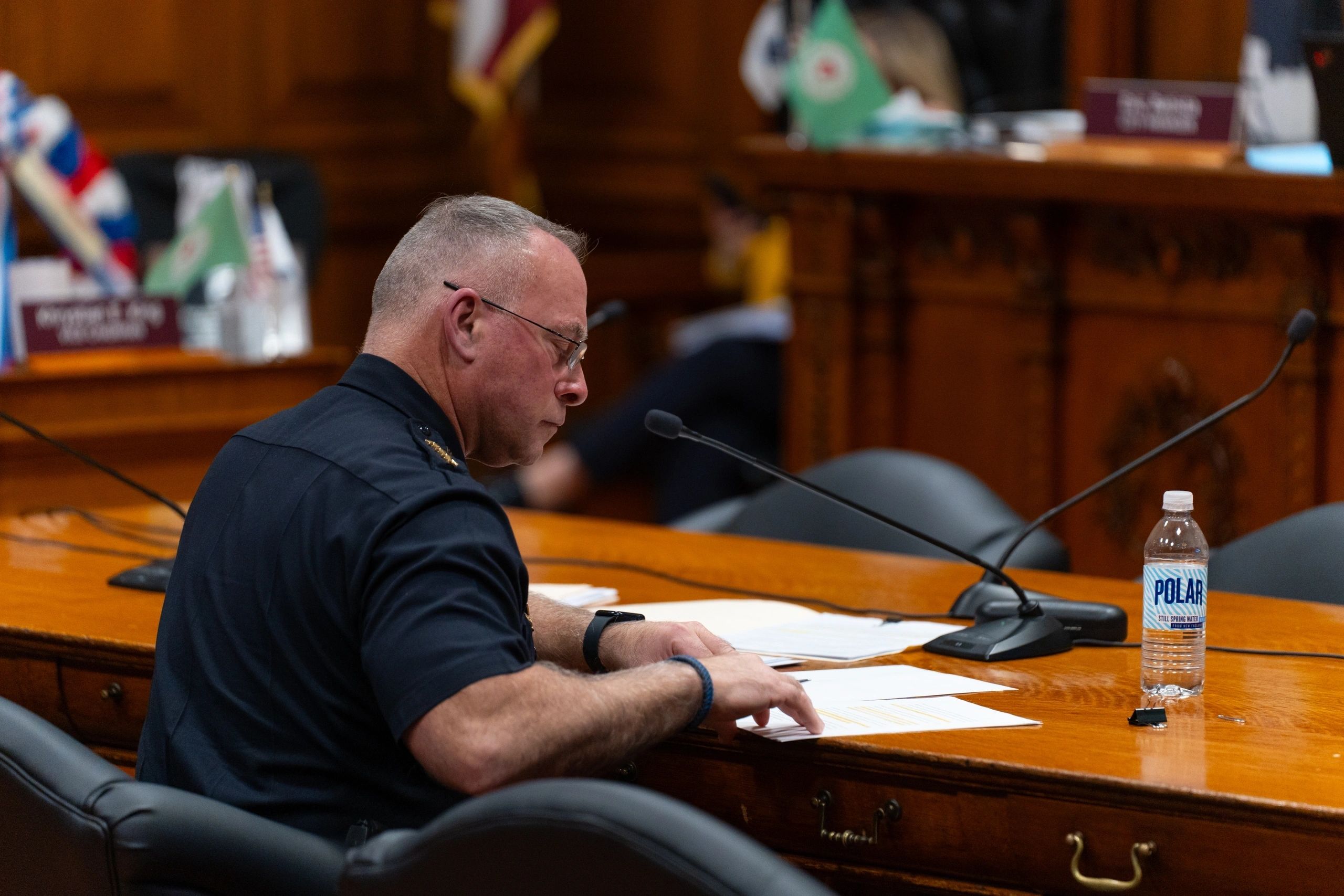
WORCESTER—The Worcester Police Department is firing back—mounting a detailed defense in response to a scathing U.S. Department of Justice report that accused the department of a pattern of excessive force, unconstitutional stops, and discriminatory practices.
The WPD’s analysis, spanning dozens of pages, defends the department’s practices and disputes the DOJ’s characterization of several high-profile incidents.
Released in December of 2024, the DOJ’s report is based on a multi-year investigation, and alleges systemic problems in use-of-force incidents and oversight within the department.
In response, WPD emphasized its cooperation during the DOJ probe, noting that it provided investigators with access to internal records, body-worn camera footage, use-of-force reports, and more than 50 sexual assault case files.
But the DOJ’s findings struck a deep nerve in Worcester, prompting intense public outcry and a packed five-hour city council meeting shortly after the report’s release. Hundreds of residents—alongside dozens of police officers—crammed into the council chambers and hallways to speak out.
Members of the public, including advocates from Project Priceless, a collective of women who survived the sex trade, called for restitution, transparency, and reform. “I believe that homeless women in the city of Worcester are under attack,” said Elizabeth “Liz” Grajales, the group’s vice president. “We demand a public apology and restitution for all the women that suffered at the hands of these officers.”
While the DOJ report did not name specific officers, it included allegations that WPD officers used excessive force—including tasings, head strikes, and other physical harm—and, in some cases, engaged in sexual misconduct with vulnerable individuals under threat of arrest.
At the council meeting following the release of the report, several city councilors criticized the WPD and the city’s initial response, calling it insufficient.
Councilor and Vice Chair Khrystian King described the WPD’s reaction as an institutional failure to acknowledge wrongdoing.
“Heads need to roll; people need to be fired,” said Councilor George Russell, while Councilor Thu Nguyen called for stronger protections for BIPOC communities, women, and sex workers. “This is not new,” Nguyen said. “It’s been known for over five years.”
Against this backdrop of civic pressure and public anger, the WPD’s recent rebuttal staunchly reframes the DOJ’s conclusions. The department argues that the DOJ omitted key context and often evaluated incidents “in hindsight and in a vacuum.”
Its response focuses on four specific incidents cited in the report, including confrontations at Union Station, a Walmart, a skilled nursing facility, and a condemned building involving a K-9 unit.
In each case, the WPD contends that force was used only after de-escalation attempts failed and that actions were consistent with department training and policy. For instance, in the Union Station case, officers claim a taser was used on a combative, intoxicated suspect who assaulted an officer. The DOJ had deemed that force unreasonable.
According to the WPD, more than 1,300 use-of-force records were documented during the period examined, with approximately 770 involving only the display of a tool or weapon and about 530 involving actual uses of force. The department stressed that “actual uses of force amount to approximately 0.08% of all incidents,” pointing to the rarity of such actions. In response to the findings, which allege a pattern of excessive force in violation of the Fourth Amendment, the WPD argues that the DOJ “minimizes or mischaracterizes” the department’s practices.
The department also criticized the federal report for omitting key contextual details, such as the behavior and threats posed by individuals involved, officers’ prior knowledge of the situations, and efforts made to de-escalate before force was used.
The department also pushed back strongly on the report’s handling of sexual assault investigations. WPD said its Special Assault Unit follows a “victim-centered and trauma-informed” model in line with state protocols. Officers said victims’ wishes are honored and that the department routinely refers them to support organizations, including the YWCA’s Worcester Intervention Network and Pathways for Change.
WPD additionally addressed criticism of its data practices and racial disparities. While acknowledging current data collection gaps, the department said it is updating its records system and disputed DOJ’s findings on racial bias in traffic stops, noting race is only recorded for citations—not warnings or verbal stops.
The department maintains that use-of-force incidents comprise just 0.08% of all interactions and that each incident undergoes internal review. Still, many councilors have called that statistic into question, especially given allegations that some actions—particularly those involving vulnerable individuals—go unreported or under-investigated.
Police Chief Paul Saucier told the Worcester Guardian he was “disappointed” and “shocked” when he first read the DOJ report.
“I know the men and women of the Worcester Police Department to be honest hard working police officers who put their lives on the line every day for the Worcester community,” Saucier said. “We are not perfect, as we too are human beings who make mistakes. When mistakes are made, we will hold our officers accountable and use progressive discipline.”
Saucier said the department’s formal response to the report had two objectives: to address the issues highlighted and to correct what he called “mischaracterizations and mistakes.”
“My job as the chief of police is to ensure we follow best practices and make appropriate changes when necessary,” he said. “When any report, no matter who writes it, is released to the public it should include all the facts for the public to see.”
At this Tuesday’s city council meeting, Saucier is expected to provide an update to councilors on how the city’s account of the Worcester Police Department’s practices differs from the findings detailed in the Department of Justice report. The update will include instances where the city disagrees with the DOJ’s conclusions, as well as areas where the city has confirmed the DOJ’s findings, according to the meeting agenda.
As for what happens next, Saucier told the Guardian that “currently there are no discussions underway” with the DOJ or other oversight bodies. However, he said the department continues to evaluate operations and make improvements internally.
Saucier acknowledged the importance of responding to community concerns and building trust—especially among those most affected by the report’s findings. To that end, he cited new community engagement patrols, changes to the department’s mission and vision, and a revised set of core values centered on “honor, integrity, and professionalism.”
With no formal resolution yet in place and the DOJ’s next steps unclear, an official “response” remains hazy. The WPD’s rebuttal restated its stance—but for some, the deeper question remains as to how, and whether, the city will reckon with the systemic issues raised in the federal report.
The Worcester Guardian has contacted Mayor Petty’s office and Project Priceless for comment but had not received a response by press time. This story will be updated as more information becomes available.
Have news, tips, or a story worth telling? Reach Editor Charlene Arsenault at carsenault@theworcesterguardian.org—because good stories (and great scoops) deserve to be shared.
The Worcester Guardian is an independent nonprofit news organization. Support local journalism by making a DONATION today.
