
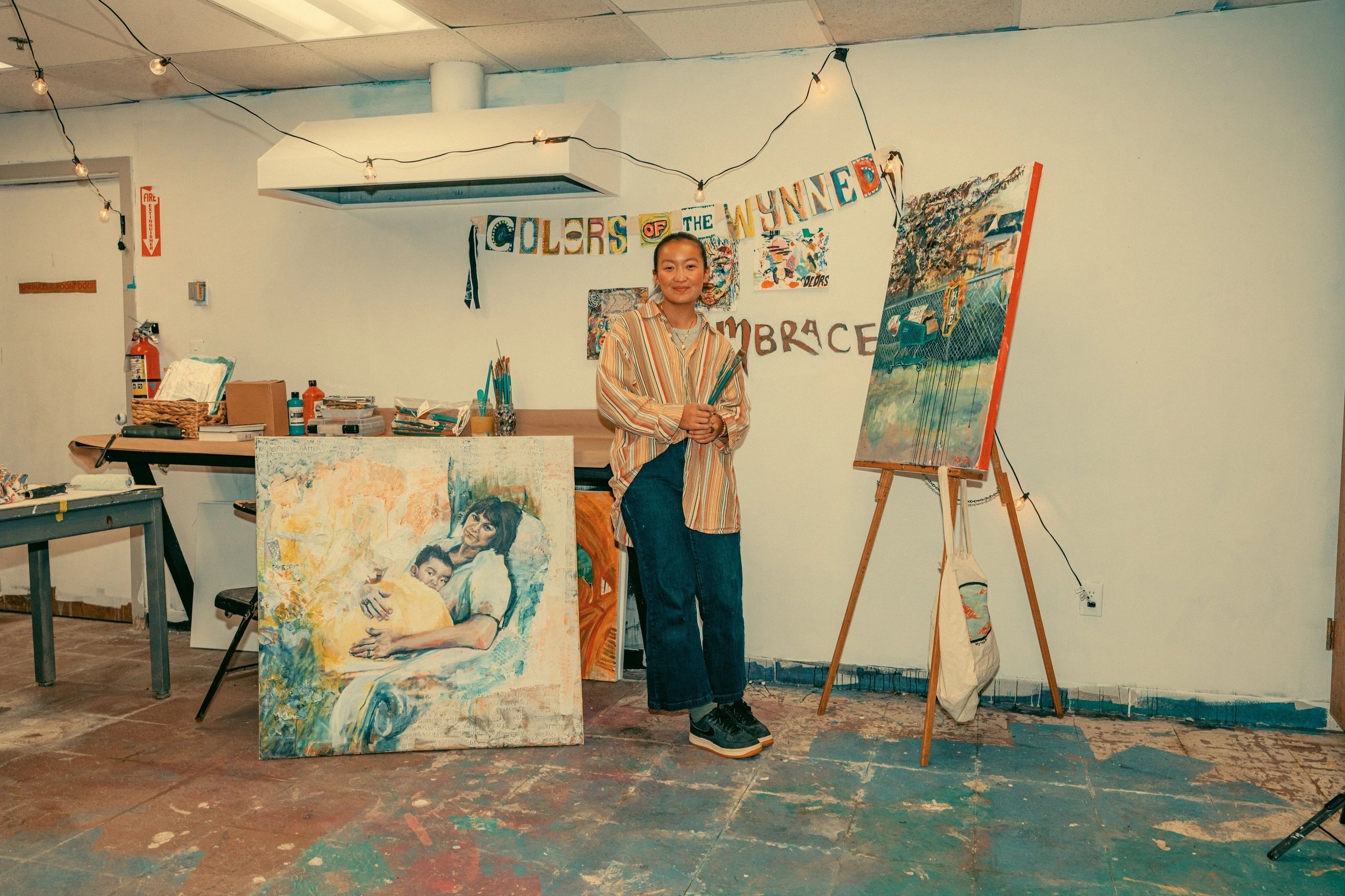
WORCESTER—Clark University’s decision to phase out its Studio Art major has sparked a wave of frustration and resistance from students, faculty, alumni, and supporters of the arts in Worcester.
While university administrators cite budgetary pressures, faculty costs, and changing higher education metrics as reasons for the move, those closest to the program say its elimination undermines core values the school claims to uphold: creativity, interdisciplinary thinking, and community engagement.
Wynne Dromey, a senior in the Studio Art program, is leading a student-driven effort to oppose the sunsetting. “Removing this program not only limits opportunities for current and future students,” she told the Worcester Guardian, “but also diminishes the university’s role in Worcester’s arts community.”
Dromey and her peers are gathering testimonials, reaching out to alumni, and encouraging the public to attend this year’s senior thesis show, titled “Vanishing Point,“ on Wednesday, April 23, at Clark’s Traina Center for the Arts.
“When I learned that the Studio Art program was being sunsetted, I felt very disheartened that there was no communication with the students before this decision was made,” Dromey said. “From what I heard, our professors also were unaware until information was leaked online. Their perspectives should have been a key part of the reimagining process.”
The announcement came quietly, and many in the Clark community say the decision feels sudden and unclear. An open forum with Dean Laurie Ross offered few concrete answers. Although she acknowledged the program’s high student satisfaction and deep community roots, Ross pointed to the university’s financial challenges, including looming capital expenses and reliance on external rankings that emphasize post-graduate salaries over qualitative learning outcomes.
“It doesn’t make a lot of sense,” Ross admitted at the meeting. While Studio Art does not suffer from low enrollment, Clark administrators say the cost of facilities, reliance on adjunct faculty, and national pressure to focus on post-college earnings influenced the move.
Currently, enrolled students can still complete the major, but new students will not be able to declare it. The university has stated it will “reimagine” the program, possibly in conjunction with its Becker School of Design and Technology, though no concrete plans have been shared.
A university spokesperson confirmed that “a process is underway to reimagine the current Studio Arts major” and that incoming students will not be able to enroll in the major beginning in the 2025–26 academic year. According to the spokesperson, the Studio Arts minor will continue to be offered, and students will continue to have access to many Studio Arts resources on campus. A newly “reimagined and amplified” Studio Arts major is expected to launch in fall 2026.
The changes, the spokesperson said, are part of a broader strategic planning effort “to build deeper distinction in areas of historic prestige, prioritize career outcomes of academic offerings, and hone operations for sustainable, long-term strength,” in light of national challenges in higher education, including declining enrollment projections. The decision, the spokesperson said, is being considered in partnership with faculty and faculty governance.
Dromey said the reimagining itself remains vague. “From what we heard from our dean, Clark may rename it to ‘Inter Media Arts’ and shift to a career-centered curriculum rather than continuing to offer an explorative space promoting creative reflection.”
Teachers say it’s critical
Faculty, meanwhile, say the Studio Art program has long served as a critical pillar of the university’s identity.
“Our students thoroughly master a chosen craft to apply it to their individual ideology,” said longtime faculty member and photographer Stephen DiRado, who has taught at Clark since the 1980s, in a testimonial. “The outcome is outstanding art built upon university resources as a whole.” DiRado warned that the removal of studio art could be “lethal to all of the remaining arts.”
Program director Sherry Freyermuth echoed that sentiment, pointing to the program’s adaptability and impact, even during the COVID-19 pandemic. “Our program has always been a space for creative disruption, bold exploration, and transformative artistic growth,” she said. “I hope we are afforded the opportunity to continue this vital work.”
Dromey emphasized that the value of a Studio Art education goes far beyond the narrow lens of salary metrics. “The administration told us that Studio Art graduates have the same average salary as someone with just a high school diploma,” she said, “but that metric completely ignores the commissioned work and private projects creatives do to support themselves. It also overlooks the soft skills we gain—like resilience and courage—through presenting vulnerable creative work and receiving feedback. These are skills that serve us in every field.”
She also questioned whether the decision aligns with the values Clark claims to champion. “Clark helps students by being different from other schools—not by striving for the same dull ideals of success,” she said. “Especially from starting my MBA this year, I’ve learned that businesses can act on their values without compromising financial sustainability.”
Hope for public showing of support
The upcoming Vanishing Point exhibition showcases the culmination of months—and for some, years—of work by eleven senior Studio Art students. Their pieces span a wide range of mediums, including painting, woodburning, quilting, film, photography, and collage.
“This show is not just about celebrating our art,” said Dromey. “It’s about showing what is at risk of being lost.”
The event is free and open to the public and will take place Wednesday, April 23, from 4 to 6 p.m. at the Traina Center for the Arts. Supporters hope the exhibit serves not only as a celebration of student achievement, but also as a platform for dialogue about the importance of arts in higher education—and in Worcester.
Have news, tips, or a story worth telling? Reach Editor Charlene Arsenault at carsenault@theworcesterguardian.org—because good stories (and great scoops) deserve to be shared.
- The Worcester Guardian is an independent nonprofit news organization. Support local journalism by making a DONATION today.