
WORCESTER — Like many cities and towns nationwide, Worcester has struggled to maintain its aging schools, but in recent years has made it a priority to improve current facilities while building new ones.
The new Doherty Memorial High School was the latest to open in August.
Worcester Public Schools Deputy Superintendent Brian Allen provided the Worcester School Committee with a facilities plan update on Jan. 9, exploring the progress made improving existing school buildings and delving into future goals –– including the long-discussed rebuild of Burncoat High School.
Modernization and safety improvements of the schools is one of many elements in a larger strategic plan which proposes increased spending on facilities, repairs and maintenance with a focus on prioritization of major projects including building replacements.
Worcester currently hosts 57 school buildings, including district and education facilities –– nearly half of which were built prior to 1940, while even more were built between 1950 and 1999. Only seven buildings were built after the turn of the millennium.
A 2016 survey conducted by the Massachusetts School Building Authority (MSBA), which provides support for the design and construction of new school buildings across the Commonwealth, concluded that at least 23 of Worcester’s schools required moderate or extensive renovations or were in poor condition.
The following year, the city produced a facilities master plan that identified $70 million in urgent repair needs and 22 schools in need of replacement or significant renovations. Since that study, the city has performed several other assessments and made smaller improvements at many of the schools.
Since 2022, Worcester Public Schools has increased spending on facilities and school safety more than doubling its investment to $16.6 million in the current fiscal year.
Allen explained that the district has seen the research that investing in and maintaining these buildings is essential to creating a welcoming learning environment to get the best out of its students.
“There are many reasons this is one of the priorities of the strategic plan,” said Allen. “Mostly due to years of underfunding, many of the district’s schools have significant deferred maintenance needs. Extensive research on school maintenance shows that school condition can positively impact school behavior, attendance and achievement.”
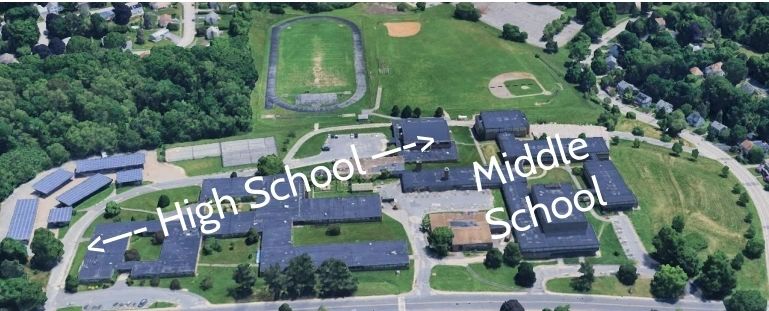
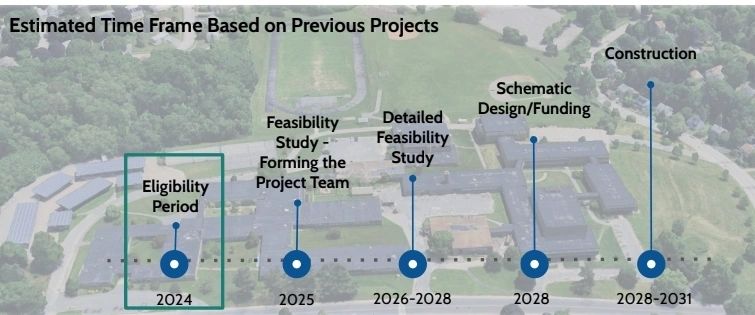
A large portion of the update focused on building replacement as the district has already invested $744 million to upgrade five schools, including Doherty. The next big project, the replacement of Burncoat High School, is already in motion. The school was deemed eligible for reimbursement by the MSBA in 2023 and Allen said the city could see the feasibility study phase kick off as early as April of this year.
“Burncoat High is the next project in the funding pipeline with the MSBA where we expect a state-of-the-art school for the district’s fine arts programs,” said Allen, “and new related Chapter 74 programs will complete the replacement of all the city’s quadrant four high schools and technical high schools since 2006. We expect that the new school will remain in the current location and will swap buildings and athletic fields and parking lots on the existing 31 acres of land.”
While Burncoat High School has received MSBA eligibility, its neighbor middle school was not included and the district is working to explore options that could include seventh and eighth graders in the new building. These finer details are still very much a work in progress as the feasibility study has yet to even begin, and a final study document may not be produced until as early as 2026. The building itself is not expected to begin construction until at least 2028.
Members of the School Committee praised the investment in local schools and the potential for the future, offering some minor recommendations as Allen concluded his report. While much progress has been made, Allen admitted there is still a long way to go as Worcester and many other cities nationwide struggle to keep up with the growing maintenance needs of their schools.
“Much has been accomplished within the facilities maintenance, renovations, and replacement projects over the past decade with a significant amount of work to go. Worcester is not alone or unique,” said Allen. “There’s a reported more than $85 billion annual spending gap nationally on needed facility maintenance. We know that this is a shared local, state, and national responsibility for adequate funding for school buildings.”
Jason Bleau has more than 11 years of experience working in news media, including WINY 1350 AM in Putnam, Connecticut, and The Stonebridge Press.
