
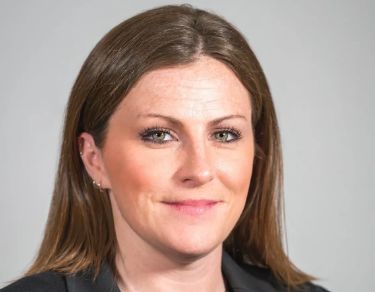
The nonprofit Living in Freedom Together rebranded as Safe Exit Initiative nearly four months ago around the time its overnight shelter services closed due to a lack of funding. Co-CEO Audra Doody discusses the current state of affairs
WORCESTER—It has been nearly four months since Living in Freedom Together changed its name to Safe Exit Initiative and eight months since Audra Doody and Courtney Ross Escobar became Co-CEOs.
At the time of the rebranding, the nonprofit agency that works to end the sex trade and help people exit prostitution ended overnight services at its 15-bed shelter, HARBOR, due to lack of funding. There were layoffs at the time, but the organization still employs 30 to 35 women, the majority of whom are survivors.
A lack of funding is something Doody said is being seen among similar nonprofits who work to end the sex trade. There have been statewide budget cuts as well as a drop in donations that surged during the start of the MeToo movement. The closure of the overnight services has contributed to a shortage of available shelter beds in Worcester.
With Safe Exit Initiative’s upheaval in leadership, Doody said there was a time she wanted to walk away but she decided to stay and work to hold together the programs for the participants.
“I just continue to show up to support the staff, to support the women, to make sure that these programs that our founder created stay alive, that’s all I want,” Doody told the Worcester Guardian Tuesday.
Nicole Bell, LIFT’s founder, left the organization in May 2023. There has not been a public explanation for her departure.
Taking over the reins has been a challenge, according to Doody, who considers herself more of a wallflower, but said she’s learning to find her voice and be more assertive.
Doody said she and Ross Escobar are working to connect with other survivor-led organizations in the state, which led to them all lobbying together at Human Trafficking Awareness Day. The other groups included Amirah, Inc. from Lynn, My Life My Choice from Boston, and Ria Inc. from Framingham.
“It was such an amazing feeling, you could feel the energy and the connectedness,” she said.
Doody started working with SEI, then LIFT, in 2018. She wasn’t paid for the first six months aside from free pizza, she said, but kept showing up because she was committed to the women and helping those involved in prostitution.
“It didn’t really matter about the paycheck at the end of the day…I just wanted to support other women like myself and really help myself along the way as well- learn more resources and get more education about the vulnerabilities that led me into the life,” Doody said.
It took Doody three years to fully exit the life of prostitution she said, and the healing process really started for her when she found a community of other women where she was able to talk about her experiences safely without judgment or stigma.
In 2023, Safe Exit Initiative served 500 unique individuals.
While it had to end overnight services at HARBOR, the location is still open from 8 a.m. to 8 p.m. as a drop-in center and the nonprofit runs Jana’s Place – a 16-bed recovery home for women who’ve experience prostitution along with substance abuse or mental health issues, a mobile outreach van that also acts as a food insecurity van that was donated by Greater Worcester Community Foundation, and the SISTER program at the Western Massachusetts Regional Women’s Correctional Center which provides case managements and other supports to survivors of the sex trade.
Doody said Safe Exit Initiative also works with the Worcester County district attorney’s office on creating alternatives to incarceration. Additionally, the nonprofit works to promote legislation to decriminalize prostitution for the prostituted people, so buyers and traffickers would still be held accountable.
“How do you end the sex trade…end demand, right? If nobody bought sex, nobody’d be selling sex,” Doody said.
Some of the most vulnerable people – young Black and Brown people, people who aged out of DCF, and people with substance abuse and/or mental health issues – are the ones who end up being trafficked, according to Doody. Due to that, Doody said people look at prostitutes as less than human and as sex objects, ignoring things like black eyes and missing teeth.
Part of lessening demand is education, according to Doody, who helps instruct “John” schools with the DA’s office, where first time sex buyers have to attend a four to five-hour classes where survivors talk about the reality of the sex trade.
“A lot of the guys don’t know any better. They just think it’s normal,” Doody said. “They’re raised into it, I’ve had fathers bring their sons to lose their virginity…like it’s an initiation into manhood.”
The demographics of the buyers is majority white males with disposable income, according to Doody, “So why do they feel the need to purchase our most vulnerable community members?”
The best ways to support Safe Exit Initiative are through volunteering, donations, and awareness, according to Doody.
“We all need volunteers and some donations, but I think the most important thing is actually just talking about the realities of the sex trade, asking about choice,” Doody said. “I don’t think people realize the majority of women who are trapped in the sex trade do not want to be here.”
Going forward Doody said she will continue to meet people with unconditional positive regard.
“A lot of people have turned their backs on our population because they’re using the same resources over and over again or they think we’re a problem or whatever,” Doody said. “I don’t care how many times you’ve told me to eff off or you hate me…I’m going to still welcome you back, I’m going to give you a hug, and I’m going to say what do you need.”
Kiernan Dunlop is an award-winning journalist who has spent the past five years reporting in Worcester, New Bedford and Antigua and Barbuda. She’s been published in Bloomberg, USA Today, Canary Media, MassLive and the New Bedford Standard Times, among other outlets. She can be contacted at kdunlop@theworcesterguardian.org
