
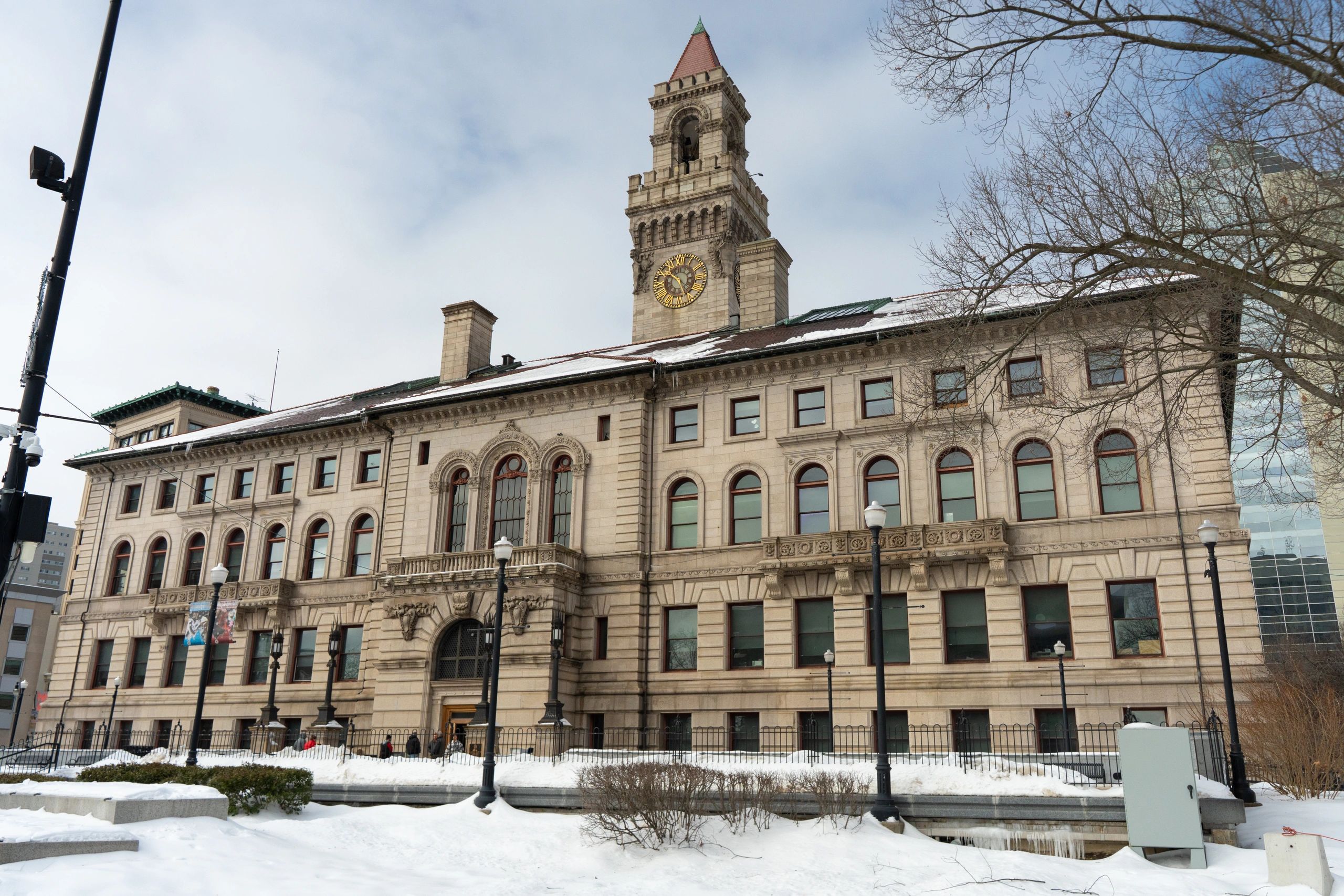
WORCESTER—Councilors return to City Hall Tuesday with an agenda that moves fast but lands heavy, touching on how residents get around the city, how the city responds when things go wrong, and whether some of Worcester’s long-standing systems are still serving the people they were designed to help.
Transportation issues are expected to dominate the night’s discussion, with a dense cluster of agenda items focused on commuter rail policy, pedestrian safety, and traffic enforcement. Several of those items stem from chairman’s orders by Mayor Joe Petty related to the Worcester/Framingham MBTA Line, including requests to explore forming a working group made up of the six communities served by the line to coordinate advocacy for infrastructure and service improvements.
Councilors are also asking the city manager to work with that proposed group and the Worcester Regional Research Bureau to support the collection of Worcester-specific ridership data, including targeted MBTA commuter rail surveys. Together, the requests reflect a broader effort to strengthen Worcester’s role in regional transit planning and provide councilors with clearer data as they engage state transportation officials.
Councilors are also pressing for clarity on projects that include a long-awaited update on the Ernest A. Johnson Tunnel and changes to streets that residents walk, bike and drive every day. Requests range from reviewing crosswalk safety on Elm Street as part of its two-way conversion to removing a handicap parking sign on Indian Hill Road that councilors say no longer makes sense in its current location. Speed and parking enforcement concerns pepper the agenda, particularly those on Mill Street and near the Mason and Chandler street corridor.
The commuter rail discussion continues with a Worcester Regional Research Bureau report examining ridership trends and recovery on the Worcester/Framingham Line. While the report itself is being placed on file, the timing matters: it reinforces councilors’ push to ground future transit advocacy in Worcester-specific data rather than regional averages that can obscure local demand.
Beyond transportation, several agenda items suggest a growing appetite for oversight and reassessment. District 1 Councilor Gary Rosen is asking whether environmental or structural factors could be contributing to public health data that he says shows unusually high rates of stroke and dementia among older residents in a dense downtown census tract. In a separate request, Rosen is also reopening a long-running civic question: whether Worcester’s modified Plan E charter—first adopted in 1987 and amended as recently as 2022—is still working as intended, or whether it deserves another hard look.
Winter response is another recurring theme, as councilors dissect how the city handles snow—and where it falls short. Multiple requests seek detailed reporting on plowing complaints, enforcement challenges during winter parking bans, sidewalk clearance near schools, and how the city prioritizes streets during major storms. Together, the items suggest less interest in finger-pointing than in building a clearer picture of what works, what doesn’t, and what needs to change before the next big snowfall hits.
Other highlights on the agenda
- More senior housing on the table: District 3 Councilor John Fresolo is asking for an update on plans to convert the former St. Vincent Hospital nursing dormitory into affordable housing for senior citizens. The project has been discussed for years and the request signals interest in whether development timelines are finally solidifying.
- A statue for America’s 250th: Councilor Morris Bergman is looking ahead to the nation’s 250th anniversary with a proposal that blends history and civic identity. He’s asking the city manager to explore funding for a permanent statue commemorating Isaiah Thomas’s historic public reading of the Declaration of Independence, to be placed outside City Hall. Supporters see it as both an educational marker and a symbolic investment in Worcester’s revolutionary past. The request also raises practical questions about cost, placement and long-term maintenance.
- Measuring police standards: Councilor Kathleen Toomey asks for an update on the Worcester Police Department’s voluntary accreditation process with the Massachusetts Police Accreditation Committee. The process requires departments to meet more than 325 operational standards and submit to an external review.
- Who pays for smoother streets? District 5 Councilor Jose Rivera is questioning whether the city’s current approach to funding street and sidewalk resurfacing is equitable or adequate. His request asks staff to explore increasing district-level paving funds and examine whether grants, free cash, or new tax growth could help close gaps.
- Tracking Home Rule history: Mayor Joe Petty is asking for a decade-long accounting of Home Rule petitions approved by the city council and sent to the state legislature. The report would detail what passed, what stalled, and what ultimately became law. For residents frustrated by slow or opaque state processes, the information could help explain where local authority ends and Beacon Hill begins. It also offers a rare long-view snapshot of Worcester’s legislative priorities.
- What’s it costing to wait? Vice Chair Khrystian King is requesting a detailed breakdown of monthly maintenance costs for several city-owned properties, including the Worcester Auditorium and the Denholm Building. The request also seeks updates on development timelines and any related RFPs. As these buildings sit in limbo, councilors want to understand how much the city is spending just to keep the lights on — and whether delays are costing more than action would.
- Shelter before winter hits: Councilor Satya Mitra is pushing for early public hearings on emergency shelter capacity for the winter of 2026-2027. The request reflects lessons learned from recent and current cold seasons, when cities across the state scrambled for last-minute solutions. By starting the conversation now, councilors hope to identify safe, secure locations well before temperatures drop.
- Walkability in Main South: Petty is asking for a plan to make the Main South area more walkable, with infrastructure improvements designed to boost foot traffic and support local businesses. Walkability has become a key metric in urban planning, influencing everything from economic development to public health. For Main South, the request signals an interest in long-term neighborhood revitalization rather than isolated fixes. Residents can expect future conversations about street design, safety and accessibility.
- What’s next for school buildings? Several requests focus on how the city uses school properties, particularly the Fanning Building. Petty is asking for a broader review of how buildings align with the district’s evolving needs, while King is seeking updates on safety audits, future use plans, and efforts to secure additional state funding through the Massachusetts School Building Authority. Together, the items suggest growing urgency around school infrastructure and long-term planning.
- Black History Month recognition: King is also sponsoring a resolution recognizing February 2026 as Black History Month. While largely ceremonial, the resolution formally affirms the city’s commitment to honoring Black history and encouraging meaningful engagement throughout the month. These recognitions often serve as a barometer for the council’s broader cultural and educational priorities.
- Water breaks, on the record: Councilors receive an informational update on recent water main breaks, continuing a pattern of placing infrastructure disruptions into the public record. While the report is being accepted without debate, it adds context to ongoing concerns about aging systems beneath city streets.
- Clerk’s office looks ahead: The agenda also includes the City Clerk’s Office annual report outlining goals and objectives for 2026. Though procedural, the document offers a glimpse into how the office plans to manage elections, records and public access in the year ahead.
Worcester City Council meets Tuesday, Feb. 3, at City Hall in the Esther Howland (south) at 6:30 p.m. It is also livestreamed on the city’s website.
Have news, tips, or a story worth telling? Reach Editor Charlene Arsenault at carsenault@theworcesterguardian.org—because good stories (and great scoops) deserve to be shared
