
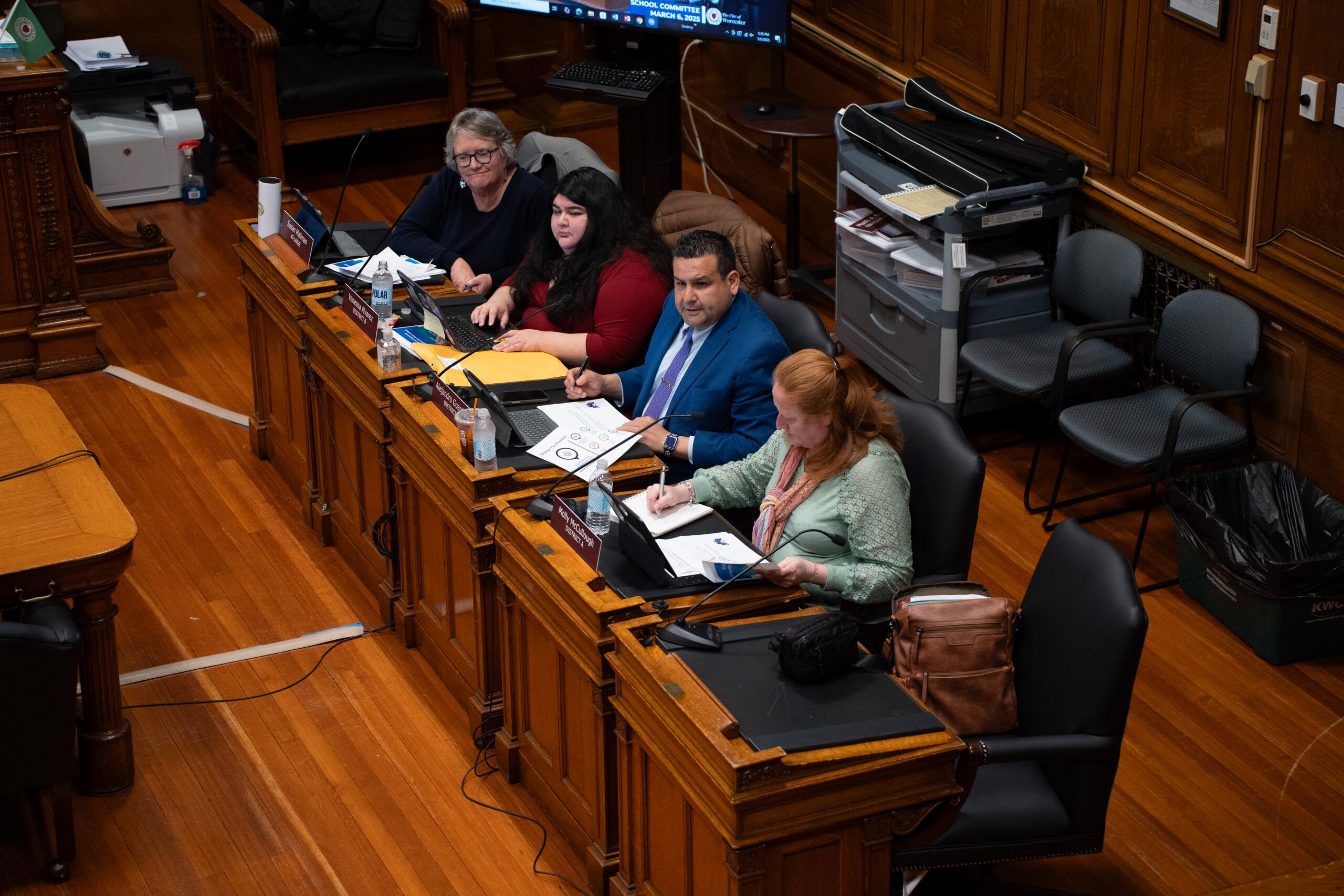
Worcester students posted their strongest single-year gains in reading and mathematics since the district adopted its current testing system, though results still fell just short of goals set for the school year.
Those findings are among the central pieces of Superintendent Brian Allen’s first annual self-assessment to be presented to the Worcester School Committee on Thursday as members begin the process of evaluating his performance during the 2025-26 school year.
The meeting also brings nearly $466,000 in proposed grants before the committee, including money for ninth-grade biology materials and teacher training, career and technical education programs, and middle school sports at five Worcester schools.
Allen rated the district as having made “significant progress” toward its student learning goal. By the end of the school year, 35% of students were meeting or exceeding benchmarks on both STAR Reading and STAR Math assessments, which is one percentage point below the district’s 36% target in each subject.
Reading performance rose six percentage points from the beginning of the school year, while mathematics increased five points. According to the self-assessment, both were the largest within-year improvements since Worcester began using its current assessment practices in the 2021-22 school year.
The percentage of students in the lowest performance category also declined. At the end of the year, 31% of students were not meeting the reading benchmark and 30% were not meeting the mathematics benchmark, the lowest year-end figures recorded under the current testing system.
Allen’s report also points to record participation in Early College courses, a record number of students earning the Seal of Biliteracy and the largest number of students exiting multilingual learner status in a single year. During his first year as superintendent, Allen reported making 120 school visits, including stops at every district school during the first month.
The report rated progress on Allen’s professional practice goal as exceeding expectations. That goal focused on creating more consistent structures for staff collaboration, including advance agendas, meeting norms and documented action steps. By the end of the year, 38 of the district’s 49 schools — about 78% — had met the standard for implementing those practices consistently, surpassing the 70% target.
Mayor Joseph Petty is also asking the committee to establish a date and process for Allen’s formal evaluation. Thursday’s presentation is the superintendent’s own assessment of his performance; committee members will complete the official review.
Nearly $466,000 in grants
The largest grant before the committee would provide $283,355 for biology curriculum materials and professional development for ninth-grade teachers across the district. The funding would support three units of the OpenSciEd biology curriculum, with more than $151,000 allocated for curriculum kits and printed materials and about $132,000 for professional development from Worcester Polytechnic Institute and the National Science Teaching Association.
Another $100,000 grant from the Play Ball Foundation would continue middle school sports during the 2026-27 school year. The money would fund uniforms, equipment, transportation and coaching stipends for baseball, softball, soccer, flag football and basketball programs at Sullivan Middle School, University Park Campus School, Burncoat Middle School, Worcester East Middle School and Forest Grove Middle School.
An $80,000 state grant would support curriculum work in career and technical education programs at Doherty Memorial, North, South and Worcester Technical high schools. Most of the funding would pay educators to update curriculum maps and align programs with state vocational standards before the fall semester.
Burncoat High School’s DECA chapter would receive a smaller but targeted $2,500 grant from the National Education Association Foundation. The money would cover memberships, conferences and competition fees for an after-school program intended to build business knowledge, leadership skills and career readiness.
Other highlights on the agenda
- Homework policy checkup: Committee member Sue Mailman requests a report on the district’s homework policy one year after it took effect. The current policy calls for assignments that support the curriculum and increase appropriately as students advance through grade levels, while also placing expectations on caregivers to monitor completion and provide a suitable place to study. The review could provide the first districtwide look at whether the policy has produced consistent practices from school to school.
- LGBTQIA training: Mailman is also seeking an update on the district’s use of the state Safe Schools Program for LGBTQ Students. A previously outlined plan called for training district leaders, principals, deans, adjustment counselors and other staff in inclusive practices, family engagement and support for transgender and gender-diverse students. The new request could clarify how much of that training occurred during the past school year and what remains planned.
- More time for major decisions: Another proposal would require at least four months of lead time before the School Committee votes on curriculum purchases, contracts or policy changes. The request is intended to give committee members and the public more time to review proposals and raise questions before decisions are made. If adopted later, it could alter how quickly the administration brings major initiatives from introduction to approval.
- Technology offices leaving Worcester Tech: The committee is seeking details on the city Information Technology Department’s move out of Worcester Technical High School. The agenda does not explain where the department is relocating or what will become of the space it leaves behind. The administration will be asked to report back, potentially opening a discussion about whether the area can be returned to school use.
- Reading and math software: Administrators are seeking approval for another three-year agreement with Renaissance Learning, which provides software used for reading, mathematics and early literacy instruction. The agenda does not list the cost of the agreement. Because the company’s programs are tied to student assessment and instructional planning, the contract has implications beyond a routine software renewal.
- New nursing director: The committee is expected to vote on a three-year employment contract with Amy Grniet, the district’s director of nursing-elect. The proposed term would run from July 16 through June 30, 2029. Contract details are expected to be discussed in executive session before the public vote.
- Watching the new budget: The district’s recently approved fiscal 2027 budget will return for routine monitoring and any transfers that become necessary during the year. The spending plan totals about $623.7 million, an increase of roughly $34.4 million over the prior year. Thursday’s item is not another budget approval vote; it begins the committee’s ongoing oversight of spending under the new plan.
The Worcester School Committee meets Thursday, July 16, at Worcester City Hall’s Esther Howland Chamber. Executive session begins at 4 p.m., followed by the public meeting at 4:30 p.m. The meeting can also be viewed through the Worcester Public Schools Zoom.
