
WORCESTER — The Worcester School Committee is set to take a final vote April 2 on a proposed $3.2 million elementary math curriculum after its Teaching, Learning and Student Success subcommittee approved the plan in a divided vote.
The subcommittee voted 2-1 in favor of adopting the Reveal Elementary Math curriculum, with members Maureen Binienda and Alex Guardiola supporting the measure and Vanessa Alvarez casting the lone dissenting vote.
The proposal had previously been reviewed by the full School Committee on March 19 before being referred to the subcommittee.
The administration is recommending replacing the enVision curriculum, whose contract expires later this year.
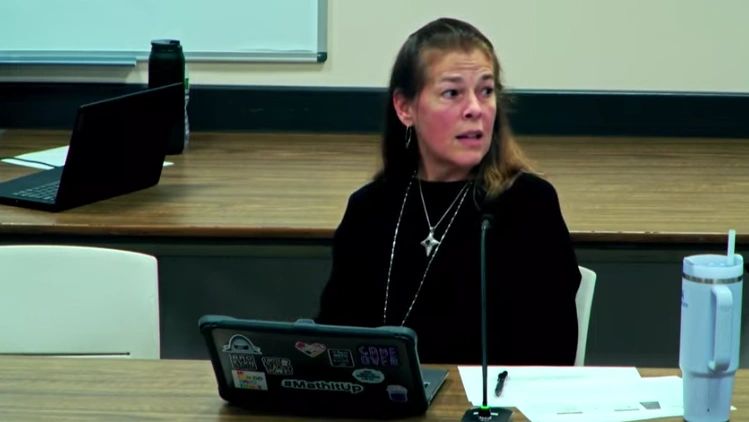
District Math Specialist Heather Farrington presented the proposal, highlighting feedback from elementary educators and testimonials from secondary teachers who already use Reveal. She said the current enVision program requires teachers to supplement lessons, while Reveal would better align with district goals and provide continuity across grade levels.
“It does meet the diverse learners in tier one instruction, it supports our instructional frameworks and Vision of a Learner, and we know math is ruthlessly cumulative and Reveal vertically aligns our curriculum from Kindergarten through Algebra II. This would be so huge for some of our transitions,” Farrington explained.
Farrington said the district also considered Illustrative Math and renewing its contract with enVision but ultimately determined Reveal was the stronger long-term investment.
“Is it worth just putting money into something that we actually have already acknowledged is not meeting the needs of our students and our teachers are supplementing,” Farrington questioned concerning a continued partnership with enVision. “Is that a good use of budget funds, rather than if we’re able to provide a curriculum that actually does what they’re asking for and that has the multi-language support imbedded and that has the differentiation? That would be where I stand.”
Subcommittee members said the presentation addressed many questions raised by both the School Committee and the public. Supporters pointed to the curriculum’s emphasis on hands-on, real-world learning, language and number routines, guided exploration, independent practice and differentiated instruction tailored to students’ needs.
Vertical alignment across grade levels emerged as a key selling point.
If approved April 2, the rollout would begin with curriculum map upgrades in May, followed by districtwide training in June. Additional professional development would take place in November and March, with a follow-up evaluation scheduled for June.
