
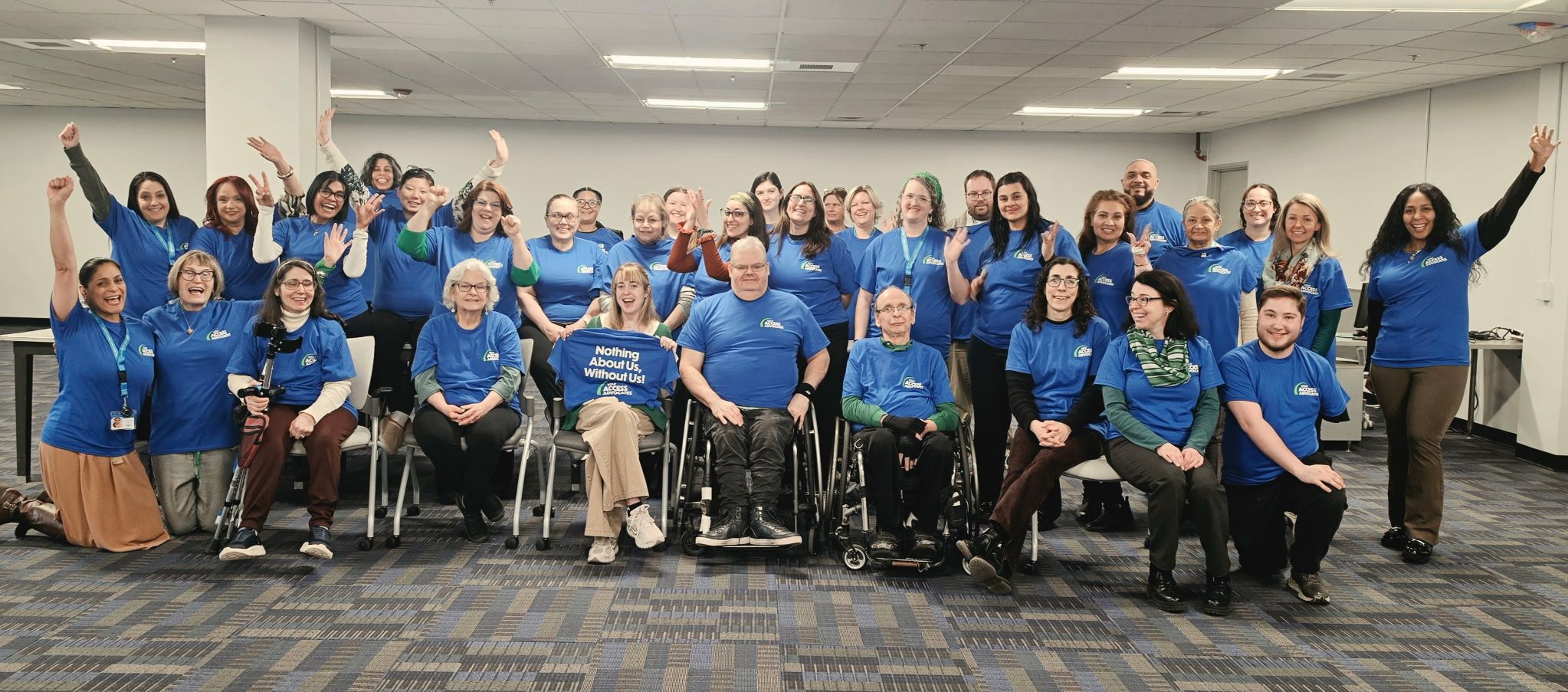
WORCESTER—The organization now known as Your Access Advocates plays a vital role in helping Worcester residents with disabilities live independently. Formerly called the Center for Living & Working, the nonprofit recently rebranded to its new name — a change leaders say was long overdue — while continuing its mission of helping residents take active roles in their lives and their community.
The issue was never the work, but the clarity.
“The old name really did not tell people who we were or what we did,” said Margaret Coffin, the organization’s CEO. That misconception became a driving force behind the rebrand.
“As a disability resource and advocacy center, this name says specifically who we are,” she said.
As the organization approached its 50th anniversary, leadership saw an opportunity to reassess and reconnect with the community. By engaging stakeholders internally and externally — and hiring an outside agency to gather broader feedback — “it was determined we did need to update our name and brand,” Coffin said.
While the name is new, the mission remains the same: ensuring individuals with disabilities have the support and services they need to live independently in their own communities. Independence, Coffin explained, looks different for everyone.
“Access means something different to everyone,” she said. “It may be physical access but it may also mean access to benefits or supports and services. Whatever access means to the person who comes to us will be what we work with them on.”
Unlike traditional service models, Your Access Advocates does not operate on a case management system. Instead, the organization emphasizes self-direction, with services shaped by what individuals want to accomplish.
One of the organization’s biggest challenges is awareness — not just of its name, but of the range of services it offers. Your Access Advocates works with individuals at all stages of life. For youth as young as 14, programs focus on transition skills to adulthood, including employment readiness, social skills and driver’s education.
For adults, the organization provides support with housing and benefits applications, financial literacy and other resources. A deaf and hard of hearing program helps connect individuals with equipment needed at home. Coffin said the organization also assists individuals with MassHealth who qualify to hire a Personal Care Assistant (PCA) to help them live in the community.
Beyond individual support, the organization conducts ADA assessments for cities, towns and businesses, helping ensure public spaces are accessible to people with disabilities.
A defining feature of Your Access Advocates is its commitment to representation. More than 51% of its board of directors and staff are individuals with disabilities.
“Centers for Independent Living are mandated by the Federal Rehabilitation Act of 1973, and this act mandates well over 50% of staff, leadership, and the board are individuals living with disabilities,” Coffin explained. Nevertheless, she said, the organization aims to go beyond the federal requirement.
“Because so many of the staff are individuals with a disability either visible or invisible,” said Coffin, “when individuals come to us they are often speaking with a peer. We offer disability etiquette and other disability related training in the community and to other agencies to remove the misconception that people with disabilities cannot live full lives on their own.”
That peer-to-peer connection can be transformative for individuals seeking assistance. It builds trust and reinforces a core value of the organization: people with disabilities are the experts in their own lives.
The impact of the organization’s work is reflected in the experiences of those it serves. Coffin shared the story of a man who turned to Your Access Advocates after a life-altering accident.
In 2017, a father was paralyzed from the neck down following a car accident. He spent two years in hospitals and skilled nursing facilities, facing an uncertain future.
“In 2019, he was referred to an options counselor to explore the possibility of returning to community living,” Coffin said. “With the guidance of his Options Counselor, he began the process of rebuilding his life outside of a facility. Together, they completed housing and benefits applications, and he was connected with the Moving Forward Plan Program, which provided financial assistance for costs associated with transitioning back into the community.”
He was able to hire PCAs and move into his own home. Today, he lives independently, engages with his community and started his own wheelchair van service, Wheels on the Bus Transportation.
Despite successes like this, significant barriers remain, particularly in Worcester.
“The biggest barrier is accessible housing,” Coffin said. “Many individuals with disabilities are forced into institutional settings.”
To address the issue, the organization works with community partners and advocacy groups focused on expanding accessible, affordable housing locally and statewide.
“We have had success in getting funding for additional, accessible and affordable units to be built,” Coffin said.
Your Access Advocates is moving forward under its new name with a goal of becoming more visible and accessible to those who need its services.
“If someone has any questions I hope they will call us,” Coffin said. “If we do not have the answer, we have a large list of resources that are available that we can connect people to.”
Coffin also offered a message for Worcester residents seeking help:
“Never take no for an answer and always advocate for your independence,” she said.