
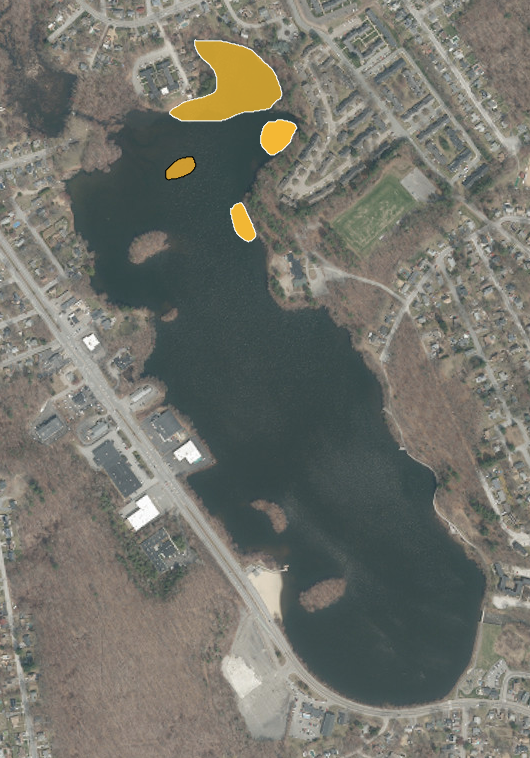
City officials are advising residents to temporarily avoid using water from part of Coes Reservoir and to stay out of a section of the lake Thursday while contractors apply an herbicide treatment targeting an invasive aquatic plant.
The Worcester Department of Sustainability and Resilience said that contractors are treating the northern section of Coes Reservoir on June 25 with ProcellaCOR, an herbicide used to control Eurasian milfoil, an invasive plant species that can spread rapidly and interfere with recreational use and aquatic ecosystems.
The treatment area includes the portion of the reservoir north of the Knights of Columbus property.
Officials are asking residents to discontinue using water from the reservoir for irrigating lawns and plants or watering livestock during the treatment period. On the day of the application, the city is also advising people to stay out of the water, avoid boating in the treatment area and keep pets away from the northern section of the reservoir.
Recreational activities, including boating and swimming, will continue to be permitted in the southern section of the lake.
The city said access points around the reservoir will be posted with notices before the herbicide is applied. Water-use restrictions are expected to be lifted the following day.
According to the announcement, herbicide treatments are commonly used to reduce populations of Eurasian milfoil and other invasive aquatic plants. The city said the treatment “poses no risk to humans and animals after application is complete,” though water from the reservoir should not be used for irrigation during the restriction period.
The treatment plan has been approved by the Worcester Conservation Commission.
Eurasian milfoil is a non-native aquatic plant that can form dense underwater growth, crowding out native vegetation and affecting boating, fishing and other recreational uses.
