
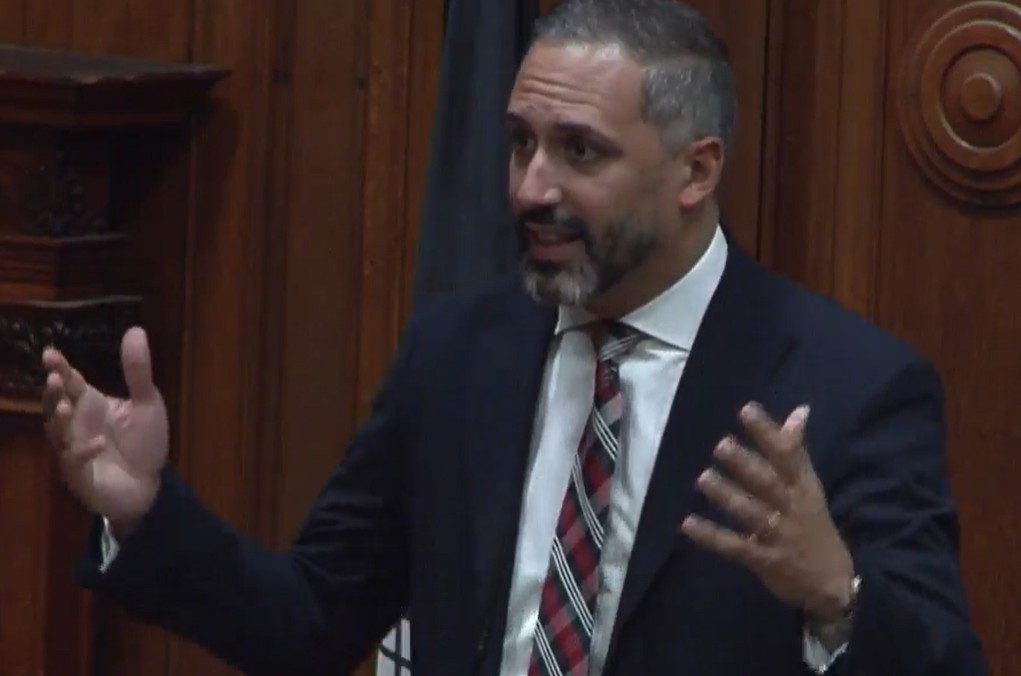
The Worcester City Council devoted its month-ending meeting to evaluating City Manager Eric Batista, with councilors largely praising his performance during fiscal year 2026 while pointing to areas they believe still need more attention.
The June 30 meeting’s only agenda item was the council’s annual review of Batista’s self-evaluation. Although members commended his leadership, communication and financial management, several also highlighted ongoing concerns about homelessness, infrastructure, departmental accountability and quality-of-life issues.
Councilor Tony Economou said he gave Batista a score of 24 out of 25 but believes several departments could still improve, particularly Public Works, Transportation and Mobility, and the fire and police departments because they affect the greatest number of residents.
“Overall, he does a great job. I’d like further oversight on areas that the taxpayers are constantly asking for,” Economou said, citing snow removal and potholes, among other issues. “The snow season went the way it went. Does it need improvement? Sure. He was on it, the commissioner was on it, and brought his report forward as to what he’d like to see changed. We’re going to have the benefit of holding him to that in this next winter season.”
District 5 Councilor Jose Rivera praised Batista’s communication with the council but said the city still has more work to do addressing homelessness.
“I’m encouraged by the work I have observed by the administration over the past six months,” Rivera said. “Your administration deserves credit for its vision and follow-through on establishing the Day Resource Center, and the services they will provide. This is an important step to address the needs of some of our most vulnerable residents. At the same time, residents are seeking assurance that the city will remain vigilant and attentive to the broader effects of homelessness throughout the community, including the downtown core, neighborhood parks and wooded areas across the city.”
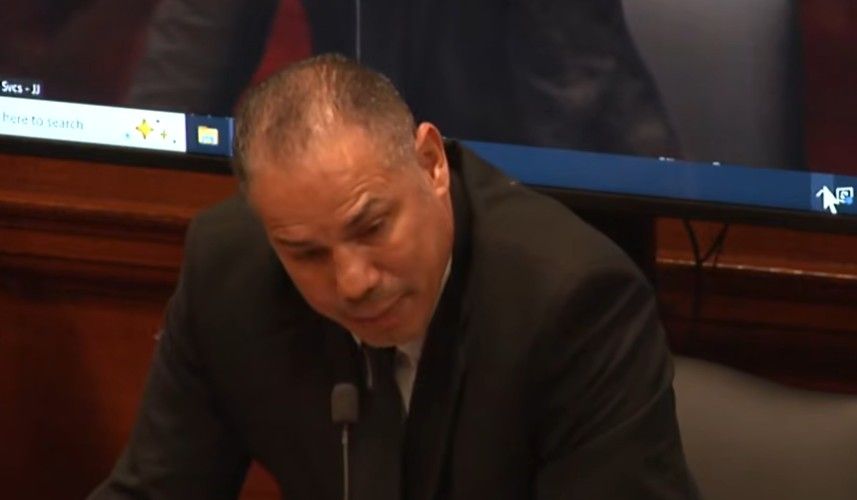
Council Vice Chairman Khrystian King questioned the timing of the evaluation, saying it comes less than a week after the city manager’s State of the City address and diminishes the council’s role in assessing the administration.
“For me, it undermines that process,” King said. “This isn’t something that Manager Batista created. This happened because of his predecessor, Manager Ed Augustus. It’s important to have a process where the public is very clear about our evaluation process, and our perspective on the state of the city. It’s also very clear that having a State of the City [address] prior to this process influences public perception without metrics, and without input from this body.”
King praised Batista’s leadership during a challenging period, particularly in strengthening Worcester’s finances, encouraging residential growth and responding to homelessness.
“We had a situation and we didn’t have a plan,” King said. “The city manager reacted to that, advocated, and was able to move and establish a level of cooperation with the private sector, but there was no plan. We acquired the RMV property, and we need more communication as to what the plan is for that property, while it remains an eyesore.”
King also called for stronger performance measurements across city government.
“There are no standardized departmental performance metrics or consistent evaluations to allow for meaningful accountability across departments,” he said, adding that he has discussed the issue with Batista and that improvements are in the works.
Councilor John Fresolo praised Batista’s “passion for public service, a commitment to the future of this city, and the seriousness with which you approach your responsibility,” but said the city’s follow-through on resident concerns could improve.
“My concern is ensuring that once an issue is raised and delegated, that there is a clear process for maintaining momentum, tracking progress and providing timely follow-up. At times, matters referred through the administration appear to lose momentum, become delayed, or require repeated follow-up before an answer or an action is provided.”
Councilor Gary Rosen also commended Batista’s work ethic while urging greater attention to enforcing the city’s responsible development ordinance, expanding services for people experiencing homelessness and pursuing voluntary Payments in Lieu of Taxes (PILOT) agreements with the city’s colleges and universities.
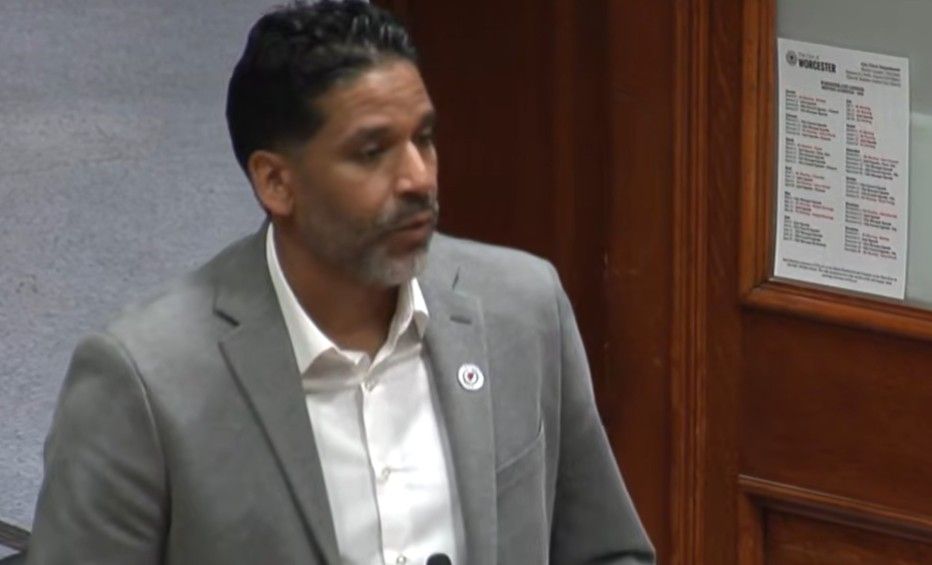
“Negotiate equitable and voluntary PILOT programs from the city’s colleges and universities who use all city services – they use ALL of them,” Rosen said. “They use the city services without paying for them through property taxes.”
Councilor Robert Bilotta commended Batista’s management skills and knowledge of city government, pointing to improvements in communication, community engagement and the Clean City Initiative.
“This continues to be a real challenge, but I absolutely know it’s not for a lack of trying,” Bilotta said. “The quality of life team and inspectional services, they do a great job. They are out there every day. Anytime I call…within 24 hours I have an update. Within 72 hours, or even less, the issue is resolved.”
Bilotta suggested the city consider broader neighborhood-based strategies to address illegal dumping, trash and other quality-of-life concerns rather than tackling issues one property at a time.
Councilor Satya Mitra said Batista has helped move Worcester in a positive direction despite the challenges facing the city.
“We all love Worcester. We all have that fellowship – that neighborhood feeling, no matter how much criticism people give, they are all focusing on one thing – the City of Worcester. We all want it to be a better city,” Mitra said.
He added that with continued unity and hard work, Worcester can become “the best city in this country.”
Councilor Luis Ojeda said Batista has demonstrated accountability and a willingness to acknowledge mistakes.
“When it comes to management skills, for me there would be [fewer] complaints if tasks were completed in a more professional and timely manner,” Ojeda said, adding that reports sometimes take too long to reach councilors. “When it comes to communication skills…the city manager has actively listened and follows up on requests as discussed. Public communication in some instances can be improved and made more clear to assist residents and others.”
Councilor Kate Toomey said the evaluation reflects not only Batista’s work but that of the city’s employees.
“This also has been a very challenging year, and there are more unknown things to come that may affect our economy,” Toomey said. “Your data-driven focus has enabled us to see clear picture of success, and areas where we need improvement.”
She also urged continued collaboration on homelessness.
“We’re doing an awful lot of things to help our unhoused, but we’ve got a different kind of population,” she said. “We need an all-hands-on-deck for this issue. We have people committing serious crimes, being arrested and not even being given docket numbers. We need everybody at the table—the courts, the community partners, religious and educational entities—to brainstorm and provide solutions. Together, we can address this.”
Councilor Morris Bergman credited Batista with helping improve Worcester’s image and said he rated the city manager higher this year than last. Like King, he called for better ways to measure departmental performance.
“There needs to be metrics, because throwing money at the problem may solve it, it may not, but without having metrics, we really don’t have any way to know that,” Bergman said.
Mayor Joe Petty thanked Batista and the administration for helping move Worcester forward.
“Our population has increased, businesses are still coming in, developers are coming here, and I think it’s because people feel safe, there is opportunity here, and people feel welcome here in the city of Worcester,” Petty said. “I think we’re going in the right direction.”
Petty also called for contractors to complete road and sidewalk projects more quickly.
“When someone opens up a street or a sidewalk, it needs to be closed in a certain amount of time,” he said. “There’s no reason to open up Burncoat Street and go six months without closing Burncoat Street. No street or sidewalk should be open when winter comes. Something should be done, and developers or contractors should be held responsible.”
Closing the discussion, Petty thanked Batista for his leadership.
“You work hard. People don’t realize it. Some things are out of your hands,” he said. “You deal with toughness but with empathy. You care, which then makes them important.”
Batista thanked the council for its feedback before crediting department heads and municipal employees for the city’s accomplishments.
“We live in a world of social media and technology that demands us to move even faster,” Batista said. “We live in a world where the demand for access and the demand to get things done, is not today, it was yesterday. That puts a lot of pressure on municipal government, because municipal government was designed to go slow, to take its time and have process.”
He said advances in technology are helping the city improve communication, collect better data and deliver services more efficiently, but stressed that Worcester’s workforce remains its greatest strength.
“They all listen. They’re all listening,” Batista said. “Every single employee in the city government is listening. That’s important, because they’re listening to the residents, the council, and everything that’s being communicated, because they’re the ones who are doing the day-to-day work for the City of Worcester.”
Smith can be reached at steve@stevephotographysmith.com