
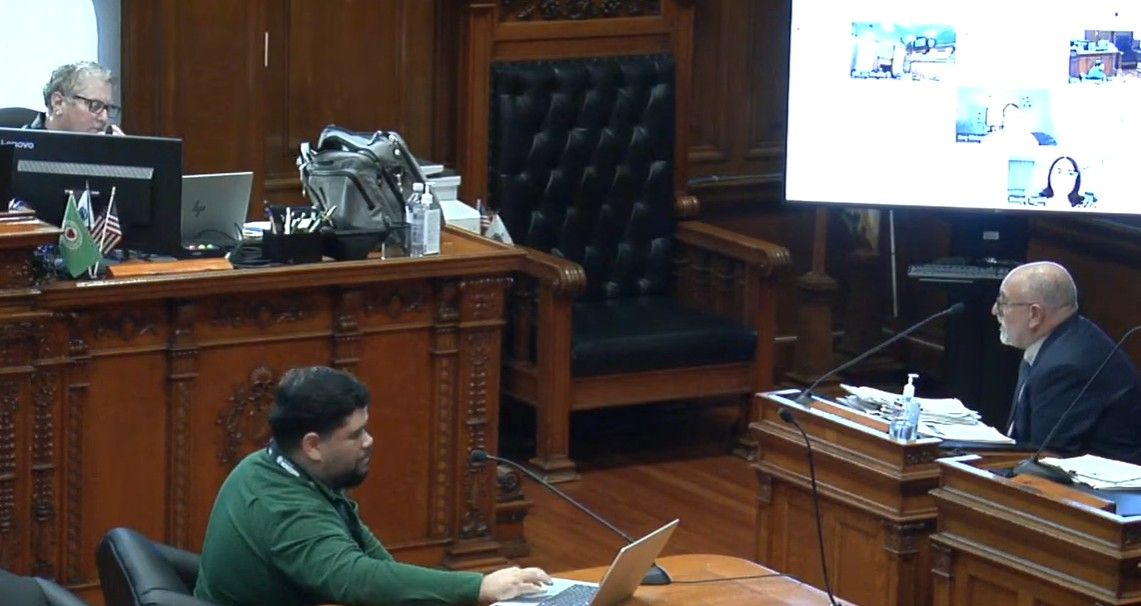
As temporary protected status expires for many Haitian and Syrian immigrants following a recent U.S. Supreme Court decision, Worcester’s Human Rights Commission is preparing for what local officials say could be significant impacts on residents, employers and immigrant families across the city.
During Monday night’s meeting, Human Rights Specialist Justo Soto of the city’s Executive Office of Diversity, Equity and Inclusion gave an overview of the federal changes and the resources available to affected residents, stressing that the briefing was for informational purposes and not as legal advice.
“The purpose of this presentation is to provide key information about the recent U.S. Supreme Court decision affecting temporary protected status … and the upcoming deadline for those on TPS,” Soto said.
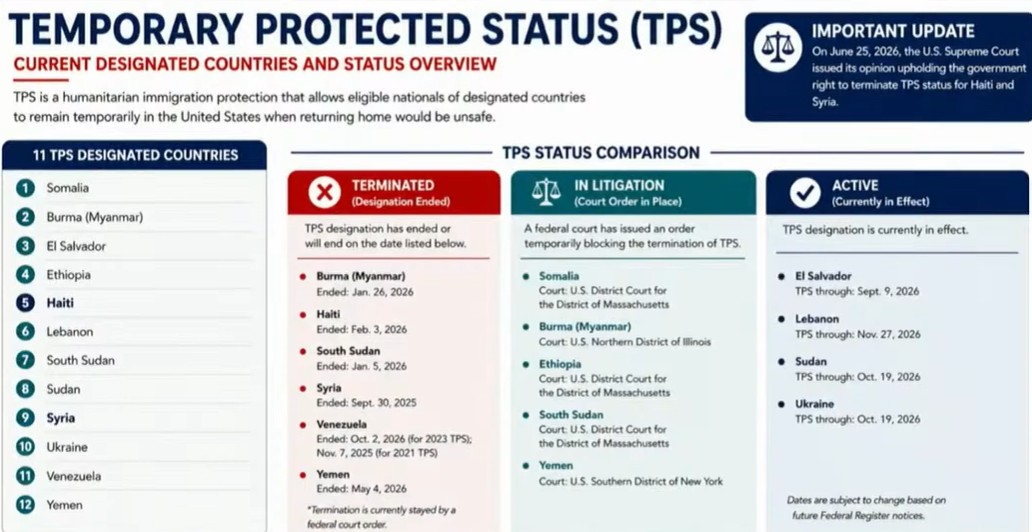
Temporary protected status, commonly known as TPS, allows eligible nationals of designated countries to remain legally in the United States when conditions such as armed conflict, natural disasters or other extraordinary circumstances make returning home unsafe.
The designation also allows recipients to obtain work authorization and, in some cases, travel authorization. It does not, however, provide a direct path to permanent residency or U.S. citizenship.
Soto told commissioners that Haiti and Syria are among the countries most immediately affected by the Supreme Court’s decision, which allows the federal government to move forward with terminating Haiti’s TPS designation while additional legal challenges continue.
He said the decision does not determine whether Haiti is safe to return to and does not automatically make every TPS holder subject to deportation. Individual immigration cases, he said, continue to be evaluated under existing immigration law.
Soto also highlighted efforts already underway in Worcester to help affected residents.
He said Mayor Joe Petty and U.S. Rep. Jim McGovern met earlier this month to discuss the impact of TPS changes on Worcester residents. A second meeting focused on connecting residents with legal resources, employer guidance and community organizations that can help immigrants understand their options.
Soto said city officials are encouraging employers not to immediately terminate workers whose TPS-based employment authorization is expiring and instead explore whether employees may qualify for other forms of work authorization or immigration relief.
He also discussed growing concerns over immigration court proceedings.
According to Soto, immigration courts have been scheduling large “mega master calendar” hearings involving dozens of cases at once. He said immigrant advocacy organizations have reported that some individuals have failed to appear after hearing dates were moved, resulting in removal orders being issued in their absence.
The Immigrant Justice Network of Massachusetts has reported those proceedings are occurring regularly in Worcester, Soto said.
Human Rights Commission Chairman Randy Feldman said another recent change requires most immigrants to appear in person for immigration proceedings rather than by video, increasing the importance of receiving accurate hearing notices.
Feldman also said work authorization for many Haitian and Syrian TPS recipients expired this week, creating uncertainty for affected workers and employers.
At the same time, he noted that many Haitian residents have already filed asylum applications, meaning the expiration of TPS does not necessarily end their ability to remain in the United States while those cases proceed.
Toward the end of the meeting, Feldman said the commission hopes to invite representatives from Legal Services of Central Massachusetts to a future meeting to explain the legal assistance available to immigrants facing changing federal policies.
No formal action was taken Monday. Soto’s complete presentation during the Human Rights Commission meeting can be viewed here.