

Just days after the Worcester Board of Health approved changes to the city’s tobacco regulations, the city council is launching its own review of youth vaping and nicotine addiction, saying testimony from doctors and youth advocates raised questions about whether enough is being done to protect young people.
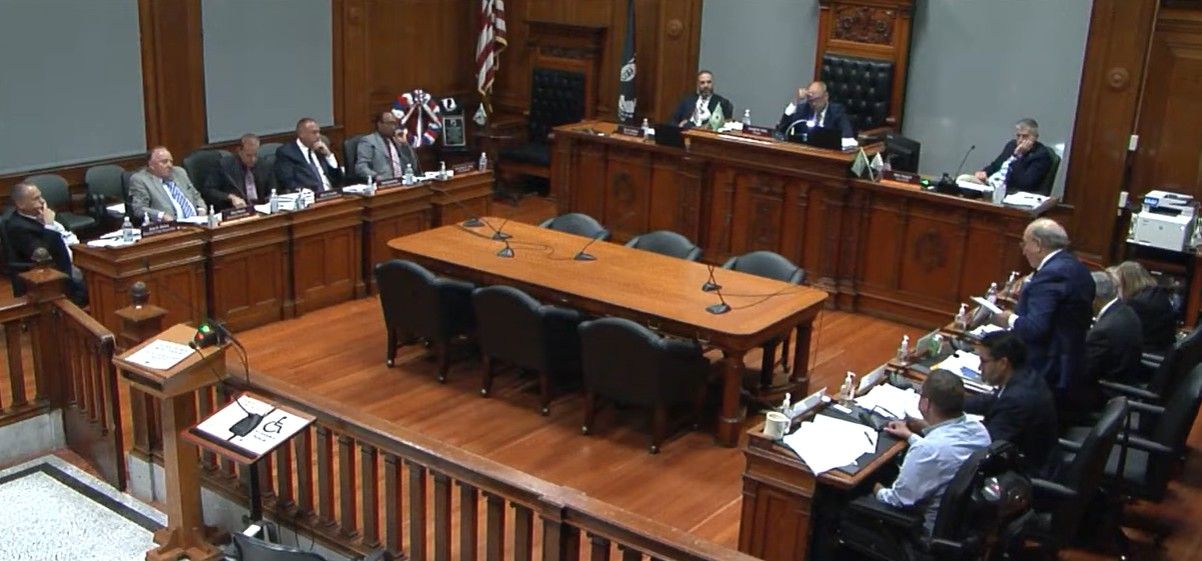
The council voted last week to ask the Standing Committee on Public Health and Human Services to meet with representatives from the Board of Health, medical professionals and youth advocacy organizations to discuss youth exposure to tobacco, nicotine and vaping products and explore what additional steps, if any, the city could take.
Councilor Gary Rosen, who chairs the committee and previously served four years on the Board of Health, said the idea grew out of a recent public hearing on revisions to the city’s tobacco regulations.
Although that discussion focused largely on easing some business restrictions affecting tobacco retailers and smoking bars, Rosen said many physicians and youth advocates shifted the conversation toward nicotine addiction among adolescents.
“I do care about our youth,” Rosen said. “My whole life has been with youth, as far as teaching and so on.”
Rosen said he did not believe changes to retailer siting rules would, by themselves, increase youth tobacco use. But he said the testimony convinced him the council should take a closer look at the broader issue.
“The doctors are probably right,” Rosen said. “Youth are being threatened by these products.”
He said the committee should hear directly from experts before deciding whether the city should pursue additional education or policy recommendations.
“What can we do as a city to keep our youth away from tobacco and nicotine and vaping?” Rosen asked. “If we understand the problem, we know how big the problem is.”
The discussion follows a July 13 Board of Health vote approving updates to Worcester’s tobacco regulations that officials said were intended to balance public health concerns with clearer and more consistent rules for tobacco retailers.
Related content: Worcester Board of Health approves updated tobacco regulations
Several medical professionals and youth advocates who spoke during that hearing warned about the health effects of nicotine addiction and youth vaping, while supporters said the revised regulations also addressed concerns raised by local businesses.
Not every councilor agreed with Rosen’s reasoning.
Councilor Robert Bilotta questioned why the council was proposing a review of youth tobacco use after recently supporting changes that made it easier for some tobacco-related businesses to operate.
“We on one hand we want to make it easier for businesses to sell tobacco, and now on the other hand we’re concerned about youth using tobacco,” Bilotta said. “I just don’t understand this order.”
Councilor Morris Bergman said he supported sending the issue to committee but cautioned against allowing a discussion focused on youth health to expand into restrictions on legal choices by adults.
Bergman said medical professionals could identify any number of habits that are unhealthy—including, he joked, his own “love of chocolate”— but said he would not want a council committee discussing limits on adults’ ability to make those choices for themselves.
“I don’t want any subcommittee meeting talking about limiting my ability to make my own adult decision,” Bergman said.
He also pointed to what he described as inconsistencies in existing age restrictions, noting that marijuana can legally be purchased at 21 even though brain development continues beyond that age.
“I think unfortunately we don’t always do it the medical way; we do it oftentimes the political way,” Bergman said. “And I have issues with those inconsistencies.”
Still, Bergman said he was willing to support sending Rosen’s proposal to committee for further discussion.
Council Vice Chairman Khrystian King said youth vaping has been an ongoing concern for the council and noted he has previously sought educational initiatives through Rec Worcester and requested vaping detection sensors for middle schools.
“I do know for a fact that youth vaping and exposures is significant,” King said.
King said he supports expanding education efforts and believes the committee hearing could identify additional ways to reach young people.
“Anything we can do as relates to educating young people, we should absolutely do that,” he said.
Councilor Luis Ojeda suggested Worcester Public Schools representatives be included in the committee discussion because educators confront vaping issues among students on a daily basis.
City Manager Eric Batista said the city is already addressing the issue through its Department of Public Health and Youth Opportunities Office in partnership with Worcester Public Schools.
“The Department of Public Health and our youth office are constantly having conversations with partners and providing information and resources to young people,” Batista said.
He cited educational programming through Rec Worcester, youth summits and ongoing collaboration with the school district.
Rosen said the committee’s role is not to duplicate those efforts but to better understand what programs already exist and determine whether additional action is needed.
“If we are [doing enough], that’s wonderful,” he said. “But according to the people who spoke … we’re not doing enough.”
The council unanimously referred the matter to the Standing Committee on Public Health and Human Services for further discussion.
Have a story tip, community concern, or insight to share? Email Editor Charlene Arsenault at carsenault@theworcesterguardian.org.
The Worcester Guardian is a nonprofit newsroom serving Central Massachusetts. Help keep independent reporting alive by making a donation today.
