
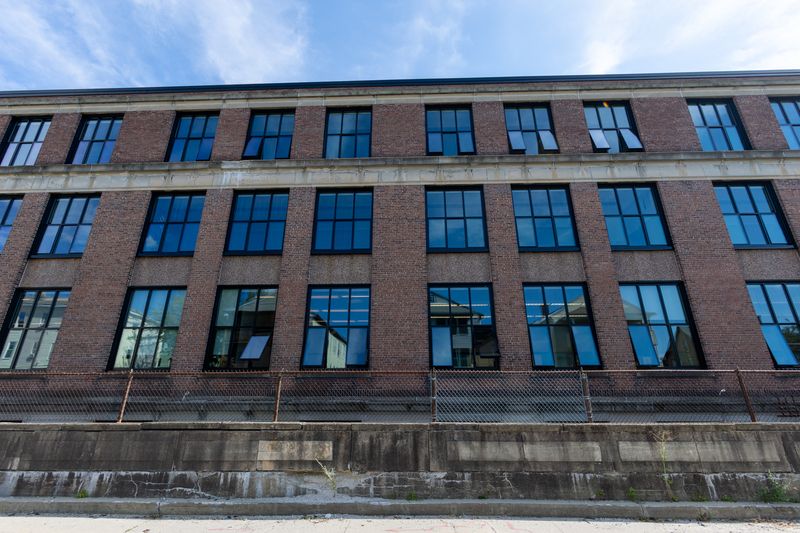
By the time George Russell walked back into Worcester East Middle School last week to celebrate the replacement of all 375 of its windows, he was no longer the district city councilor who had spent years pushing City Hall to do something about them.
The problem had outlasted his tenure.
Russell said he first became alarmed by conditions at the school around 2017, when he visited on behalf of the mayor for a staff retirement celebration and saw sheets of plastic and duct tape covering damaged windows throughout the building.
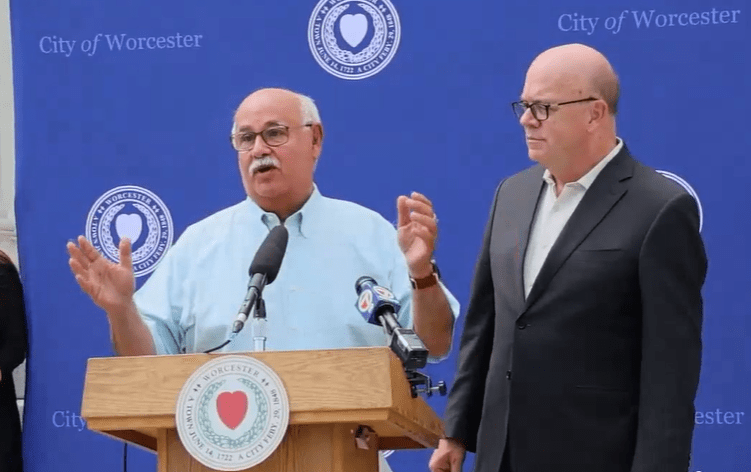
“I was quite upset looking at duct tape and sheets of plastic blowing in the wind over windows throughout the school,” Russell told the Worcester Guardian. “I also saw peeling, chipping paint.”
What followed was years of city council agenda items, meetings, budget battles and appeals for capital funding — at one point including a Russell vote against a school department budget because, he said, needed improvements were not being addressed.
The windows remained.
Now, nearly a decade after Russell began pressing the issue—and after school officials say attempts to replace the windows stretch back even further—the 1929 school has undergone one of its most substantial improvements in years.
Worcester Public Schools completed a two-year project this summer replacing all 375 original windows at Worcester East Middle School, using approximately $4 million from Massachusetts’ Improving Ventilation and Air Quality grant program, which was funded through the federal American Rescue Plan Act.
The work also included hazardous-material abatement, new roller shades and replacement of exterior doors, according to Worcester Public Schools.
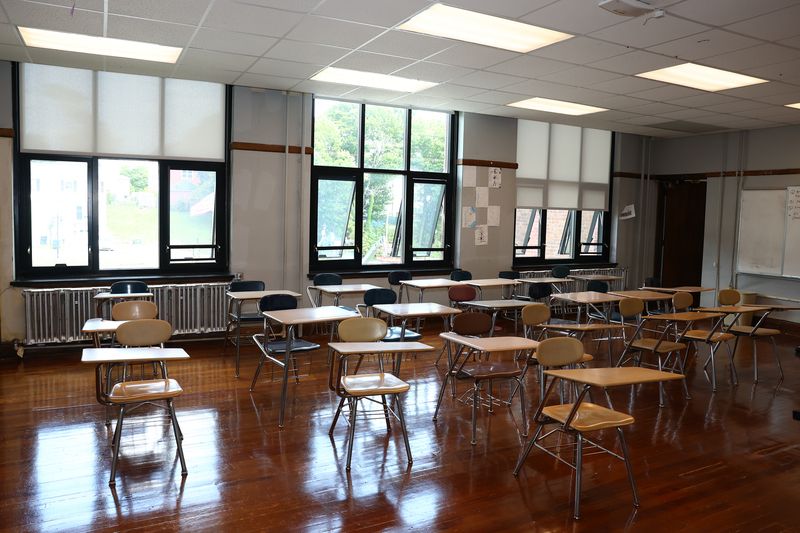
For students returning to school this fall, Superintendent Brian Allen said the difference will be tangible.
“We’ve been trying to replace these windows since at least 2012, and so we just didn’t have the resources,” Allen said at an event last week celebrating the work. “When students come back to school next week, they’re going to see a much different environment inside of the school building.”
Allen said classrooms will be warmer during the winter and safer because windows are no longer “screwed shut or held together by duct tape and so forth.”
The project is a striking example of how pandemic-era relief money is continuing to reshape public infrastructure years after the emergency that produced it.
Massachusetts established its Improving Ventilation and Air Quality program with federal American Rescue Plan funding, setting aside roughly $100 million for public schools with high concentrations of economically disadvantaged students and English learners and for communities disproportionately affected by COVID-19.
The program was designed to address disparities in aging school facilities and improve indoor air quality. State guidelines specifically allowed money to be used to replace windows and doors when existing units could not be opened to allow fresh air into classrooms.
At Worcester East, that provision proved critical.
State Rep. Mary Keefe said she visited the school after the pandemic and immediately saw the condition of the windows.
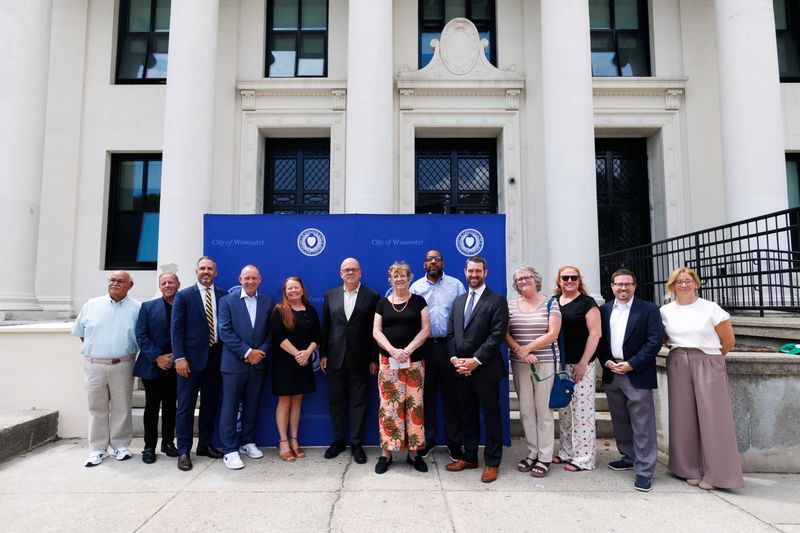
“You could see it just by walking up to the building that this was something that really needed to be taken care of,” Keefe said during the event.
Keefe said she and state Rep. Dan Donahue saw an opportunity when money became available through the state ventilation program and began working to direct funding toward Worcester East.
“We had to explain that HVAC or IVAQ, the grant wasn’t just HVAC,” Keefe said. “That it was something simple like being able to open a window to get some fresh air in the room.”
The distinction mattered in a building approaching its 100th birthday.
Keefe noted that Worcester East was built in 1929, during an early period in the development of junior high and middle schools. Over the decades, the landmark neighborhood building aged along with much of Worcester’s school infrastructure.
Russell said he repeatedly heard that investing heavily in Worcester East was difficult to justify because the state preferred that Worcester eventually replace the building entirely.
He said he was told a new Worcester East Middle School could be decades away — around 2039.
That only made the existing conditions harder for him to accept.
“Kids and staff shouldn’t have to wait until 2039 to cure these conditions,” Russell told the Guardian.
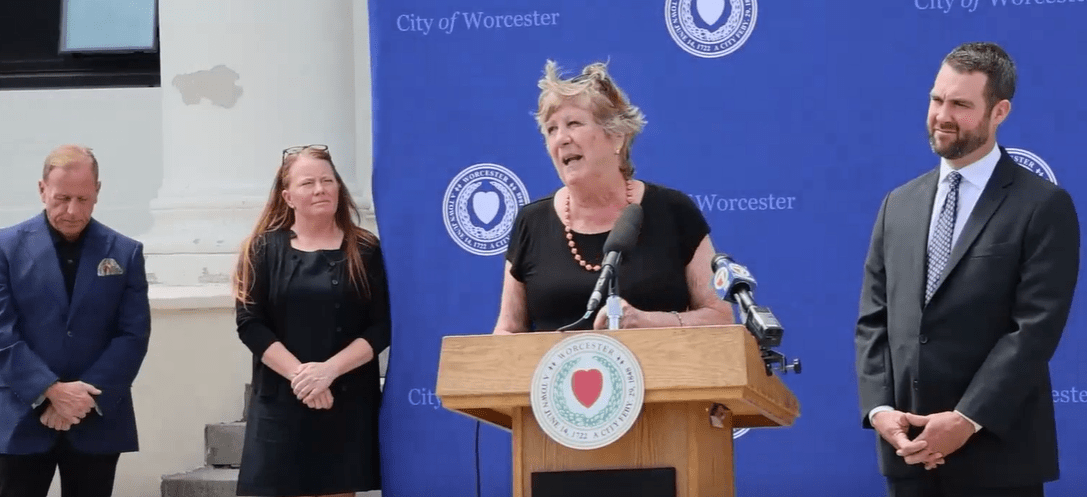
Russell said he brought numerous items before the city council over the years, requested air-quality and safety reports and pushed city officials for estimates on when a replacement school might be built. He also brought then-city officials Eric Batista and Edward Augustus to tour the building.
At the Aug. 24 event, Russell recalled enticing the pair with the promise of breakfast before taking them to see the school instead.
“I promised them breakfast at Palma’s, but really I took them here,” Russell said. “And we said, you know, this is not right. It’s not right to have kids in classrooms and educators in classrooms with plastic sheets of plastic over the windows and duct tape holding it together.”
At the time, Russell said, the estimated cost of addressing the problem was about $7 million — money the city did not have available for the project.
The pandemic changed the financial equation.
Congressman Jim McGovern said the American Rescue Plan sent more than $5 billion to Massachusetts and another $3 billion directly to cities and towns throughout the state. Massachusetts subsequently created the $100 million school air-quality program.
“Poor ventilation and unhealthy indoor air in public spaces is a serious problem, whether we’re in a pandemic or not,” McGovern said at the conference (which was followed by a tour of the school).
Once the state program was created, McGovern said, Keefe and Donahue worked with city officials to make Worcester East a priority.
“Creating a statewide program is one thing; making sure Worcester gets its fair share of those resources is another,” McGovern said.
The result was about $4 million for Worcester East, supplemented by city funding, he said.
Donahue credited Russell with keeping pressure on city officials long before the state money was available.
“Councilor Russell was incredible about staying on top of this issue on the city side, making sure that that funding was focused on by our partners at the city level,” Donahue said during the event.
The work was split over two summers, with the first phase completed in 2025 and the remainder finished this year.
City Manager Eric Batista, himself a Worcester East graduate who lives nearby, said the project reflects a larger challenge confronting Worcester: maintaining an extensive collection of aging school buildings while planning major replacements that can take years to finance and construct.
“We have a lot of schools. We have a lot of aging infrastructure, and working hand in hand with the superintendent, we’re tackling that little by little,” Batista said.
Batista pointed to additional school work underway elsewhere in Worcester and said Burncoat is among the major projects ahead.
Across the district this summer, Worcester Public Schools also carried out accessibility improvements at Thorndyke Road and Lincoln Street schools; asbestos or other material abatement at several buildings; lead paint remediation at Goddard School of Science and Technology and Midland Street School; roof repairs at University Park Campus School; and a series of electrical, boiler, masonry and safety projects.
But Worcester East illustrates both the possibilities — and frustrations — involved in maintaining old schools.
Russell said recent improvements at the school have also included roof and heating work, and he hopes the city eventually constructs a new Worcester East on another nearby site while finding another use for the historic building.
He also believes the work is unfinished.
Russell told the Guardian that peeling paint remains in the Worcester East auditorium and said he had previously been told capital money was available to address it.
“The work is not done,” Russell said.
For now, however, one problem that persisted through several superintendents, city administrations, budget cycles and Russell’s own departure from public office has finally disappeared.
The plastic and duct tape are gone.
And after at least 14 years of trying, Worcester East’s windows open again.
