
Worcester Polytechnic Institute has received a $2 million federal grant to provide scholarships, mentoring and other support to 70 undergraduate and graduate students pursuing degrees tied to robotics, smart infrastructure and advanced manufacturing.
The six-year grant from the National Science Foundation focuses on high-performing students with financial need, including undergraduates who receive federal Pell Grants and graduate students who demonstrate financial need. WPI will also recruit transfer students from regional community colleges and the University of Puerto Rico Mayagüez.
The project is intended not only to ease the cost of a WPI education but also to improve retention and graduation rates by surrounding scholarship recipients with faculty mentoring, interdisciplinary projects, summer programs and internship opportunities.
“It is important to give students from all backgrounds the opportunity to contribute to STEM fields,” Cagdas Onal, associate professor and head of WPI’s Department of Robotics Engineering, said in the university’s announcement. “If we remove the financial constraints that make it difficult for students to devote themselves to learning, those students will be able to graduate at higher rates, succeed in STEM careers, and live as productive citizens.”
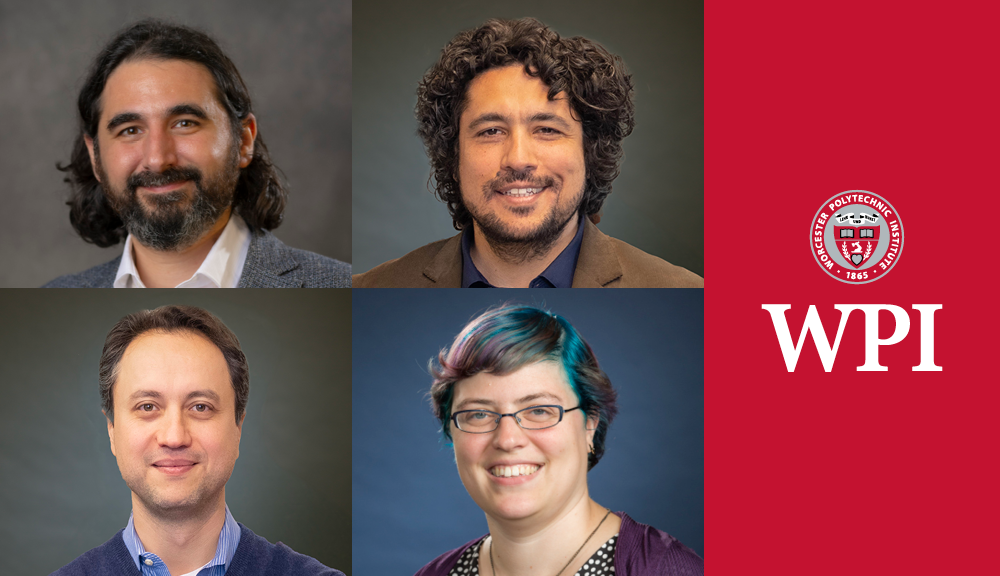
Onal will serve as principal investigator for the project, leading a faculty team drawn from several disciplines at WPI. Co-principal investigators are Berk Calli, associate professor of robotics engineering; Gillian Smith, a computer science professor and director of the Interactive Media and Game Development Program; and Yunus Telliel, an assistant professor in the Department of Humanities and Arts and Interactive Media and Game Development Program who also directs WPI’s Great Problems Seminar.
Scholarships will be available to students studying robotics engineering; mechanical and materials engineering; civil, environmental and architectural engineering; and interactive media and game development.
WPI plans to recruit prospective transfer students from Quinsigamond, Mount Wachusett, Berkshire, Holyoke and MassBay community colleges in Massachusetts, as well as Northern Essex and Manchester community colleges in New Hampshire. The university already has transfer partnership agreements with some of the schools intended to make the transition to WPI easier.
The effort comes amid broader concerns about the ability of students with limited financial resources to remain in college through graduation.
“Pell-eligible students have lower retention and graduation rates than other four-year undergraduates,” Smith said in the announcement. “Scholarships will help lift a financial burden for these students, while supporting them in pursuing exciting, interdisciplinary opportunities in design that open doors for a wide variety of internships and future career pathways.”
The initiative goes beyond scholarships. Students will work with faculty mentors on interdisciplinary projects at different stages of their education and will have access to WPI summer educational programs. The university also plans to work with companies and nonprofit organizations to create internship opportunities.
Those experiences will build on WPI’s existing project-based curriculum, which requires students to complete research projects addressing real-world problems before graduating.
“All students at WPI must complete research projects focused on real-world problems to graduate, and our programs will enable students to shape those required projects into multiyear, interdisciplinary collaborations that can help pave the way for their future careers,” Calli said in the announcement. “We place great importance on empowering students to make a positive impact in their communities, and this program will provide many such opportunities, from assistive robotics in healthcare to solutions in waste management.”
Other WPI faculty participating in the project include Carrick Eggleston, Paul Mathisen and Nima Rahbar of the Department of Civil, Environmental and Architectural Engineering; Pratap Rao of the Department of Mechanical and Materials Engineering; Sarah Strauss of the Department of Integrative and Global Studies; and robotics engineering professor Jing Xiao.
The new grant follows other NSF-backed efforts at WPI aimed at helping students with financial need enter and remain in STEM fields. The university received $2.5 million in 2023 for scholarships and programming for computer science undergraduates, an initiative that remains underway. Earlier programs focused on students pursuing renewable energy fields and undergraduates who were the first in their families to attend college.
As part of the new project, researchers will also study how the combination of financial assistance, mentoring and other programs affects the success of students from low-income backgrounds, with the goal of producing findings that could be useful beyond WPI.
“Technological change requires us to broaden our understanding of the capabilities essential to STEM,” Telliel said in the announcement. “Students who can link technical design with human experience and social impact will shape the future workforce in technology and engineering. By cultivating those capabilities throughout the undergraduate education, this project will identify effective ways to help more students thrive while generating insights that can be shared with universities across the country.”
