

WORCESTER – The mission and focus of Abby’s House hasn’t changed much in the last 47 years.
The Worcester nonprofit provides advocacy and support services to women who are low-income, unhoused, or domestic violence victims. It also provides shelter and affordable housing, and the shelter component will see an upgrade in the next several months in the form of a new facility.
Abby’s House celebrates this milestone with its Crown Hill neighbors at a groundbreaking from 10-11 a.m. on Tuesday, Oct. 24, at its site at 21-23 Crown Street.
An initial groundbreaking already took place in August, Executive Director Julie Orozco said, but since the structure is an older building, there were issues, such as lead remediation, which needed to happen before any actual construction took place.
“It’s a complete renovation,” said Orozco. “The original shelter was half of a side-by-side duplex. One side was an individual home and the other a nine-bed shelter space for women and children. If you think of the needs of such a space, it was cramped, and with the current housing crisis, nine beds were not adequate.”
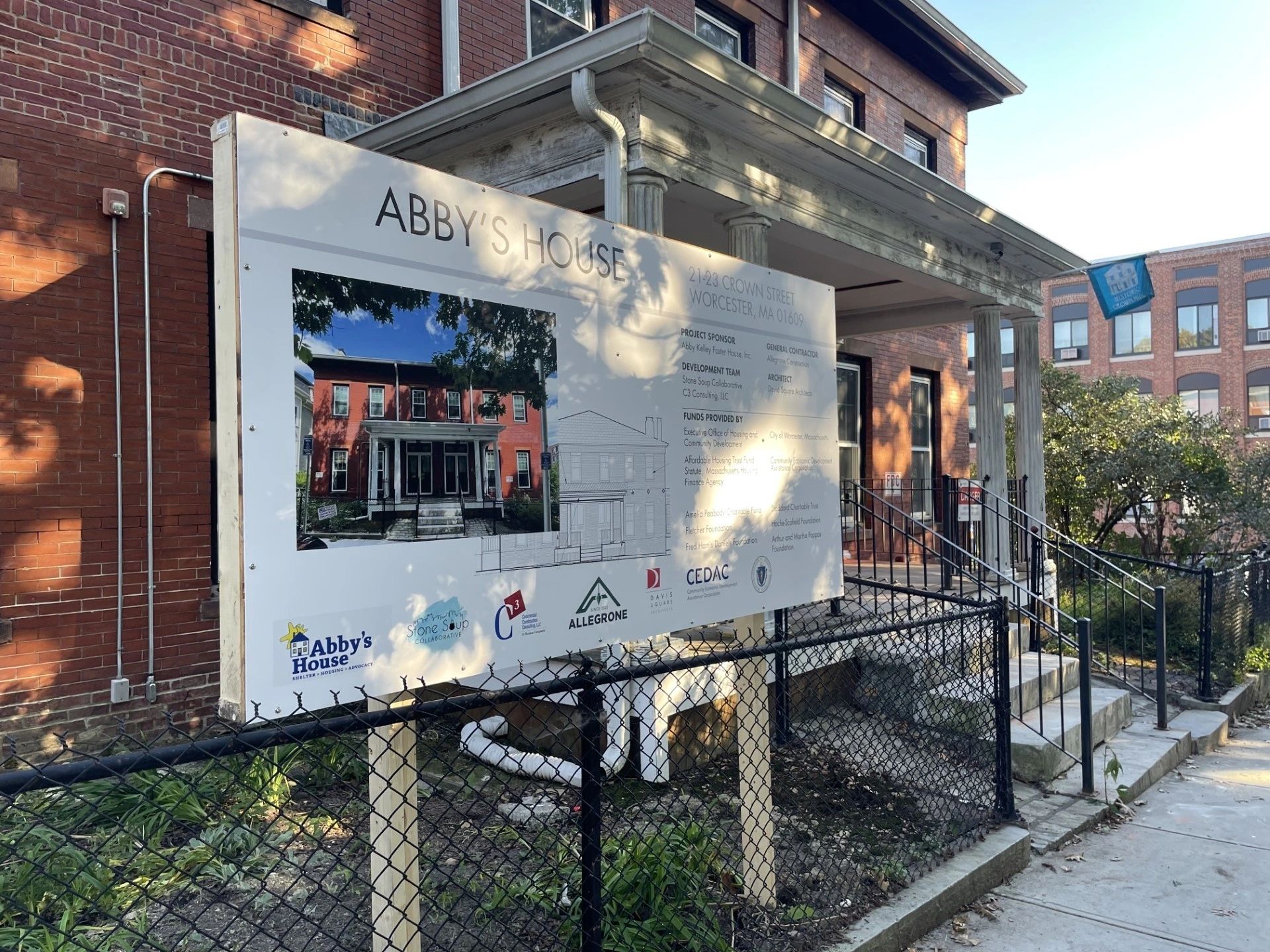
The remodel will turn the duplex into a single unit, with 18 beds, and, unlike the original shelter, will have handicapped access. Orozco said this will accommodate not only those with a physical disability, but also older individuals who might have trouble navigating stairs.
“There will be a first-floor space that’s fully accessible, including the bathroom, and a ramp into the building,” Orozco continued. “That’s really exciting.”
Another consideration was improving the physical layout. Abby’s shelter accepts women and children, and it is common for the mothers to cook meals for their own families. That could be difficult, Orozco said, because with strangers sharing common spaces, mothers want to have eyes on their kids while they prep the meals.
“It’s an intentional design,” Orozco said. “With the old design, they couldn’t see the children from the kitchen. This new space has great sight lines, so moms can do what they need to do, and kids can be kids.”
The shelter is expected to reopen next spring, but in the meantime, Orozco said, women in need are still welcome to apply. If a person’s safety is a barrier to acceptance – for example, if mental illness or addiction is a concern – Abby’s staff works to help with the most immediate need, such as hospitalization, recovery programs, and mental health services. Currently, there are two guests staying at an alternate location.
“We tried to find a physical location during the renovation, but it’s hard to find temporary, landlorded spots,” Orozco said.
In addition, there is another site in the Crown Hill area, that, with some small renovations, will become a day center, offering laundry, shower space, computer access, and a place to collaborate with others. It will be open during the day to the early evening,
“Abby’s way would be that we always have shelter for guests in need, but [previous Executive Director] Stephanie Page was forward thinking,” Orozco said. “We can take the temporary hit to be able to get to better services. I can help bring that to fruition.”
Abby’s continues to help in other ways. The agency recently accepted a donation from the Patriots Foundation of 25 “empowerment coats” – warm winter jackets that convert to a weather-protecting sleeping sack if someone is completely unhoused.
Abby’s also has a program that provides more permanent housing.
“One thing many people don’t know is that we have three floors of single room occupancy units,” Orozco said. “Many of these women work, but this is what they can afford.”
Affordable housing is a crisis; Gov. Maura Healey in August declared a state of emergency due to “rapid and unabating increases in the number of families with children and pregnant people – many of them newly arriving migrants and refugees – living within the state but without the means to secure safe shelter in our communities.”
Currently, Orozco said, the market rate for homes is pricing out middle-income families. That creates a crunch for low-income housing, but those requirements are so stringent, only the poorest families qualify.
“We then have an overburdened shelter system, but there’s a bottleneck, because the women can’t afford to move on,” Orozco said. “It’s meant to be a short-term solution, but now we have people who have been there for two years. … There’s a myth that people are looking for handouts, but people are busting their butts and can’t afford to live. That says something about society, not our guests.”
Christine M. Quirk is the former editor of MotherTown and has written for the Telegram & Gazette, Bay State Parent, and Times & Courier. She lives with her family in West Boylston and can be reached at cmqwriter@gmail.com