
WORCESTER—Students in Worcester schools could soon have to adjust to an updated cell phone and earbuds policy in the classroom.
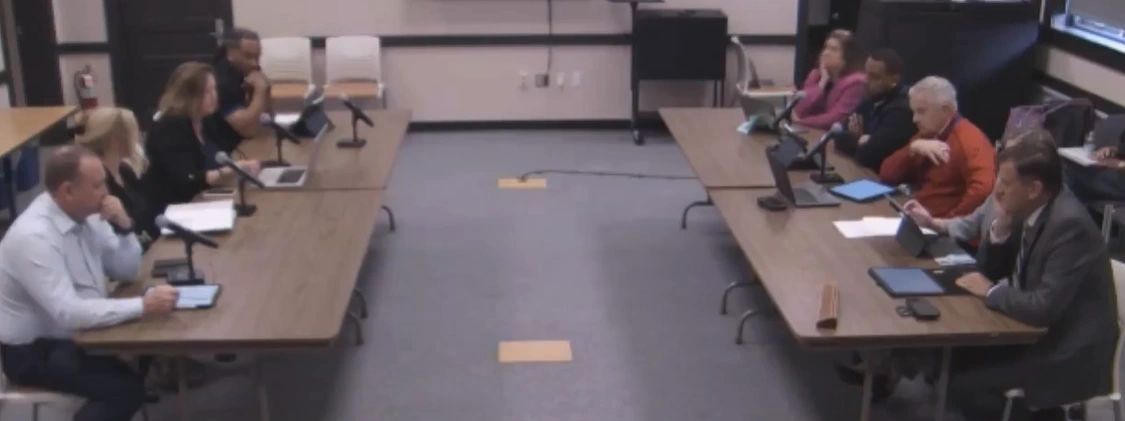
The Standing Committee on Finance, Operations and Governance of the Worcester School Committee held a hybrid meeting to discuss, in particular, the district’s cell phone and earbud use policy.
Monday’s meeting revolved around talks on a proposed cell phone use policy introduced last August by former School Committee Member Tracy O’Connell Novick. The new policy would amend the current one in the student handbook.
Molly McCullough, District A school committee member, and chair of the Standing Committee of Finance, Operations and Governance, said that the current cell phone use policy in the schools is “basic” and the proposed revision is based on extensive feedback from administrators, educators and students.
“Our current policy is slightly basic when it comes to phones and do not involve things specifically with earbuds and other uses of technology that may apply,” McCullough told the Worcester Guardian.
“In the Worcester Public Schools, we recognize technology’s significant role in modern education,” reads the proposal submitted by the Office of Instruction and School Leadership. “We acknowledge the potential benefits of cell phone use as a tool for educational purposes. However, we also recognize the challenges that come with cell phone usage in schools, including distractions, disengagement, and overuse.
The new policy recommends cell phones be allowed for:
Educational use: At the discretion of the classroom teacher and building administrator, cell phones may be used for educational purposes and communication, such as research and specialized educational applications. Teachers may let students use personal cell phones for educational reasons if another school-issued device is unavailable.
Communication: Students may use cell phones for educational communication via district-approved applications (e.g., email or chat application) with teachers, classmates, and parents outside of class time.
Important use: In the case of emergencies and other important matters that involve safety, including personal safety and the safety of others.
Communication between students and parents and caregivers: During the school day, parents should channel urgent communication with their children through the school office. Students are not permitted to use cell phones to communicate with their parents during instructional time.
Emergency Notifications: Parents and guardians are encouraged to keep the school informed of any changes to their contact information to ensure timely communication during emergencies.
The proposal continues that teachers in the classroom shouldn’t be authorized to use cell phones for any non-educational reasons, such as social media or video games, during class time. Also, the new outline proposed that cell phones must be powered off (or on “silent” or “airplane” mode) and out of sight during class time.
“Teachers, administrators, and school staff will promote digital citizenship by teaching students responsible and ethical use of technology, including cell phones, in educational and professional contexts,” the proposal continues.
Violations could result in receiving a warning, having the device confiscated temporarily, and meetings with the student’s parent(s) or guardian.
Further, the proposal includes the use of earphones or earbuds in schools and states that the acceptable use of these would include listening to educational podcasts or audiobooks, participating in virtual classes or using language learning apps or educational software.
McCullough joined Dianna Biancheria, vice chair, Jermaine Johnson and Kathleen Roy as members of the standing committee.
Executive Director for the Burncoat Quadrant William Foley told the committee that the administration has drafted what it considers the “backbone of a cell phone policy, which we thought struck a balance between the policy we had previously and a total ban on cell phones.”
He said that drafts of the policy were presented to the superintendent’s roundtable group and to the student advisory committee twice. The students, Foley cracked, were “very polite” during the first meeting, so they were asked to not be quite so polite the next time around.
“They gave us some really good insight as to what they saw as the impact of cell phones in the classroom and the best way for the cell phones to be integrated but at the same time not cause a distraction,” said Foley, who added that middle school principals also looked at the document.
McCullough remarked that the new policy is “certainly much more robust than the current policy.”
“We talk a lot about the vision of a learner and future-ready students and know that technology will be used in the classroom,” said McCullough, “I’m so happy you mention that even the students acknowledge that it can be a distraction, too. So how do you strike that balance of using it appropriately for educational needs, but also not have it be a barrier to learning in the classroom?”
McCullough questioned the language in the policy around grade levels, and that elementary and secondary school level directives could be more clearly defined.
“It provides teachers and instructors with discretion, and you’d imagine that elementary school level teachers would use that discretion,” said Foley, who added that discretion, too, would be used regarding the use of cell phones for social media and video game scenarios in which these are applied for educational purposes.
Biancheria questioned the disciplinary portion of the policy, asking how this would be applied to illegal or inappropriate recording of video or audio in the classroom.
“That’s not detailed in the piece of the policy,” said Foley, “but the consequence for inappropriate video or picture taking…you’d have to look at that through some of the other disciplinary measures. Context is important in that. It’s the context of the specific incident.”
Johnson remarked that opinions on cell phones in the classroom, as he has heard, run the gamut between a full ban and full-on usage.
“What were some of the concerns on how you landed here?” he asked. “What are the barriers to not having cell phones in schools?”
“Originally the idea that a ban of cell phones is possible…we realized bans just don’t work,” said Morse. “There really wasn’t any group that recommended a full ban. What the reasonable balance seemed to be was finding a way to eliminate the distraction that cell phones seem to cause in instruction. We recognize the emergency component of it and the change in the landscape around media communications, and that our students have been born into an age of technology. To ban technology wouldn’t seem the right fit for our district.”
Morse commented that student feedback on the issue was “more strict” than some of the administrators’ and teachers’ views. Parents, by and large, were in support of students having access to their phones during the school day should they need them.
“Our district seems to be somewhere in the middle,” said Morse.
A motion was made by the committee to update language around volume when using phones on buses, presenting the updated policy to students before it goes into effect, and moving the policy to the Worcester School Committee for full review.
Charlene Arsenault can be reached at carsenault@theworcesterguardian.org