
UPDATE, Aug. 14: City Manager Eric Batista issued a new statement Friday responding to criticism of the city’s characterization of the DOJ’s decision. Batista said the closure is “not vindication,” but said the DOJ’s letter cites both a lack of current allegations concerning the conduct under investigation and reforms implemented by the city. Read our follow-up coverage here.
The U.S. Department of Justice has ended its civil rights investigation into the Worcester Police Department without taking further action, according to the city, closing a federal inquiry that produced explosive findings of excessive force and sexual misconduct and ignited one of the most contentious debates over policing in Worcester in years.
The city announced Friday that federal officials informed Worcester on Thursday that the investigation had been closed. According to the city’s statement, DOJ took no further action and did not sustain allegations contained in its December 2024 report.
The announcement marks a striking turn in a case that began in November 2022 and culminated two years later in a Justice Department report concluding there was reasonable cause to believe Worcester police engaged in a pattern or practice of conduct that violated the Constitution and federal law.
That report found Worcester officers used excessive force in violation of the Fourth Amendment, including unnecessary use of tasers, police dogs and strikes to the head. It also found that the department permitted undercover officers to engage in sexual contact with women suspected of involvement in the commercial sex trade, conduct DOJ said violated the 14th Amendment.
Federal investigators also documented allegations from multiple women who said Worcester officers subjected them to unwanted sexual contact, exploited them sexually while they were vulnerable or threatened them with arrest if they did not perform sex acts. DOJ said those allegations raised serious concerns about the department’s handling of sexual misconduct. Investigators also identified racial disparities in policing, although DOJ stopped short of finding an unlawful pattern of racial discrimination.
The investigation reviewed hundreds of incident files, video evidence where available, thousands of documents and years of police data. Investigators also interviewed current and former police officers, city employees and nearly 150 residents and representatives of local organizations.
The city’s Friday announcement did not include the Justice Department’s closing letter, and DOJ had not issued a public announcement about the Worcester case as of Saturday.
That leaves an important distinction unresolved publicly: whether DOJ’s decision to close the investigation amounts to a retraction of its earlier findings or simply a decision not to pursue court-ordered reforms or other enforcement.
City Manager Eric Batista characterized the closure as recognition of the work Worcester has undertaken since the investigation began.
“I want to thank the DOJ for recognizing the positive steps the WPD has taken to strengthen its policies and practices and for their thorough attention to this matter,” Batista said in the city’s announcement.
Batista said the city would continue evaluating and improving the department despite the end of the federal investigation.
“While the DOJ investigation may be closed, we remain committed to proactive evaluation and improvement,” he said.
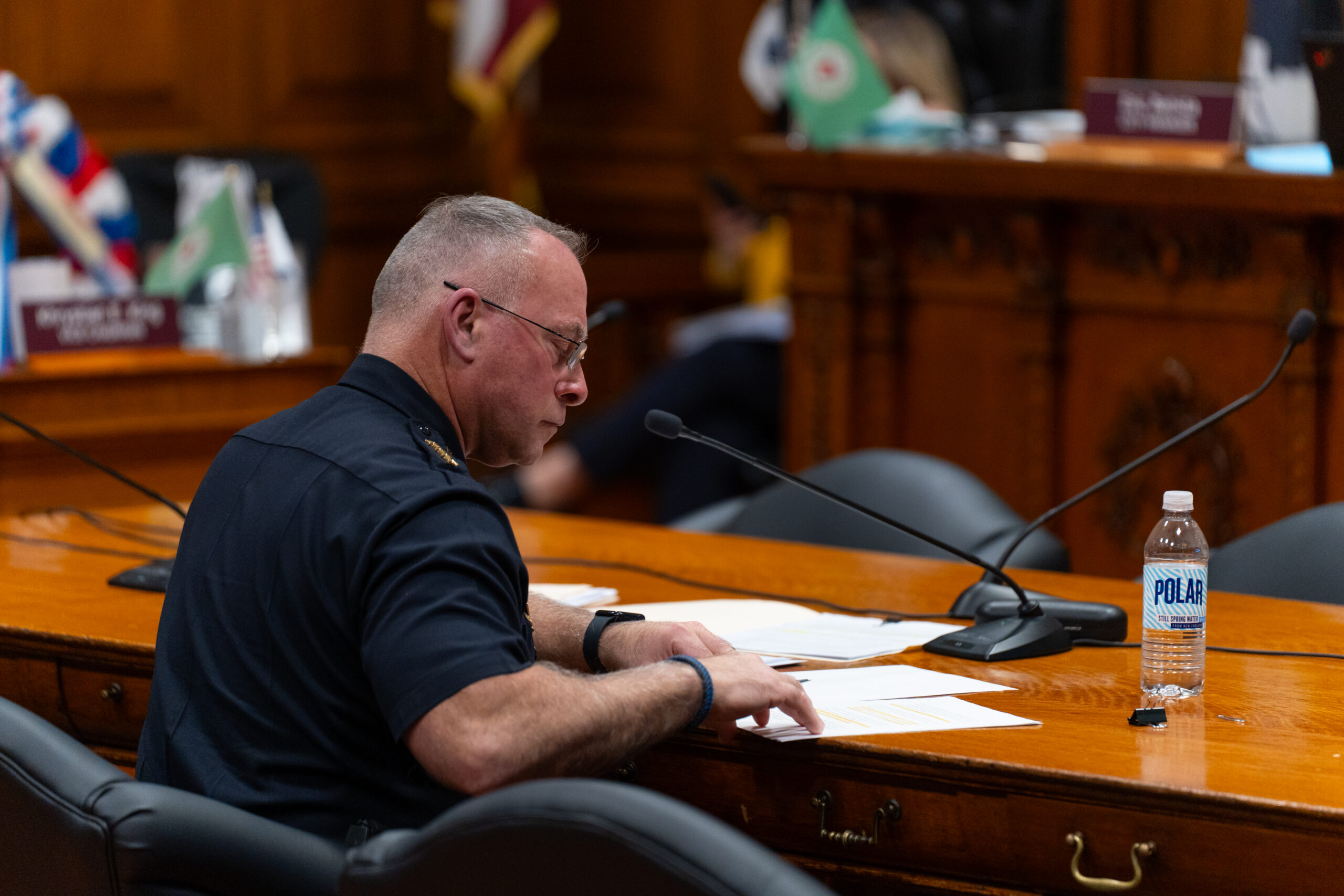
Police Chief Paul Saucier told the Worcester Guardian that the department views the DOJ’s decision as recognition that its efforts to modernize policies and improve operations have made a difference. Saucier acknowledged the lasting impact of the allegations while pointing to the department’s commitment to rebuilding public trust.
“Closing the investigation is significant because policy modernization and the efforts to restructure have not gone unnoticed,” Saucier said. “The allegations in this report were horrible and tarnished the reputation of the Worcester Police Department, which can’t be undone. Despite those negative allegations, members of the Worcester Police Department were proactive in their response, and the Department is focusing heavily on the needs and feedback of citizens. We are all about creating a culture of excellence in this police department and will continue to do so in order to be one the best police departments in the country.”
Asked whether reform efforts would continue despite the federal investigation ending, Saucier said they would.
“Yes, the Worcester Police Department will be continuously revisiting and revising policies, procedures and best practices implemented throughout the country as needed,” he told the Guardian. “In addition, we will meet all 274 standards needed to complete our accreditation process through the Massachusetts Police Accreditation Commission (MPAC): an outside agency. Accreditation is a voluntary process, part of which entails allowing members of MPAC to evaluate the policies of the Department and examine the provided evidence for compliance.”
Council Vice Chair Khrystian King, who has pushed for greater police oversight since the DOJ findings were released, sharply disputed the city’s characterization of the federal government’s decision in a statement issued Tuesday, Aug. 11.
King said the DOJ’s decision to end the investigation should not be interpreted as clearing the department or invalidating the findings issued in 2024.
“Inaction is not exoneration, and an abandoned federal process is not vindication,” King said in the statement. “The Trump administration’s failure to finish the job does not erase the DOJ’s findings or invalidate the concerns of Worcester residents.”
King accused city leadership of mischaracterizing the Justice Department’s action, saying the federal government had closed the investigation without completing the corrective process begun under the Biden administration.
“Nowhere does the letter conclude that community concerns were unfounded or unsubstantiated, nor does it retract the DOJ’s findings,” King said in the statement. “Worcester residents deserve honesty from their government, particularly on matters of public safety, police accountability, and community trust.”
King also renewed his call for Worcester to establish an independent civilian review board with subpoena power and access to evidence, an idea Batista recently recommended against pursuing.
King acknowledged progress within the police department but argued that reforms do not eliminate the need for independent oversight.
“Progress within the Worcester Police Department should be recognized, but it does not erase the conduct that made reform necessary or eliminate the need for oversight,” King said. “Progress and independent accountability can and should coexist.”
King argued that the end of federal involvement makes permanent local oversight more important, not less.
“When Washington changes direction or walks away, Worcester residents should not lose accountability with it,” King said. “That is why we need a permanent, independent Civilian Review Board with subpoena power and access to the evidence.”
The closure comes after more than a year and a half of policy changes, political debate and community pressure triggered by the December 2024 findings.
The report drew an immediate and deeply divided response in Worcester.
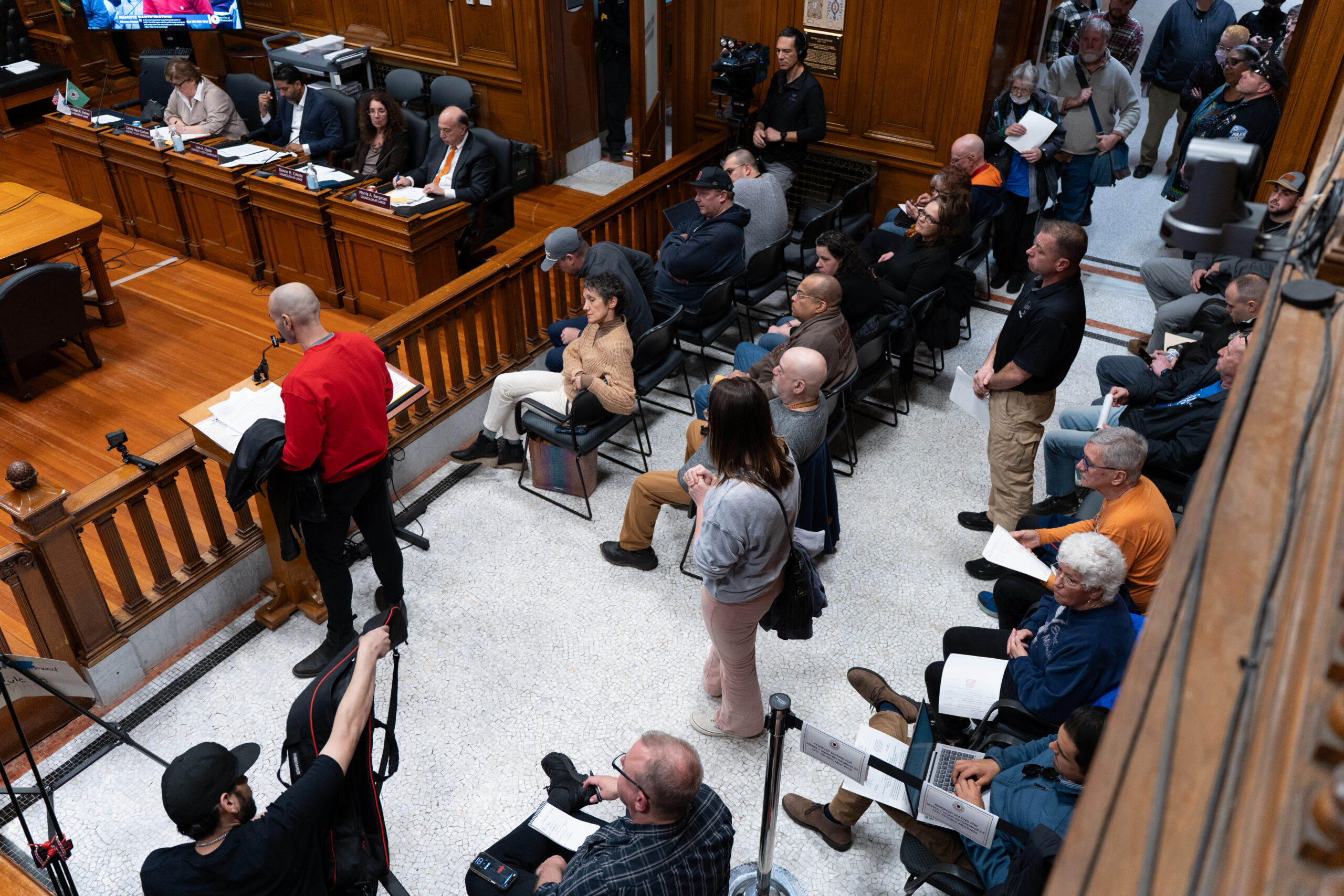
At a city council meeting days after its release, roughly 200 people packed the Council Chamber and hallway, including dozens of police officers. Women affiliated with Project Priceless, an organization representing survivors of the sex trade, urged city leaders to take the findings seriously and hold officers accountable.
Elizabeth Grajales, the organization’s vice president, called for an apology and restitution for women she said had suffered abuse at the hands of officers.
Police officers and their supporters, meanwhile, sharply criticized the DOJ report as lacking sufficient detail and unfairly tarnishing the department.
Veteran Worcester police officer Thomas Duffy called the investigation “a total disgrace” during that December meeting and said the report undermined public confidence in officers without adequately identifying the facts underlying its conclusions.
City officials themselves initially offered a complicated response.
Batista called the findings “shocking” and “unacceptable” shortly after their release and said allegations of such misconduct by city employees were difficult to comprehend. Mayor Joseph Petty said the city owed residents a serious response and called for action on DOJ’s recommendations.
At the same time, city officials and police leadership repeatedly disputed portions of the federal report.
In April 2025, Police Chief Paul Saucier presented the city council with an internal review highlighting several cases in which the department reached different conclusions than DOJ investigators.
King criticized that response as incomplete, while Councilor Etel Haxhiaj, who was serving on the council at the time, argued that it failed to acknowledge harm identified in the federal investigation.
Batista told councilors at the time that Worcester could disagree with portions of the DOJ report while still acknowledging the need for reform.
“It’s extremely important to understand that two things can be right in this case,” Batista said at the April meeting. “Unfortunately, the message continues to be that the City of Worcester is completely against this report. I want to say, right now, completely that that is not true.”
Worcester nevertheless moved forward with a series of changes after the DOJ findings.
The city established a police misconduct hotline, began pursuing state accreditation for the department, allocated funding for new internal affairs software and provided federal “color-of-law” training to hundreds of officers. It also launched public webpages tracking changes stemming from the DOJ report and an earlier racial equity audit.
The city council unanimously approved several measures in April 2025 seeking additional information about police discipline, use of force, complaint investigations, settlements and implementation of reform recommendations.
The city also considered creating a civilian police review board, though Batista recommended last month against establishing a separate board, arguing Worcester should strengthen existing oversight mechanisms instead.
The federal government’s approach to police oversight has also changed significantly since Worcester’s findings were released.
In May 2025, the Justice Department under President Donald Trump announced it was closing several police pattern-or-practice investigations begun during the Biden administration and retracting findings against departments including Phoenix, Memphis, Trenton and the Louisiana State Police. It also moved to dismiss proposed consent decrees involving Minneapolis and Louisville, saying federal oversight had become overly intrusive.
The Justice Department has not publicly said whether its decision in Worcester is part of that broader shift.
Worcester never entered into a consent decree with the federal government, and no federal court took control of reforms within the department.
The city said Friday that its reform efforts continue despite the end of the investigation.
What remains less clear is what becomes of the Justice Department’s 2024 findings themselves—conclusions that reshaped Worcester’s debate over policing, prompted calls for greater oversight and gave public weight to allegations that community advocates had raised for years.
This is a developing story. Refresh the page for updates.
Have a story tip, community concern, or insight to share? Email Editor Charlene Arsenault at carsenault@theworcesterguardian.org.
The Worcester Guardian is a nonprofit newsroom serving Central Massachusetts. Help keep independent reporting alive by making a donation today.
