
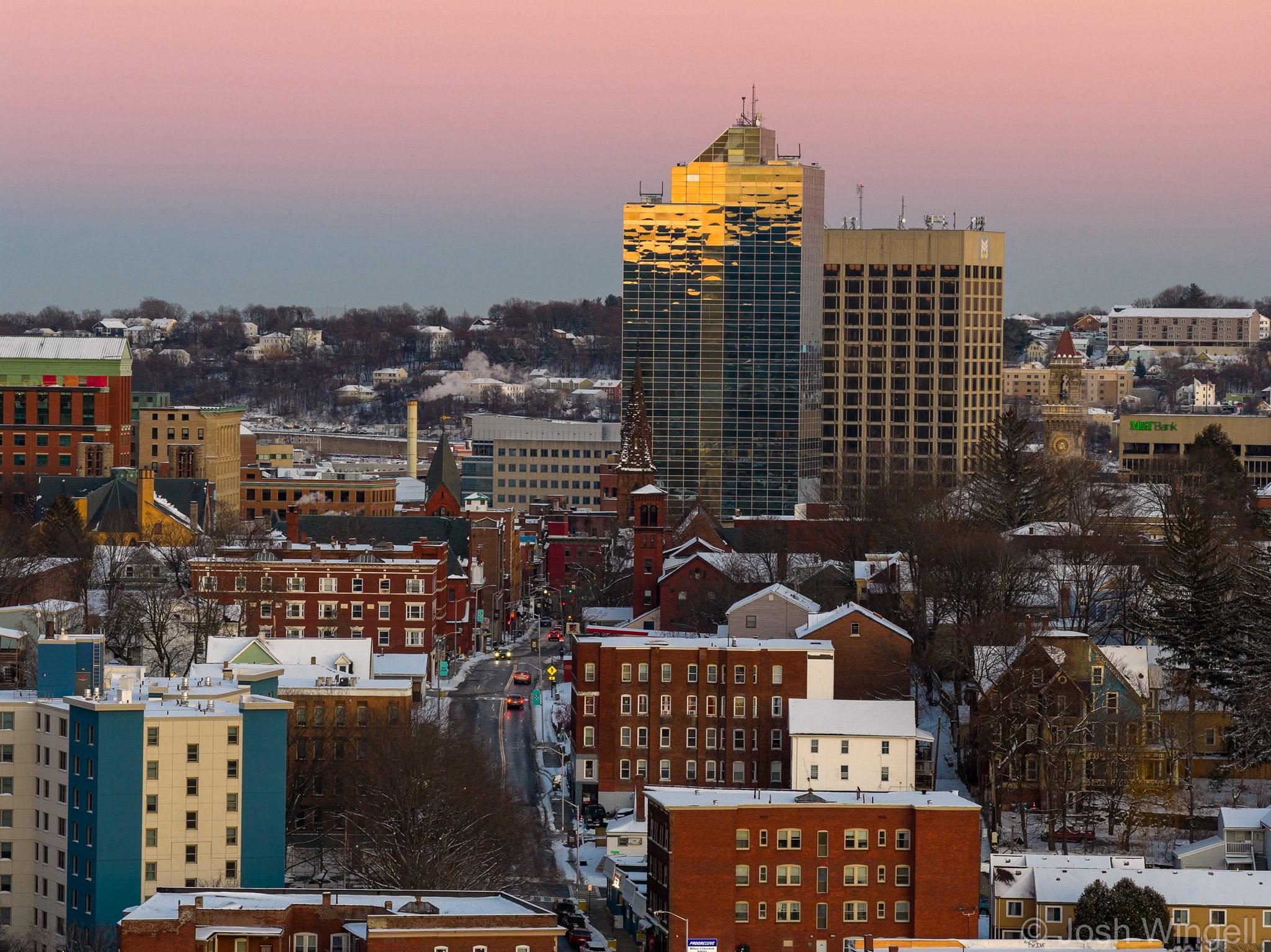
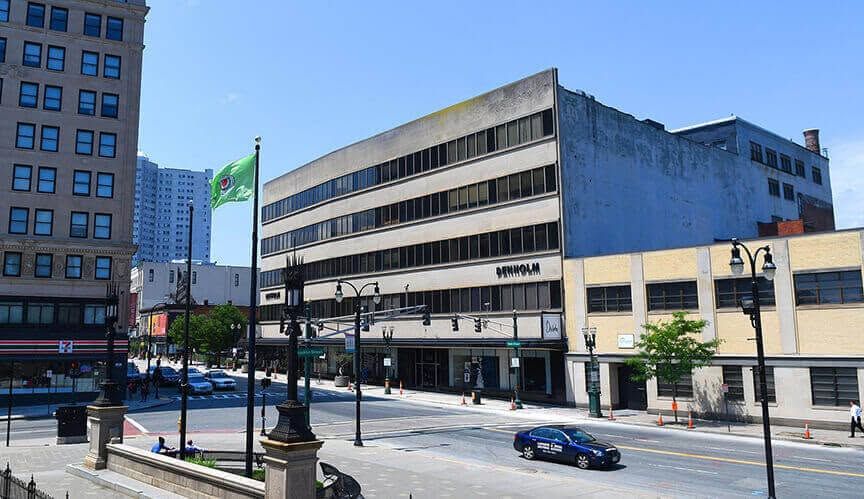
The vacant Denholm building is one step closer to coming down, with the state awarding Worcester $3 million to demolish the downtown property and prepare its 1.2-acre site for redevelopment.
The demolition money accounts for the largest share of nearly $5 million in state grants awarded to Worcester through the Community One Stop for Growth program. The funding also supports infrastructure for a potential manufacturing expansion on the city’s north side, improvements to downtown navigation and efforts to fill long-vacant storefronts.
The four Worcester projects are among eight receiving a combined $9.97 million in Worcester, Auburn, Shrewsbury and Westborough, according to an Oct. 22 announcement from state Sen. Michael Moore, D-Millbury.
Statewide, Gov. Maura Healey’s administration is distributing $330 million to just over 400 housing and economic development projects in 207 communities, the largest single funding round in the program’s history.
For Worcester, the most immediately recognizable project is the Denholm building, a longtime downtown landmark whose future has been the subject of redevelopment discussions.
The $3 million award helps clear the vacant property and prepare the land for new construction. The announcement does not identify a specific development planned for the site. That distinction is important: The state is paying to help make redevelopment possible, not announcing what will eventually replace the building. Still, the funding represents a significant step toward addressing a prominent vacant property in the heart of downtown.
Another $1.65 million goes to the city and New Garden Park Inc. for infrastructure improvements intended to support up to 1 million square feet of new manufacturing space on Worcester’s north side. The project involves reconstructing an existing roadway and installing new street infrastructure to accommodate potential industrial development. While the proposed scale is substantial, the announcement does not identify specific manufacturers, construction schedules or the number of jobs that could ultimately result.
The remaining two Worcester grants focus on the downtown business environment.
The city and Downtown Worcester Business Improvement District receives $250,000 to purchase and install four interactive digital wayfinding kiosks and 88 new downtown banners.
The kiosks are intended to help pedestrians and visitors find their way around downtown, while the banners will contribute to the district’s streetscape improvements.
Another $50,000 supports efforts to attract businesses to storefronts that have remained vacant for extended periods within the city’s designated Commercial Area Revitalization Districts.
The awards address several different challenges facing Worcester: an aging building awaiting redevelopment, the infrastructure needed to attract industrial investment and the continuing effort to strengthen downtown’s commercial activity.
Outside Worcester, the largest award in Moore’s district goes to Shrewsbury, which is receiving $3,676,630 for construction of a signalized intersection on Stoney Hill Road.
The intersection improvements are intended to accommodate a proposed 250-unit mixed-use development, addressing transportation needs before additional housing and commercial activity move forward.
Auburn receives $390,000 to design a shared-use path along the Massachusetts Electric right-of-way and complete improvements on Albert Street.
Westborough is receiving two grants totaling $958,000. The larger, $808,000 award funds the replacement of aging sewer pipes in the town’s recently rezoned downtown area, where officials are preparing for additional housing and business development.
A separate $150,000 grant supports an economic development plan for the Interstate 495/Route 9 gateway area, in partnership with Southborough.
Moore said the investments are intended to support economic activity at a time when Massachusetts residents and businesses are contending with high costs and economic uncertainty.
“Facing a shaky economy and high inflation, Bay Staters are looking for signals that we are bullish about the future of the Commonwealth. This year’s Community One Stop For Growth grant awards, the largest ever, is the signal they’ve been waiting for,” Moore said in the announcement.
He also welcomed the nearly $10 million directed to communities in his district, saying the grants would support construction, jobs and efforts to address the state’s housing shortage.
The Community One Stop for Growth program brings together 14 state grant programs under a coordinated application and review process.
Administered through the Executive Office of Economic Development, Executive Office of Housing and Livable Communities and MassDevelopment, the initiative provides funding for infrastructure, housing development, site preparation, downtown revitalization and other local economic development projects.
According to the Healey administration, projects receiving funding statewide are expected to support more than 27,000 new homes, 13,000 permanent jobs and 7 million square feet of commercial development.
The administration also estimates that the projects could help generate $24.6 billion in private investment.
Those figures are projections tied to the proposed developments, rather than housing, employment or investment already realized.
The largest portions of the statewide funding will go toward infrastructure, with approximately $109.7 million awarded through the HousingWorks Infrastructure Program and $105.1 million through the MassWorks Infrastructure Program.
Another $51.1 million will be distributed through the MBTA Community Catalyst Fund, while additional grants will support redevelopment of underused properties, rural development, vacant storefronts, environmental cleanup and municipal planning.
Thirteen communities are receiving Community One Stop funding for the first time, according to the announcement.
For Worcester, the grants offer funding for projects at different stages of development, from clearing the Denholm property to laying the groundwork for future manufacturing and making downtown more accessible to visitors.
Whether those investments ultimately produce new buildings, businesses and jobs will depend on what happens after the state money is spent.
Have news, tips, or a story worth telling? Feedback to this story? A good recipe, a funny joke or a suggestion? Reach Editor Charlene Arsenault at carsenault@theworcesterguardian.org—because good stories (and great scoops) deserve to be shared.
- The Worcester Guardian is an independent nonprofit news organization. Support local journalism by making a DONATION today.
